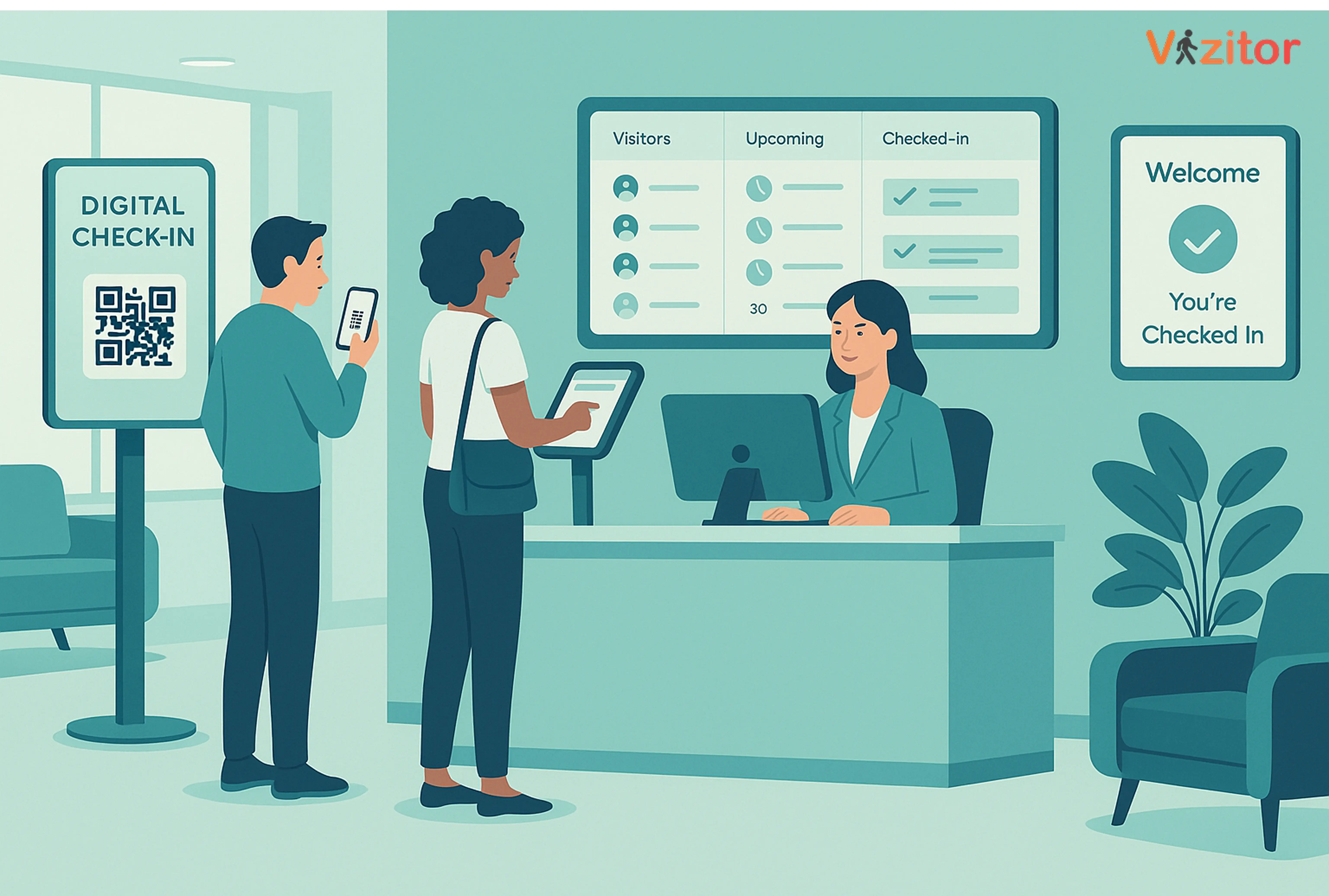
Digital check-ins are transforming how workplaces welcome visitors. Faster, more secure, and fully automated, they replace old registers with QR codes, real-time logs, and smarter workflows. Companies adopt digital check-ins for efficiency, compliance, and a better first impression, making them the new standard for modern offices.


Published on: Tue, Dec 9, 2025
Read in 5 minutes
In a world where nearly everything has gone digital payments, meetings, queues, and even coffee orders, it’s no surprise that workplaces are now rethinking one of the most fundamental processes of all: the check-in.
For decades, the process barely changed: pick up a pen, find an empty line in a register, scribble your information, and hope the writing was clear enough to be useful later. But today, the shift from pen-and-paper check-ins to smart digital check-ins is more than a trend, it’s a natural evolution shaped by technology, efficiency, and modern workplace expectations.
So the real question isn’t “Why switch?”
It’s “Why stay behind?”
For centuries, checking in meant signing your name in a book.
Charming? Yes. Practical today? Not really.
Paper logs served their purpose when volume was low and security expectations were simpler.
By the 80s and 90s, workplaces began experimenting with digital logs, barcode badges, and basic computer entries, improving legibility and storage but still lacking automation.
Today, visitor management systems like Vizitor have completely transformed the process:
Check-ins are now faster, cleaner, and more secure.
Companies aren’t adopting digital check-ins because it’s trendy, they’re embracing them because they work better in every way.
Visitors don’t want to stand in line.
Employees don’t want to manage piles of registers.
Digital check-ins offer:
It’s simple: faster check-ins = happier visitors + smoother operations.
Paper registers can’t verify identity, store data securely, or offer real-time visibility.
Digital check-ins provide:
Security teams gain clarity.
Visitors gain confidence.
Workplaces gain peace of mind.
Whether it’s workplace safety, data protection, or industry-specific compliance, digital check-ins make record-keeping effortless.
Companies get:
Paper can’t keep up, digital systems make compliance easier, faster, and far more reliable.
Visitors immediately associate digital check-ins with modern, well-managed workplaces.
The experience feels:
Your front desk becomes an extension of your brand.
Today’s workplaces require flexibility.
Digital check-ins enable:
They blend seamlessly into hybrid environments and modern office ecosystems.
Paper logs provide zero intelligence.
Digital check-ins unlock valuable analytics:
Leaders make better decisions when they understand workplace activity.
Traditional methods survive in some settings because:
These methods work for very small operations but they cannot meet the expectations of modern workplaces focused on security, compliance, and efficiency.
Vizitor’s Digital Check-In System brings everything together in one seamless platform:
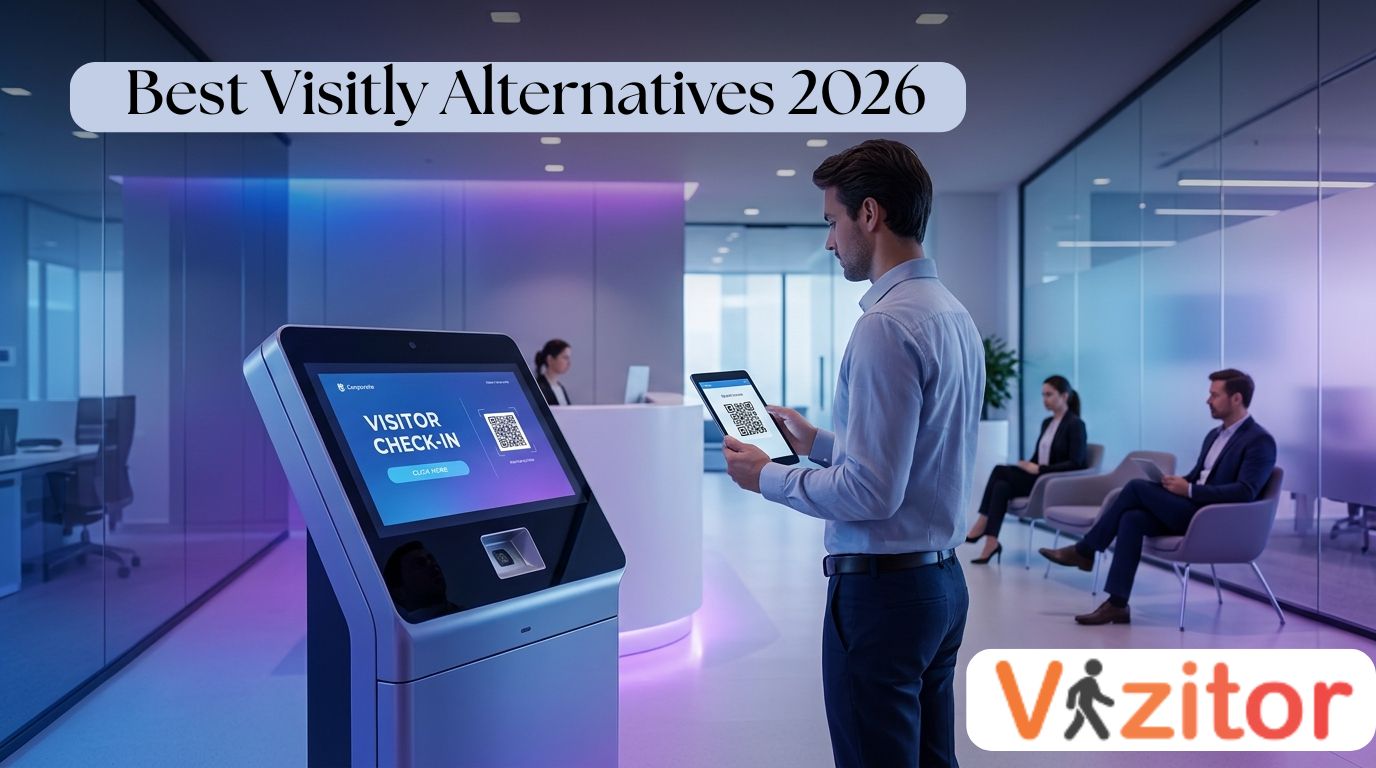
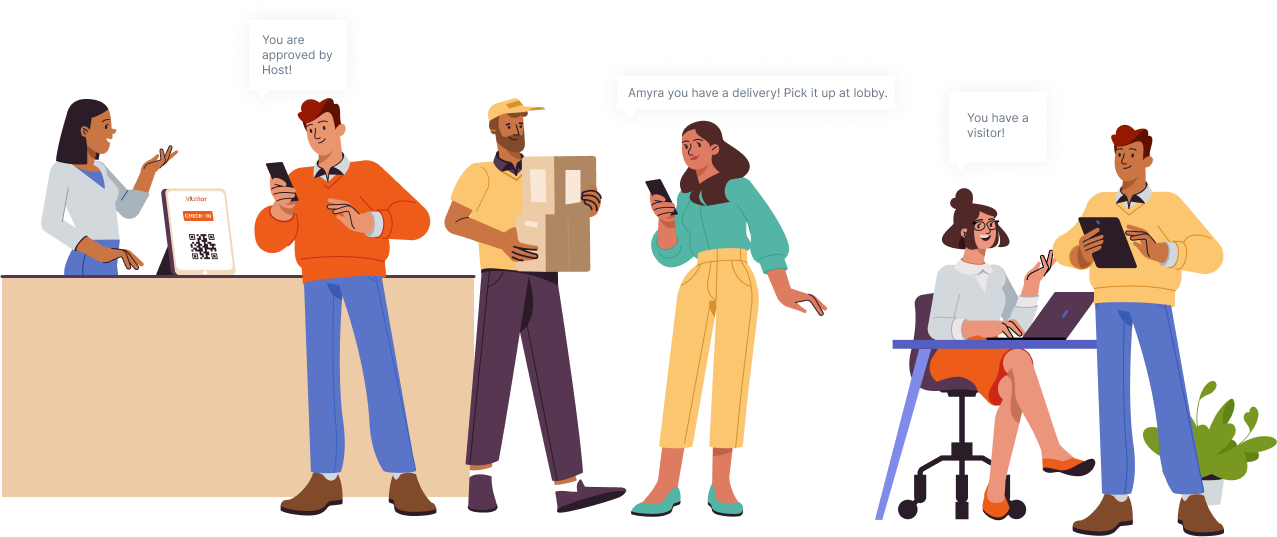
QR codes, pre-registration, and touchless entry.
Verified visitor logs, photo capture, and real-time tracking.
Analytics for better staffing, planning, and operations.
Branded screens, intuitive flow, and a smooth visitor journey.
Offices, co-working spaces, hospitals, schools, retail, logistics, and corporate campuses.
With Vizitor, companies transition from registers that record information to systems that improve operations.
Digital check-ins aren’t just an upgrade, they’re an evolution.
They make workplaces safer, faster, smarter, and more welcoming.
As businesses modernize and employees adapt to hybrid environments, digital check-ins are quickly becoming the backbone of professional visitor management.
If your first interaction with a visitor is your check-in process…
why not make it effortless, impressive, and future-ready?
Switch to Vizitor’s Digital Check-In System and transform your visitor experience today.
Digital check-ins offer faster entry, accurate tracking, improved security, and automated visitor logs; benefits that paper registers cannot provide.
A digital check-in system allows visitors or employees to sign in using QR codes, mobile devices, or kiosks. It records entries in real time and automates the entire process.
Yes, Digital check-ins verify visitor identity, store data securely, provide time-stamped logs, and integrate with access control systems enhancing workplace security.
Most visitors appreciate the speed and convenience of QR check-ins, touchless entry, and automated flows. It reduces waiting time and improves their overall experience.
They maintain accurate visitor records, automate documentation, support audits, and help companies meet safety and data governance standards.
Corporate offices, coworking spaces, hospitals, schools, logistics centers, manufacturing plants, retail outlets, and government facilities use digital check-ins for efficiency and security.
No, They reduce administrative load, eliminate paper use, improve accuracy, and save time; offering strong long-term ROI.
Yes, Modern visitor management systems like Vizitor integrate with access control, attendance systems, delivery logs, and smart office tools.
Absolutely, Digital systems enable remote pre-registration, QR entry, cross-location check-ins, and real-time monitoring, ideal for hybrid workplaces.
Vizitor offers QR check-ins, pre-registration, host notifications, digital badges, real-time dashboards, and smart workflows that create a seamless visitor experience from start to finish.