A modern workplace is a connected environment where people, technology, and processes work together to improve efficiency, security, and visibility. It goes beyond office design or hybrid work, focusing on automated workflows, controlled access, real-time occupancy insights, and seamless experiences that support employees, visitors, and compliance.


Published on: Tue, Feb 3, 2026
Read in 4 minutes
When people picture a modern workplace, they often think of sleek offices, flexible seating, or hybrid schedules. But today, a modern workplace is much more than how an office looks or where employees work from.
Modern workplaces span multi-location enterprises, manufacturing plants, biotech labs, coworking spaces, and corporate campuses. What makes them “modern” is not design, but how well people, systems, and processes are connected to keep operations efficient, compliant, and secure.
In practice, a modern workplace operates as a single, intelligent ecosystem, where manual tasks are minimized, visibility is real-time, and security is built into everyday workflows.
Traditional workplaces rely on disconnected tools, spreadsheets, and manual coordination. Modern workplaces replace this fragmentation with connected systems that work quietly in the background.
This means:
Instead of reacting to problems, workplace teams can plan ahead, allocate resources better, and maintain compliance without additional effort.
In many organizations, workplace teams still rely on spreadsheets or manual logs to track visitors and onsite employees. These processes are slow, error-prone, and difficult to scale.
In a modern workplace:
By removing administrative busywork, workplace teams regain valuable time, often the equivalent of hours or even days each month, allowing them to focus on employee experience, safety, and operational planning.
Modern workplaces recognize that security is not just digital, it is physical.
Unverified visitors, manual sign-ins, and trust-based access create unnecessary risk. A modern workplace replaces these gaps with structured, auditable access control.
This includes:
Security becomes consistent and enforceable, not dependent on memory or manual checks.
One of the biggest shifts in modern workplaces is data-driven visibility.
Leaders and workplace teams can instantly see:
This visibility supports better space planning, stronger emergency preparedness, and faster response during incidents.
In modern workplaces, the front desk evolves from a greeting point into a control and coordination hub.
Instead of paper logbooks and manual phone calls, modern front desks use:
This improves both security and visitor experience, without adding pressure on front desk staff.
A defining trait of a modern workplace is that technology feels invisible.
Systems should:
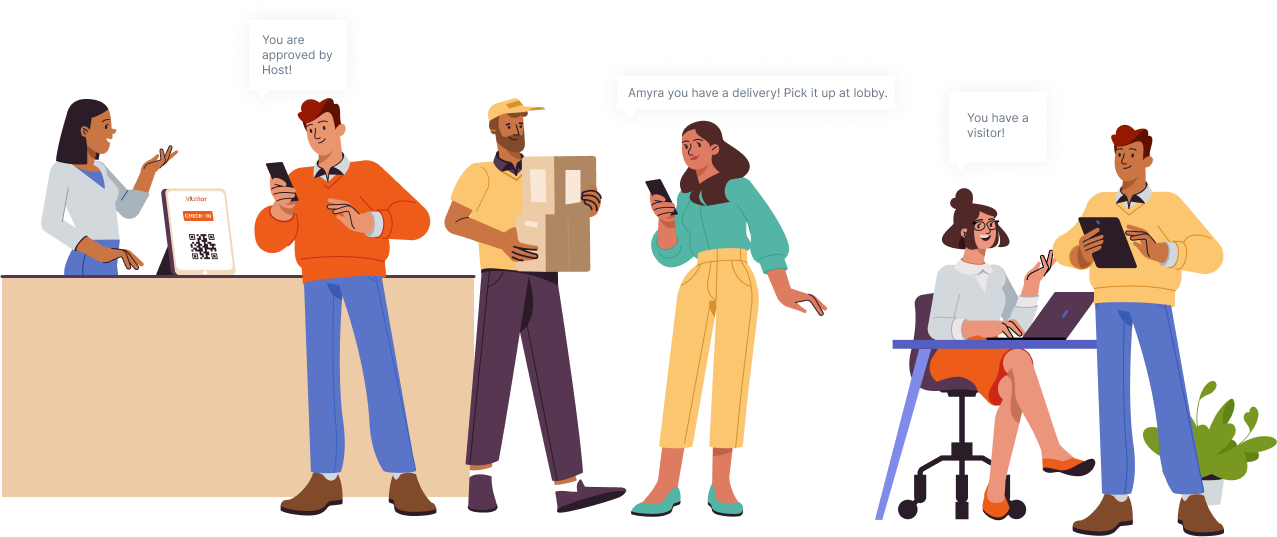
Platforms like Vizitor enable this by connecting visitor access, attendance tracking, and workplace visibility into a single, reliable system, helping organizations modernize without disrupting operations.
While technology enables modernization, people make it effective.
Modern workplaces invest in:
When people and systems work together, workplaces become resilient, not just efficient.
To be clear, a modern workplace is not:
True modernization balances efficiency, experience, and security.
A modern workplace is a connected environment where:
Modernization starts at the front door and extends across every interaction inside the workplace.
If your workplace still relies on paper logs, manual tracking, or trust-based access, it may look modern, but it doesn’t operate like one.
Modern workplaces are built on clarity, control, and connection, and that transformation begins with how people enter, move through, and interact within your space.
A modern workplace combines flexible work models, integrated technology, strong security, and employee-focused design to support productivity and safety.
The front desk is the first control point. Modern workplaces use structured systems to manage visitor access, reduce risk, and maintain compliance.
Technology automates manual tasks, improves visibility, enhances collaboration, and enables real-time decision-making.
No, Organizations of all sizes can adopt modern workplace principles by focusing on flexibility, security, and user experience.