Published on: Wed, Mar 5, 2025
Last updated: 2026-04-05
Read in 11 minutes
Every school has a paper problem.
Visitor logs filled with indecipherable handwriting. Stacks of permission slips. Filing cabinets overflowing with printed attendance records. Front desk staff printing, re-printing, and manually archiving documents that no one will ever look at again.
It adds up. A school with 500 students and regular visitor activity can generate tens of thousands of paper records per year from front-desk operations alone. That’s before you count communication with parents, internal notices, and administrative paperwork.
Schools have genuinely committed to sustainability in recent years. Recycling programs, LED lighting upgrades, solar panels, and campus gardens are all real steps forward. But the paper problem at the front desk and in visitor management gets overlooked consistently, even though it’s one of the easiest and most immediate changes a school can make.
This guide is specifically focused on how digital visitor management reduces paper waste in schools, what that means for sustainability goals, and how it connects to the broader green school initiative.
When schools audit their paper usage, they typically look at printing costs in classrooms and administrative offices. They rarely analyze what’s happening at the front desk.
Consider what a typical school processes manually every single day:
Each of these generates paper. Many of them generate paper that is stored, filed, and never referenced again. When it is referenced, staff spend time hunting through physical files for a specific entry.
This isn’t just a sustainability problem. It’s an operational inefficiency that costs time, money, and space.
The traditional visitor sign-in book is the most visible symbol of a school’s paper dependency at the front. But the problem goes deeper than the book itself.
The sign-in book problem:
A school sign-in book contains unverified handwritten entries. Anyone can write any name. There’s no photo, no ID check, no automatic notification to the teacher or staff member being visited. If something happens on campus and you need to know who was present on a specific date three weeks ago, you’re flipping through pages hoping the handwriting is legible.
Beyond security, the book itself is a continuous paper expense. And the data inside it is essentially useless for any analytical purpose.
What digital visitor management replaces:
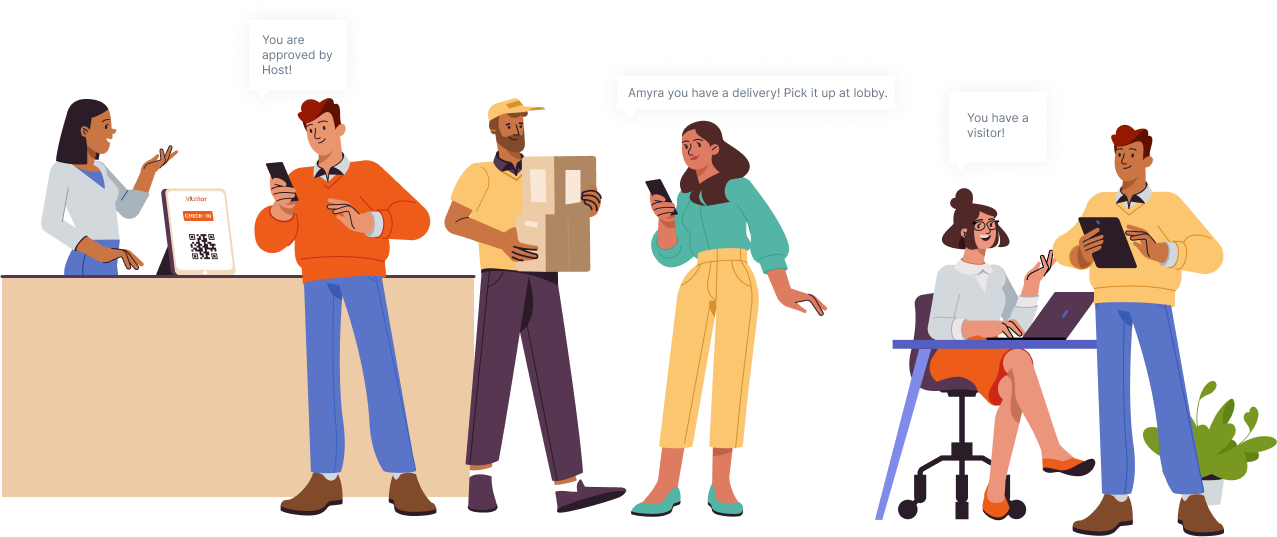
A visitor management system replaces the sign-in book with a tablet kiosk or mobile check-in process. Visitors scan their ID, answer screening questions, sign any required documents electronically, and receive a printed or digital badge. The host is automatically notified.
Every entry is timestamped, stored securely in the cloud, and searchable in seconds. No paper. No filing. No hunting through binders.
For a school with 50 visitor entries per week, that’s approximately 2,600 entries per year captured digitally instead of in a paper book. Over five years, that’s one less filing cabinet, a significant reduction in consumables, and staff hours redirected from administrative grunt work to actual student support.
Going paperless at the front desk connects directly to several sustainability objectives schools are already tracking.
Paper production has a real carbon cost. Deforestation, pulp processing, transportation, and eventual disposal all contribute to emissions. When schools eliminate paper records from visitor management, attendance logging, and administrative communication, they directly reduce their contribution to that footprint.
It’s not a massive single step. But combined with other initiatives, it moves the needle on the carbon reduction targets many school districts are now required to report against.
Digital visitor management eliminates the need for:
That’s a direct reduction in consumable spending alongside the environmental benefit.
Schools are subject to safeguarding and compliance requirements that typically create enormous paper footprints. Background check records, visitor authorization lists, signed agreements, and audit trails traditionally live in filing cabinets.
Digital visitor management systems maintain all of this electronically. Audit trails are automatic. Signed documents are stored in the cloud. Compliance reports can be generated in minutes without touching a single piece of paper.
Post-2020, touchless technology moved from a nice-to-have to a genuine operational requirement for schools. Parents and staff expect it. Many local health guidelines recommend it.
Vizitor’s touchless check-in allows visitors to complete the entire entry process without touching a shared surface. They scan a QR code with their phone, complete the check-in process on their own device, and receive their visit confirmation digitally.
From a sustainability standpoint, touchless check-in also eliminates:
From a security standpoint, touchless check-in captures verified data tied to a real device, not a handwritten entry in a logbook.
For schools specifically, this matters during high-volume entry periods. Morning drop-off, parent-teacher conference days, and school events can create real congestion at the front desk. A touchless system processes visitors faster, with less staff involvement, and generates zero paper waste in the process.
See how Vizitor handles school visitor management
Join 2,000+ workplaces using Vizitor to go paperless and manage visitors securely. Free trial, no credit card required.
Book a DemoOne of the most paper-intensive areas in school administration is document collection. Schools routinely collect:
Each of these is typically printed, distributed, signed, collected, and filed. Chasing missing forms is a weekly task for many administrators. Storing signed forms takes physical space and creates retrieval headaches.
Digital visitor management handles this through pre-registration. Before a parent, volunteer, or contractor arrives, they receive a digital invite link. Through that link, they complete all required forms electronically. By the time they arrive at the front desk, their documents are already signed and stored.
This eliminates:
For large school events like open days, sports meets, or graduation ceremonies, pre-registration with digital document collection can process hundreds of visitors with zero paper involved.
Most school front desks have at least one filing cabinet dedicated entirely to visitor and compliance records. Some have several. These represent years of accumulated paper that is rarely accessed, takes up real estate in the office, and poses a data management challenge when records need to be found or destroyed.
Digital visitor management replaces this entirely. Every record is:
This matters beyond just sustainability. Schools have data protection obligations. Physical filing cabinets are not compliant by default. Digital records with proper access controls and retention policies are far easier to manage against GDPR, FERPA, or local data protection requirements.
Sustainability in schools builds across multiple touchpoints. Here’s a practical breakdown of where digital systems make the most impact:
The single most immediate change. A tablet kiosk at the front desk captures every visitor entry digitally, with no paper required. Entry data is accurate, searchable, and automatically linked to the host.
Send digital invite links before any visitor arrives. They complete check-in, sign documents, and declare any relevant information before they even leave home. Arrival is fast and paperless.
Reusable badge holders with printed inserts are still more sustainable than disposable paper badges. Fully digital badge systems displayed on a phone are the most sustainable option.
Connect your visitor management system to your document workflow so that consent forms and permission slips are collected digitally through the pre-registration process.
Instead of staff calling or manually walking to find the host when a visitor arrives, the system sends an automatic notification via SMS or email. No paper message slips, no phone tag.
Upgrade to LED lighting with motion sensors in classrooms, washrooms, and corridors. Cuts electricity usage without any operational disruption.
Track energy consumption across buildings. Identifying waste is the first step to eliminating it.
Labeled bins for recyclables, organics, and landfill waste, paired with student-led accountability, drive actual behavior change rather than symbolic intent.
Audit consumption patterns and adjust portion sizes. Partner with composting vendors to divert organic waste from landfill.
Replace printed newsletters and notices with email, SMS, or app-based communication. A school with 500 students that switches from printed to digital communication eliminates thousands of pages per term.
Eco-clubs and monthly sustainability challenges embed green behavior into school culture. Students who participate in these programs carry the habits home.
Regular maintenance of heating and cooling systems ensures they run efficiently. Poorly maintained systems are among the largest energy wasters in school buildings.
Work with certified vendors for e-waste, paper recycling, and sustainable procurement. This closes the loop on what happens to disposed materials.
Solar panels or hybrid energy solutions reduce long-term electricity costs and dependency on non-renewable sources. Many schools have successfully offset significant portions of their energy consumption through rooftop solar installations.
Set measurable targets, track progress, and display results where staff, students, and parents can see them. Visibility creates accountability.
| Factor | Traditional Schools | Schools with Digital Visitor Management |
|---|---|---|
| Visitor records | Paper sign-in books | Cloud-based, searchable digital records |
| Document collection | Printed, hand-collected | Digital, pre-collected via invite link |
| Compliance storage | Physical filing cabinets | Encrypted cloud storage with access controls |
| Host notifications | Manual calls or paper slips | Automatic SMS/email alerts |
| Audit capability | Manual page-searching | Instant search and export |
| Annual paper waste | Thousands of sheets from front-desk alone | Near zero for visitor operations |
Schools often struggle to quantify the benefit of going paperless because they haven’t measured the baseline. Before implementing a digital visitor management system, spend two weeks counting:
After six months on a digital system, the difference is measurable and concrete. That data is useful for sustainability reporting, budget justification, and demonstrating progress to school boards and parent communities.
For more detail on managing the full visitor experience in educational settings, see the complete guide to school visitor management. For schools specifically interested in touchless entry, the complete guide to touchless visitor check-in covers implementation in detail.
It replaces paper sign-in books, printed visitor badges, physical consent forms, and manual filing with cloud-based digital records. Every visitor interaction is captured electronically, eliminating the need for paper at every stage of the process.
Yes. Modern visitor management systems capture ID-verified entries, store records with access controls, and generate automatic audit trails. They are more secure than paper sign-in books, which can be falsified or lost.
Hosts send a digital invite link to the visitor before their arrival. The visitor completes all required information, signs any necessary documents electronically, and checks in on their device when they arrive. Front desk processing time drops significantly.
Yes. Systems like Vizitor support digital document signing as part of the check-in or pre-registration flow. NDAs, confidentiality agreements, health declarations, and consent forms can all be collected and stored digitally.
Existing records can be scanned and uploaded or retained until their required retention period expires. Going forward, all new records are captured digitally. Many schools use the transition as an opportunity to audit and properly dispose of records that no longer need to be retained.
Vizitor starts at $20 per month. For most schools, the reduction in consumables (visitor log books, printed forms, filing supplies) and staff time recaptured from manual processes pays for the system within the first few months.
Try Vizitor Free
No credit card required. Setup in under 5 minutes. Manage visitors, queues, meeting rooms, and more.
Start Free Trial