
Visitor Management System
Where every visitor feels welcome and every building stays secure
Vizitor checks visitors in, prints their badge, and notifies their host automatically, all in under 30 seconds, on the tablet already at your reception desk. Pre-registered visitors scan a QR code and walk straight in. Walk-ins are handled without any staff involvement. Start free. No hardware required. Live in 30 minutes.











Visitors managed across the platform
Vizitor platform data, 2026
NDAs signed digitally
Vizitor platform data, 2026
Average check-in time vs. 5-8 min on paper
Vizitor platform data, 2026
What Is a Visitor Management System?
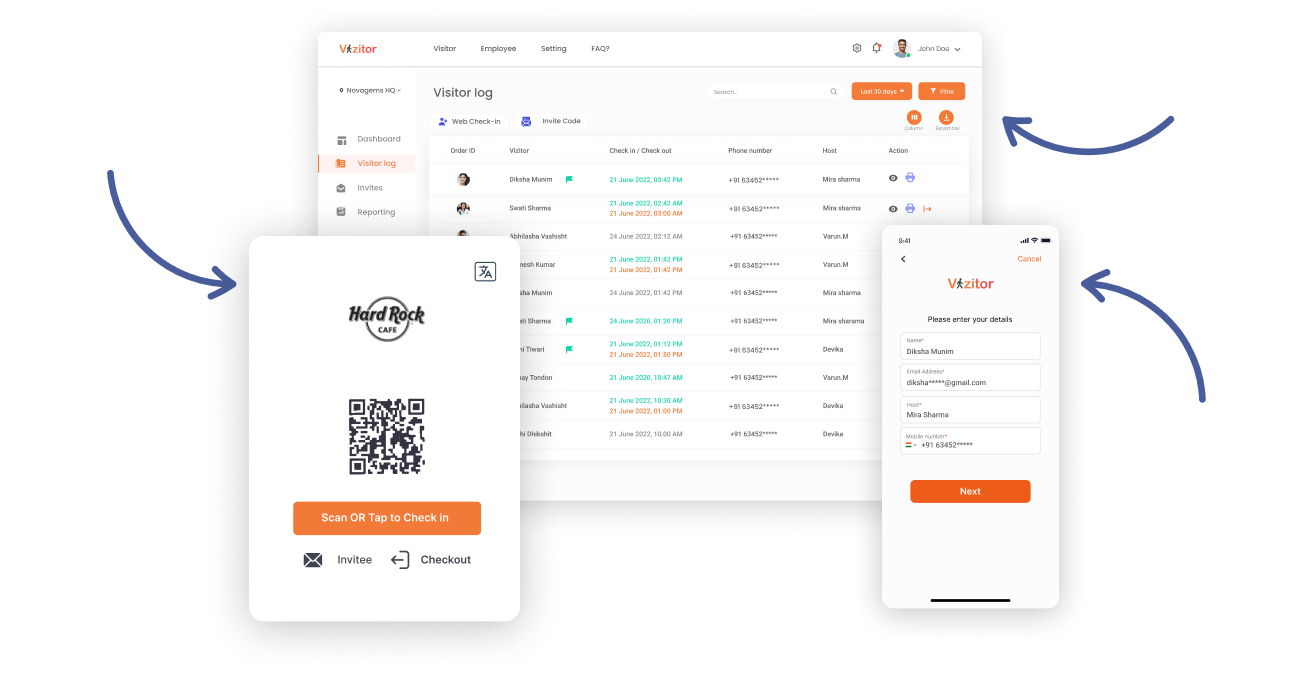
A visitor management system is software that replaces paper sign-in sheets with an automated check-in process, capturing visitor identity, collecting signed documents, printing a dated badge, and notifying the host automatically. Every visit is logged with a timestamp in an encrypted, searchable audit trail accessible from any device.
Six Ways a Paper Visitor Log Fails Your
Organization Every Day
No identity verification
Anyone can write any name in a logbook. No photo. No ID check. No watchlist screen. When a compliance audit or a security incident requires a verified visitor record, a handwritten logbook cannot provide one.
Hosts notified only when reception remembers
The visitor arrives. Reception calls the host. The host is in a meeting. The visitor stands at the front desk for five minutes while reception tries again. That sequence plays out dozens of times a day, and reflects directly on the organization before a single meeting starts.
No live view of who is currently inside
During a fire alarm or lockdown, the question is: who is in the building right now? A paper log records arrivals. It has no departure tracking, no photo, no last known floor. The answer a first responder needs is not there.
NDAs and consent captured inconsistently
Legal agreements at check-in should happen at every visit. With a manual process they depend on whether someone remembers to ask, and whether the visitor signs before proceeding. Inconsistent NDA capture is a legal exposure that most organizations discover only when they need the record.
Front desk burned by manual work
Checking visitors in, calling hosts, printing badges, chasing NDAs, logging packages, all manually, all repetitive, all taking time away from the work that actually requires a person. Vizitor automates every routine step so reception handles exceptions, not process.
No unified view across multiple locations
Each office runs its own clipboard, its own inconsistent policy, its own paper trail that cannot be searched, compared, or reported on centrally. The moment you have two offices, the paper system has already failed. Vizitor gives one dashboard across every location, every entry point, and every visitor type.
One Visitor Management System That Solves Every One of Those Problems
Vizitor replaces the clipboard, the phone call, the manual badge, and the spreadsheet with one connected platform that handles every visitor workflow automatically.
Every visitor verified before they step inside
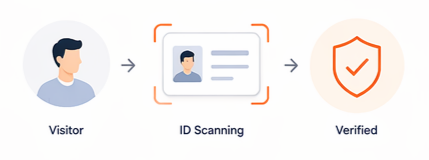
Photo capture, government ID scanning, and NDA signing happen at check-in, automatically. Every entry is logged, timestamped, and stored in an encrypted audit trail.
Your front desk runs on its own
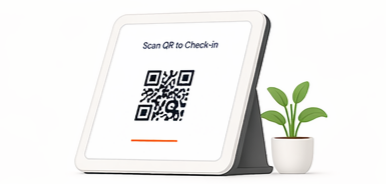
QR code check-in, instant badge printing, and automatic host notifications without anyone at the desk needing to do a thing. Routine arrivals handle themselves.
Know exactly who's on site, right now
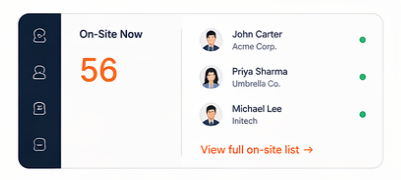
A live dashboard shows every visitor currently checked in, who they're meeting, and when they arrived. In an emergency, pull the full on-site list from any device in seconds.
NDAs and consent captured every single time
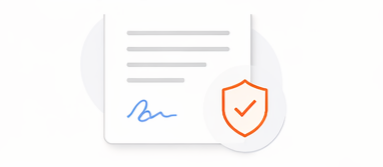
Legal agreements are built into the check-in flow not left to chance. Visitors sign digitally before entering, and every document is stored against their visit record.
Hosts know the moment their visitor arrives
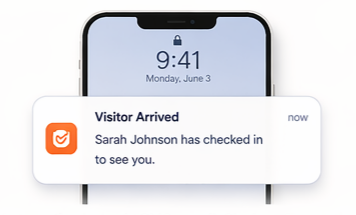
Automatic alerts via instant notification via SMS, email, Slack, or Teams, the second a visitor scans in. No calls from reception. No guests left standing at the desk, wondering what's happening.
Every office, one system, one view
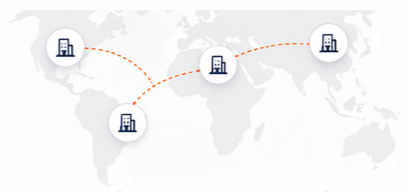
Manage visitor flows across all your locations from a single admin panel. Each site has its own policies and branding. You see everything from one place.
Five Steps. Under 30 Seconds. Nothing Missed.
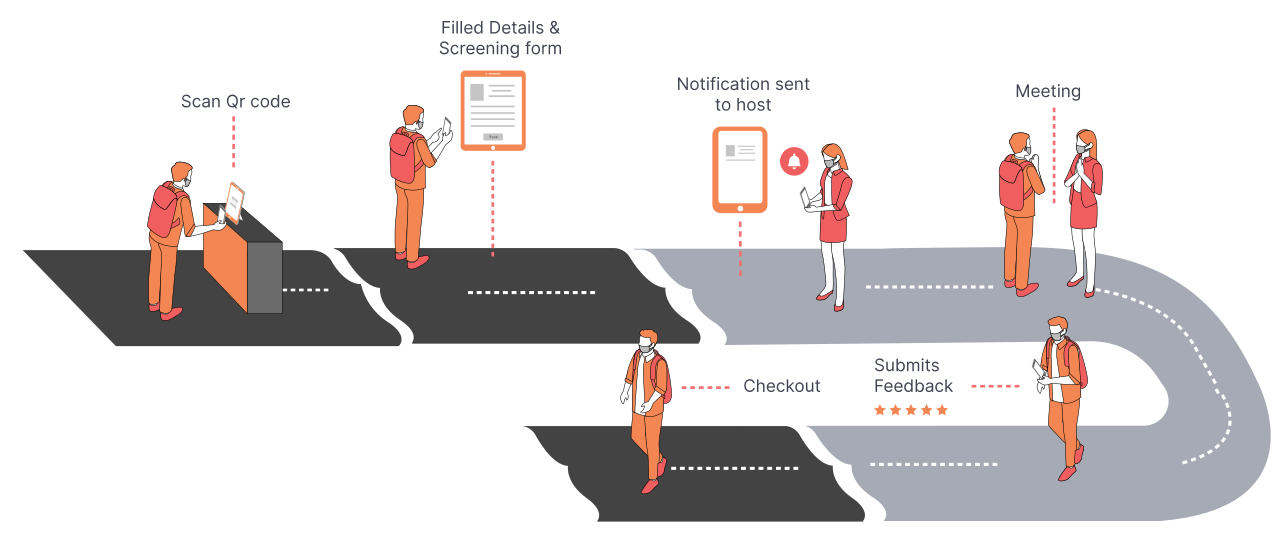
Host sends a pre-registration invitation
The host sends a branded digital invitation from the Vizitor dashboard or Vizitor Pass app, with the visit date, office location, map, and a personal QR code. The visitor completes their details and signs any required documents from their own device before arriving.
Visitor arrives and scans their QR code
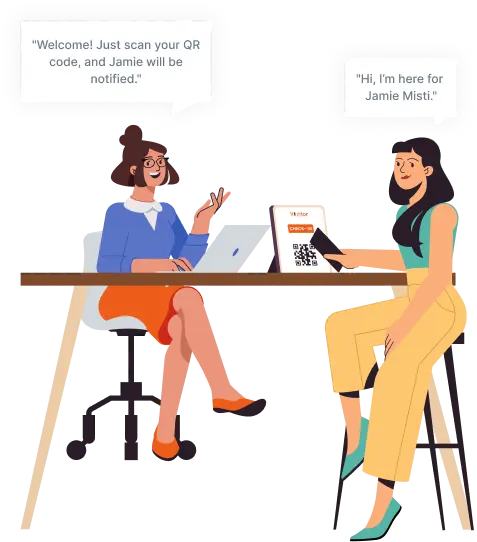
Pre-registered visitors scan their personal QR code at the kiosk, check-in confirms in under 10 seconds. Walk-in visitors complete the kiosk form in under 30 seconds. Both flows run on the same device simultaneously with no separate queue.
Photo captured and identity verified
The kiosk camera captures the visitor's photo at check-in. For walk-in visitors, OTP verification confirms the contact number provided. Every check-in creates a timestamped, photo-attached record immediately searchable from the admin dashboard.
Badge prints and host is notified instantly
A dated visitor badge prints in under 5 seconds, name, photo, host, and date included. Simultaneously, the host receives an automatic notification via email, Slack, or Microsoft Teams. No phone call from reception. No missed arrivals.
Visit logged. Departure recorded. Audit trail complete.
When the visitor leaves, check-out is logged. The complete visit record, arrival time, departure time, purpose, host, and signed documents, is stored in an encrypted audit trail, exportable for compliance review in under 60 seconds.
Everything a Visitor Management System Should Do,
Built In, Not Bolted On
John Smith
Acme Corp
📅 Thursday · 10:00 AM
Scan at reception for instant check-in
Welcome!
Done in under 30 seconds
VISITOR
John Smith
Acme Corp
Thu · 10:42 AM
WhatsApp · Just now
John Smith has arrived at reception
Slack · Just now
Your visitor John Smith has arrived
Security · Just now
Watchlist screening: no match found
John Smith
Acme CorpNeha Rao
TechSolRohit Saini
GlobalTechSunita Mehta
Brand Co.Send the Invitation Before They Travel. When They Arrive, They Scan and Walk In.
Pre-registration moves the entire check-in process to before the visitor leaves their office. The host sends a branded invitation from the dashboard or Vizitor Pass app. The visitor completes their details and signs any required NDA from their own device. On arrival: QR scan, check-in confirmed, badge printed, host notified, in under 10 seconds.
- Branded invitation with personal QR code, date, location, and map
- NDA and required documents signed from visitor's own device before arriving
- QR e-pass generated automatically, no extra configuration required
- On arrival: QR scan → instant check-in → badge prints → host notified
- Walk-in and pre-registered visitors handled on the same kiosk simultaneously
No Proprietary Hardware. No Purchase Required. Works on the Device Already at Reception.
Vizitor runs on any iPad or Android tablet. No specialist kiosk terminal to procure, no hardware lead time, no installation engineer. Download the app, place the tablet at reception, and the visitor management system is live. From download to first visitor check-in takes under 30 minutes.
- Works on any iPad (iOS 13+) or Android tablet (Android 8.0+)
- No proprietary hardware to purchase, use the tablet already at reception
- Kiosk mode locks device to check-in, visitors cannot access other functions
- NDA and required documents signed directly on the kiosk screen
- Walk-in and QR check-in simultaneously on the same device
A Dated, Photo-Inclusive Badge That Identifies Every Visitor Throughout the Building.
Every check-in produces a printed badge in under 5 seconds, with the visitor's name, photo, host name, and visit date. Color-coded by visitor type so any staff member in any corridor can confirm at a glance that the person has been through the check-in process.
- Photo captured automatically at every check-in, attached to the visit record
- Badge prints in under 5 seconds where printing is enabled
- Name, photo, host, date, and visitor type on every badge
- Color-coded by visitor type, contractors, clients, vendors distinguishable instantly
- OTP verification confirms visitor contact details at walk-in check-in
- Government ID scanning available for high-security environments
The Host Knows the Moment Their Visitor Arrives. Security Knows Before the Visitor Proceeds.
The moment a visitor completes check-in, the host receives an automatic alert, via email, Slack, or Microsoft Teams, with the visitor's name and photo. Every visitor is simultaneously screened against the organization's configured watchlist. A match triggers a discreet, immediate alert to security before a badge is issued.
- Instant notification via email, SMS, Slack, and Microsoft Teams on check-in
- Notification includes visitor name, photo, and arrival time
- Watchlist and blocklist screening at every check-in, before badge is issued
- Discreet alert, visitor sees only a standard waiting message
- Custom watchlist categories maintained by security administrators
Every Visit Logged. Every Record Encrypted. Every Audit Answered in Under 60 Seconds.
The admin dashboard shows every visitor currently on site, live and in real time. During an emergency, evacuation alert emails are sent to everyone on site from the dashboard in one click. The live roster is accessible from any phone outside the building.
- Live on-site roster, every visitor currently checked in, updated in real time
- Evacuation alert emails to all on-site visitors and staff in one click
- AES-256 encryption at rest, TLS 1.2 in transit, tamper-proof records
- Configurable data retention periods for GDPR compliance
- Audit-ready export, complete visitor log for any date range in under 60 seconds
- Multi-location dashboard, all sites in one admin view, one login
See emergency evacuation management →
See full security details →
Plans That Fit Every Workplace Size
Start with a free trial and see Vizitor running in your lobby today. No hidden fees, no credit card required. Pick the plan that fits your workplace today and upgrade as you grow.
Save upto 60% with Vizitor
Monthly
Annual

Recommended
Enterprise
Connect
 Unlimited visitors
Category based form,
Third party integration
Black listing
Evacuation alerts
One Visitor Management System. Every Team That Needs It.
Vizitor is not just a front desk tool, it gives every team with a stake in who enters the building exactly what they need.
Pre-register interview candidates, track contractor visits, and give HR an auditable record of every person who enters the building. Visitor data connects directly to your attendance and compliance workflows.
See HR solution →SSO integration, role-based access control, tamper-proof audit logs, watchlist screening, and GDPR-compliant data handling, all from a platform that is ISO 27001 certified and VAPT tested.
See IT and Security solution →Self-service check-in removes the manual reception burden. Live on-site rosters support emergency preparedness. Multi-entry point management gives one view across every entrance.
See Facilities solution →One dashboard across every location, every visitor type, and every workflow, visitor logs, delivery records, desk bookings, and ticketing all connected. No disconnected tools.
See Operations solution →Visitors check themselves in. Hosts are notified automatically. Badges print without staff involvement. Reception is free to greet, assist, and do the work that requires a human.
See Admin solution →Visitor Management Across Every Industry and Environment
The same platform. Configured for the specific visitor, compliance, and security requirements of each.

Hospitals and Healthcare
Visiting hour enforcement, patient area access control, contractor documentation, health screening, and HIPAA-aligned audit logs for acute care and clinical environments.
See healthcare visitor management →
Schools and Educational Institutions
Custody restriction screening, K-12 visitor policies, emergency evacuation rosters, and FERPA-aligned record keeping for every visitor on campus.
See school visitor management →Colleges and Universities
Clery Act compliance, open campus visitor accountability, research facility access control, and multi-building management for higher education environments.
See university visitor management →
Hospitality and Hotels
Guest check-in, contractor management, and visitor flow management for hospitality environments where the arrival experience defines the brand impression.
Manufacturing and Industrial
Contractor pre-clearance, safety acknowledgment capture, access area documentation, and OSHA-aligned evacuation accountability for high-risk industrial environments.
Corporate Offices
Multi-floor, multi-entry, multi-location visitor management for corporate headquarters, satellite offices, and hybrid workplaces with variable daily attendance.
Enterprise-Grade Security, From the Free Plan Up.
Not an enterprise add-on. Not a paid upgrade. Every security credential Vizitor holds applies from the moment you create a free account.
See Full Security and Compliance Details →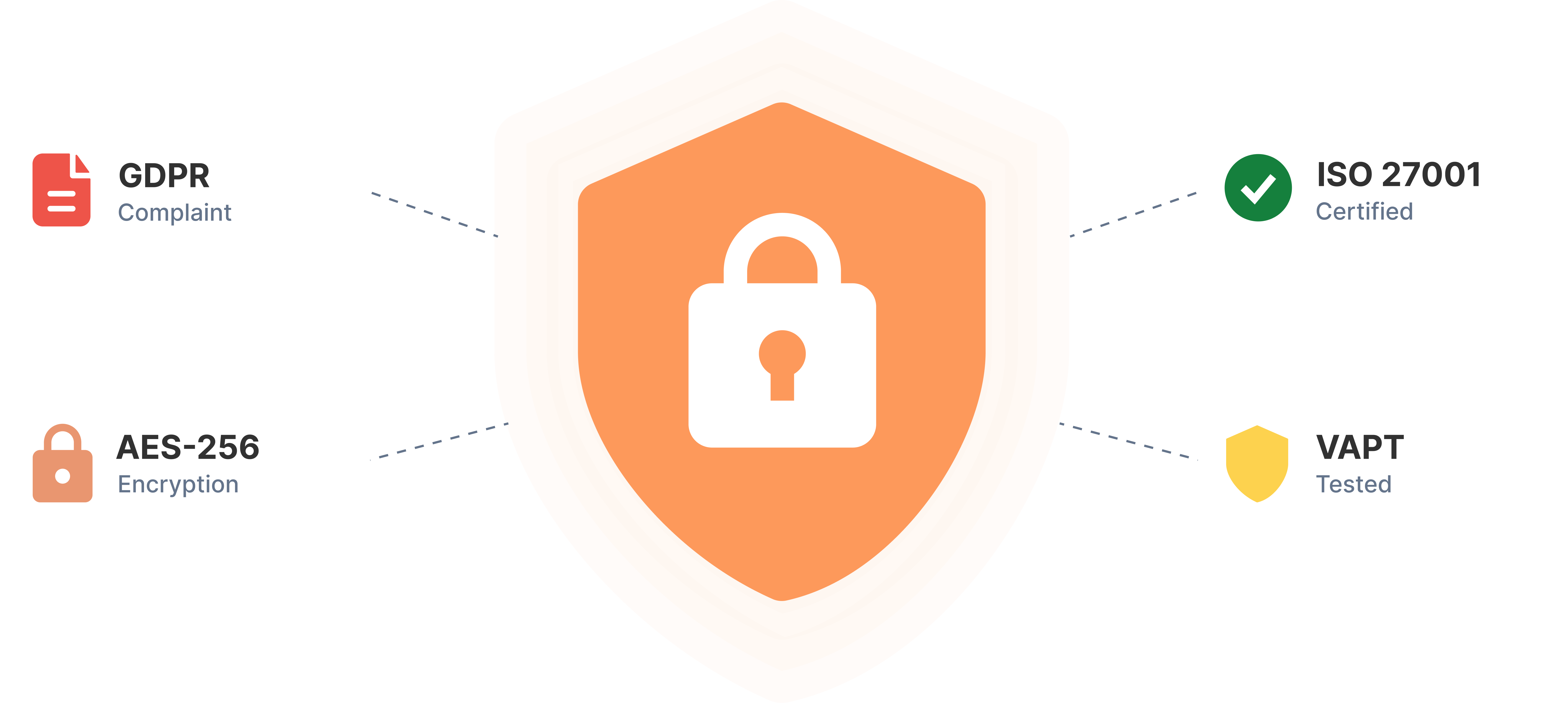
ISO 27001 Certified
International information security management certification, audited annually by independent third parties. Every visitor record on Vizitor is managed under ISO 27001 controls.
VAPT Certified
Vizitor's systems are regularly tested by independent security assessors through Vulnerability Assessment and Penetration Testing, active adversarial testing that certifications alone do not provide.
GDPR Compliant
Visitor consent captured at check-in. Configurable data retention periods. Individual record deletion for right-to-erasure requests. Processing activity documentation for Article 30 compliance.
AES-256 Encryption
All visitor data encrypted at rest with AES-256. TLS 1.2 in transit. Tamper-proof audit logs. Role-based access, only authorized administrators can access visit records. 99.9% uptime SLA on enterprise plans.
Visitor Management Is One Module. Vizitor Is the Whole Platform.
Most visitor management tools are standalone. Vizitor connects visitor check-in to every other workplace workflow from the same dashboard.

Attendance Management System
GPS and QR employee attendance, WFH/WFO tracking, RTO compliance, and payroll-ready reports.
Learn more →
Desk and Room Booking
Real-time availability, ghost meeting auto-release, and Google Calendar and Outlook sync.
Learn more →Mailroom Management Software
Incoming and outgoing package tracking with automatic employee notifications.
Learn more →
Space Management Software
Occupancy analytics and utilization reports for real estate decisions.
Learn more →

Ticketing Management System
IT, facilities, and HR request routing, tracking, and resolution.
Learn more →Frequently Asked Questions
A visitor management system is software that replaces paper sign-in sheets with an automated check-in process, capturing visitor identity, collecting signed documents, printing a dated badge, and notifying the host automatically. Every visit is logged in an encrypted, searchable audit trail accessible from any device.
A paper logbook records a name and a time. A visitor management system captures a verified identity with photo, collects signed documents, screens against a watchlist, prints a dated badge, notifies the host automatically, and stores an encrypted audit record. In an emergency, a paper logbook cannot produce a live roster, a digital system can, from any phone, outside the building.
Any visitor type, clients, contractors, vendors, interview candidates, delivery personnel, volunteers, government inspectors, auditors, event attendees, and recurring service providers. Each visitor type has its own configurable check-in flow with different fields, required documents, and badge format.
A standard single-location setup, creating an account, configuring visitor types, installing the app on a tablet, and welcoming the first visitor, takes under 30 minutes. No IT team, no implementation consultant, no coding required.
Three things: a free account, a tablet (any iPad or Android you already own), and a Wi-Fi connection. Badge printer optional. No proprietary hardware, no installation engineer, no setup fee.
Yes. Core visitor check-in, QR e-pass generation, and host notifications are on the free plan permanently, no credit card, no trial period limit. Upgrade when you are ready for additional features or locations.
No. Vizitor runs on any iPad or Android tablet you already own. No proprietary kiosk terminal to purchase. From download to first visitor check-in takes under 30 minutes.
Yes. Vizitor runs on any iPad with iOS 13 or later and any Android tablet with Android 8.0 or later. All features are identical on both platforms.
Yes. Vizitor has an offline mode that captures visitor data locally during an outage. Records sync automatically when connectivity is restored.
The moment a visitor completes check-in, the host receives an automatic alert, via email, SMS, Slack, or Microsoft Teams, with the visitor's name, photo, and arrival time. No phone call from reception required.
Yes. NDAs, health declarations, safety acknowledgments, and any custom document can be attached to visitor types. Visitors sign digitally at check-in or during pre-registration from their own device. Every signed document is stored with a timestamp against the visit record.
Yes. Every visitor's details are screened against the organization's configured watchlist at check-in, before a badge is issued. A match triggers an immediate, discreet alert to security. The visitor sees only a standard waiting message.
Every checked-in visitor appears on a live on-site roster accessible from any phone outside the building. Evacuation alert emails are sent to everyone currently on site in one click from the dashboard. The safety coordinator arrives at the muster point with a current, photo-inclusive list, not a clipboard from an unmanned reception desk. See emergency evacuation management →
Vizitor is ISO 27001 certified, GDPR compliant, and VAPT penetration tested. Visitor data is encrypted at rest with AES-256 and in transit with TLS 1.2. A 99.9% uptime SLA is available on enterprise plans. See full security details →
Yes. Visitor records are stored with AES-256 encryption, configurable retention periods, role-based access, and individual deletion for right-to-erasure requests. A GDPR-compliant consent notice is presented at every check-in.
Yes. The complete visitor log for any date range is exportable in under 60 seconds, in formats suitable for GDPR audits, ISO 27001 assessments, Joint Commission surveys, and internal compliance reviews.
Yes. All locations are managed from one admin dashboard, each with its own check-in flow, branding, and policies. Visitor logs, live rosters, and reports are available per location or across the full portfolio from one login.
Paid plans start from $36 per month. A free plan is available with no credit card required. See the current pricing page for full plan details.
The Best Workplaces Know Who Is in Their Buildings at All Times. Yours Should Too.
500+ workplaces across 15+ countries trust Vizitor to automate visitor check-in, badge printing, host notifications, NDA signing, watchlist screening, and compliance records, from a free plan, on the tablet already at reception, live in 30 minutes.
Real Vizitor Customer Reviews
"You will not be disappointed"
Fast response time to questions. Great value for the money. It was easy to implement, and easy to train people. Reports are easy to run, clear to read and can be done in real time. I like the simplicity of the software.
"User friendly software"
Prompt issue resolution and user friendly. Ability to link more than one device to the software.
"Great sign in software"
I own a Martial Arts studio and needed a better way to keep track of "walk ins". Now they can actually leave the basic information needed to reach back as well as a signed waiver to get back to training. Perfect because I can customize and add any form to be signed by visitor. Also works wonders when set on kiosk on an event! Very reasonable cost. Easy to use and customize. Works well with my iPads.