Empower Your Business with the Top Employee Time Tracking Apps



Table of Content
Try Vizitor for Free!
Time is the one resource that cannot be recovered once it is spent. For businesses, the accuracy with which working time is tracked directly affects payroll costs, project profitability, client billing, and compliance with labor regulations. Yet many organizations still rely on manual time tracking methods that are slow, error-prone, and impossible to audit reliably.
Employee time tracking apps have matured substantially. The best platforms now handle not just clock-in and clock-out, but shift scheduling, leave management, overtime calculations, geo-fencing for remote workers, and direct payroll integration. Choosing the right one for your business is less about finding the most feature-rich option and more about matching the platform’s strengths to your specific workforce type and operational context.
This guide covers what to look for in an employee time tracking app, reviews the leading options across different business contexts, and explains why Vizitor’s attendance management system is the strongest choice for organizations prioritizing accuracy, security, and compliance.
Why Employee Time Tracking Matters
Before evaluating specific apps, it is worth being clear about the business problems that time tracking is meant to solve.
Payroll accuracy: Manual time records introduce errors through illegible handwriting, forgotten entries, and deliberate falsification. The American Payroll Association estimates error rates of 1% to 8% in manually processed payroll. For a business with a $500,000 annual payroll, that is up to $40,000 in potential errors per year.
Labor law compliance: Most jurisdictions require accurate records of working hours, overtime, and rest periods. Insufficient documentation exposes organizations to regulatory audits and penalties.
Project profitability: For service businesses and agencies, accurate time tracking by project determines whether pricing covers actual labor costs. Underestimating project time by 10% across a portfolio of contracts can turn profitable work into losses.
Remote workforce management: With distributed and hybrid teams, managers cannot rely on physical presence to confirm that employees are working. Time tracking apps with geo-fencing and mobile clock-in provide visibility without requiring surveillance.
Overtime control: Without real-time visibility into cumulative hours, overtime costs accumulate invisibly until the payroll report arrives. Time tracking systems that alert managers when employees approach overtime thresholds allow proactive scheduling adjustments.
What to Look for in an Employee Time Tracking App
Not every time tracking app serves every business context equally well. These are the capabilities that matter most:
Clock-in method variety: Different workforce types need different clock-in options. A construction company with workers spread across sites needs mobile GPS clock-in. A healthcare facility benefits from biometric authentication that prevents buddy punching. An office team might use a web-based time clock or QR code system.
Shift scheduling integration: Time tracking is more useful when it connects to scheduling. An app that knows an employee was supposed to start at 8:00 AM and records their actual arrival at 8:22 AM provides more actionable data than one that just logs a timestamp.
Payroll integration: The value of time data depends on how easily it flows into your payroll system. Look for direct integrations with your payroll provider or clean export formats that minimize manual data transfer.
Real-time dashboards: Managers need live visibility into who is clocked in, who is absent, and who is running overtime. This is especially important in shift-based operations where coverage decisions need to be made quickly.
Compliance support: Configurable rules for overtime thresholds, minimum rest periods, and shift length limits help enforce labor law compliance automatically rather than relying on managers to track these manually.
Mobile and offline capability: For field workers and employees in areas with unreliable connectivity, the app needs to function offline and sync when connectivity is restored.
Employee self-service: The ability for employees to view their own records, submit leave requests, and review approved hours reduces HR administrative overhead significantly.
Vizitor: Attendance Management Built for Security and Compliance

Vizitor is an all-in-one attendance management platform designed for organizations that need accurate time tracking combined with security features like geo-fencing, biometric authentication, and audit-ready record keeping.
Where many time tracking apps focus primarily on the clock-in mechanism, Vizitor provides a complete workforce attendance infrastructure: shift management, leave workflows, real-time dashboards, payroll-ready exports, and integration with physical access control systems.
Core capabilities:
QR-Based Attendance: Employees scan a QR code at clock-in and clock-out. The timestamp is recorded instantly. For organizations with physical reception points, this integrates directly with visitor management so a single check-in system covers both employees and external visitors.
Biometric Authentication: Fingerprint and facial recognition clock-in eliminates buddy punching entirely. Each clock-in is tied to the individual employee’s biometric identity.
Geo-Fencing for Remote and Field Teams: Mobile clock-in for field employees records GPS location at the time of each entry. Geo-fencing rules can restrict clock-in to within a defined radius of authorized work locations.
Shift Management: Build and publish shift schedules from within the platform. Employees receive notifications of upcoming shifts. Schedule changes are communicated instantly rather than through manual messages.
Comprehensive Leave Workflows: Leave requests are submitted through the employee self-service portal, checked against team coverage rules, and routed to the relevant manager for approval. Approved leave flows automatically into attendance records and payroll calculations.
Payroll-Ready Exports: Attendance data exports in formats compatible with major payroll platforms, with overtime, differentials, and deductions pre-calculated based on your configured rules.
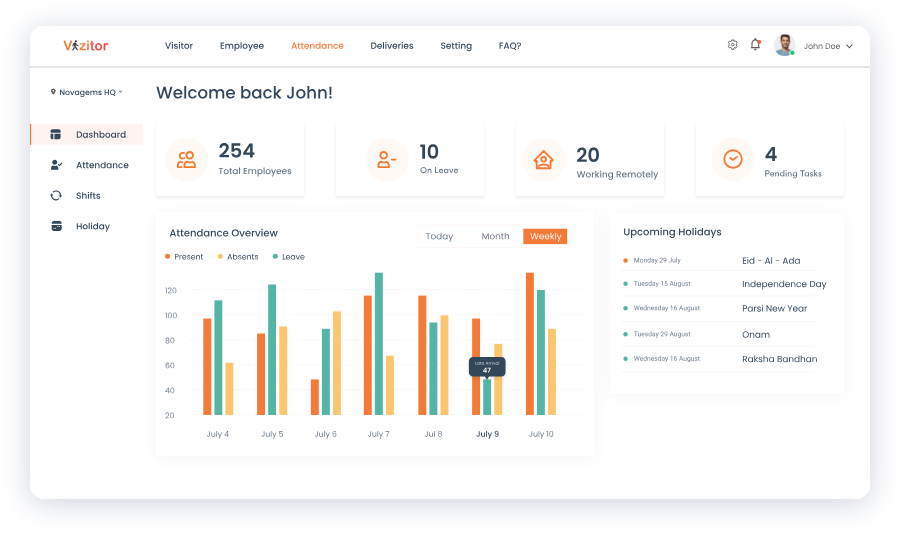
Real-Time Dashboard: Live visibility into who is on-site, who is absent, who is on leave, and who is approaching overtime thresholds, across all locations from a single interface.
Pricing: Vizitor starts at $20 per month. A free trial is available with no credit card required.
See how Vizitor tracks employee time and attendance
Join 2,000+ workplaces using Vizitor to automate time tracking, manage shifts, and generate payroll-ready exports. Free trial, no credit card required.
Book a DemoHomebase: Strong Choice for Small Businesses in Retail and Hospitality
Homebase is a strong option for small businesses, particularly in the restaurant and retail sectors. Its free tier is more generous than most competitors, covering scheduling, time tracking, and basic HR functions for a single location.
What Homebase does well:
The mobile app allows staff to clock in and out using PIN codes with GPS functionality. Per-location pricing makes it practical for businesses planning to grow within a single site without paying per-seat fees that escalate with headcount. Job posting, applicant tracking, and basic onboarding tools make it a useful starting point for businesses that want integrated HR functionality without a full HR platform.
Limitations: Homebase does not offer client invoicing or project-based billing. Its compliance capabilities are relatively basic. Organizations with complex shift rules, multi-location operations at scale, or compliance requirements in regulated industries will find its feature set insufficient.
Best fit: Small businesses in hospitality, retail, or services with straightforward scheduling needs and a single location.
Clockify: Flexible Option for Freelancers and Project-Based Teams
Clockify is built around project-based time tracking rather than shift management or workforce compliance. Its free tier supports unlimited users and projects, making it an attractive entry point for freelancers and agencies that need to track time by client or project.
What Clockify does well:
The interface is simple and the cross-device experience is consistent. Time can be tracked on mobile devices, computers, and web browsers. Project and task tagging allows detailed reporting on where time is actually spent.
Limitations: Clockify lacks the shift scheduling, biometric authentication, and payroll integration capabilities that businesses managing hourly workforces need. Its compliance features are minimal. It is not designed for attendance management in the traditional employment sense.
Best fit: Freelancers, agencies, and knowledge workers who need to track billable time by project rather than manage employee attendance.
When I Work: Scheduling-First for Hourly Workforces Across Locations
When I Work is built for startups and growing businesses managing hourly employees across multiple physical locations. Its strength is the combination of scheduling and time tracking in a mobile-first interface.
What When I Work does well:
The time clock app handles employee scheduling and attendance in an integrated workflow. Team messaging features reduce the back-and-forth of schedule coordination. Export functionality allows attendance data to flow into payroll software.
Limitations: Occasional interface issues have been reported. The feature set, while solid for scheduling and basic time tracking, does not extend to the deeper compliance and access control integration that regulated industries require.
Best fit: Startups and growing retail or service businesses managing hourly employees across two to ten locations.
Fingercheck: All-in-One HR for Small Businesses That Need Payroll Integration
Fingercheck differentiates itself by bundling time tracking with hiring, onboarding, benefits management, and payroll in a single platform. For small businesses that want to avoid managing multiple separate HR tools, this integration is genuinely useful.
What Fingercheck does well:
The mobile app tracks time with GPS features, allowing employees to view schedules, request time off, and run payroll on the go. The benefits management module handles insurance policies and employee benefits in the same system as time tracking.
Limitations: Fingercheck’s pricing is higher than most time tracking specialists. The integration between modules is good but not perfect; some users report friction when data needs to flow between the time tracking and payroll components.
Best fit: Small businesses that want a single vendor for time tracking, benefits, and payroll rather than separate specialized tools.
ClickTime: Built for Nonprofits and Project Budget Tracking
ClickTime is designed specifically for nonprofit organizations and project-oriented teams that need to track time against budget allocations. Its discounted pricing for nonprofits and grant-tracking features make it a practical choice for organizations in that sector.
What ClickTime does well:
Quick expense tracking, project budget visibility, and mobile accessibility cover the core needs of nonprofits and grant-funded organizations. The interface provides clear visibility into project assignments and hour allocations.
Limitations: ClickTime lacks the shift scheduling, biometric clock-in, and workforce compliance features needed for hourly workforce management. It is purpose-built for salaried knowledge workers tracking project time, not for managing shift-based attendance.
Best fit: Nonprofits and agencies that need to track billable time against project budgets for grant compliance or client reporting.
LawBillity: Time Tracking and Billing for Legal Professionals
LawBillity integrates time tracking with legal billing workflows, including LEDES and LSS invoice formats used in the legal industry. This specialization makes it the right tool for law firms and legal agencies, and the wrong tool for most other organizations.
What LawBillity does well:
The mobile app tracks time and expenses and generates legal invoices with offline functionality. The billing workflows are designed around the specific formats and requirements of legal billing rather than being adapted from a general-purpose tool.
Limitations: LawBillity’s reporting customization is limited. It is not designed for workforce attendance management, shift scheduling, or the compliance requirements of industries outside legal services.
Best fit: Law firms, legal departments, and legal agencies billing by the hour.
How to Choose the Right Time Tracking App for Your Business
The right choice depends on your primary operational requirements. Here is a practical framework:
If your primary need is accurate workforce attendance for hourly or shift-based employees: Vizitor. The combination of biometric authentication, geo-fencing, shift management, payroll integration, and compliance reporting covers the full attendance management workflow.
If you are a small business in hospitality or retail with simple scheduling needs: Homebase provides a solid free tier for single-location operations.
If you manage freelancers or project-based teams that need to track billable hours: Clockify’s free tier handles unlimited projects and users without complexity.
If you are managing hourly employees across multiple locations and scheduling is the primary challenge: When I Work balances scheduling and time tracking well for growing multi-location operations.
If you want a single platform for time tracking, payroll, and benefits management: Fingercheck integrates these functions in one system, at a higher price point.
If you are a legal firm or nonprofit with specialized billing or grant-tracking needs: LawBillity and ClickTime respectively address these niche requirements.
Key Factors to Evaluate for Any Time Tracking Decision
Regardless of which platform you evaluate, these dimensions should anchor your assessment:
User-friendly interface: A time tracking app that employees find confusing or inconvenient will be used inconsistently, defeating its purpose. Evaluate the employee-facing interface as carefully as the manager dashboard.
Compatibility: The app needs to work on the devices your employees actually use, including older Android devices if your workforce includes field teams with company-issued phones.
Integration with existing tools: The value of time data depends on how cleanly it flows into your payroll system, HR platform, and project management tools. Evaluate integration depth, not just the existence of an integration.
Reporting and analytics: Beyond raw time records, look for reporting that surfaces meaningful patterns: departments with high overtime, projects running over budget, teams with recurring attendance gaps.
Flexibility in tracking methods: Different parts of your workforce may need different clock-in options. A platform that supports biometric, mobile, QR, and web clock-in methods handles workforce heterogeneity better than one that only offers a single method.
Customer support: When something goes wrong at the start of a pay period, response time from support matters. Evaluate the support model: live chat, phone, or email only?
FAQ
What is the difference between time tracking and attendance management?
Time tracking records when an employee starts and stops working, often at the task or project level. Attendance management covers the broader workforce context: scheduled vs. actual attendance, leave balances, shift compliance, overtime tracking, and payroll-ready reporting. Most businesses need both, and the best platforms integrate them.
How do time tracking apps prevent buddy punching?
Biometric authentication, specifically fingerprint or facial recognition, ties each clock-in record to the specific employee’s physical presence. This makes it technically impossible for one employee to clock in for another. QR code systems can be reinforced with selfie verification for a similar effect.
Can employee time tracking apps handle remote and field workers?
Yes, through mobile apps with geo-fencing. Employees clock in from their mobile devices, and the system records their GPS location at the time of the entry. Geo-fencing rules can require employees to be within a defined radius of an authorized work location to successfully clock in.
How do I migrate from manual timesheets to a digital time tracking system?
Start by configuring your employee list and shift rules in the new system. Run the new system in parallel with your existing process for one pay period to identify any discrepancies and build confidence before cutting over entirely. Most platforms, including Vizitor, offer implementation support to smooth this transition.
What should I look for in payroll integration?
Confirm that the time tracking platform exports in a format compatible with your payroll provider, with overtime, differentials, and deductions pre-calculated. Verify that the integration handles exceptions, including missing clock-outs and pending leave approvals, in a way that does not require manual intervention for every anomaly.
Is a free time tracking app adequate for a business with 20+ employees?
For simple, single-location businesses with basic tracking needs, a free tier may be sufficient in the early stages. As headcount grows and operational complexity increases, the limitations of free tiers (typically single-location support, limited compliance features, and minimal reporting) become constraints. Most businesses with 20+ employees find the investment in a paid platform pays back quickly through reduced payroll errors and administrative time savings.
Efficient time tracking is one of the most direct levers available for controlling labor costs, improving payroll accuracy, and maintaining workforce compliance. The right app for your business depends on your workforce type, operational complexity, and integration requirements.
For organizations that need a complete attendance management platform with security, compliance, and payroll integration built in, Vizitor’s attendance management system covers the full workflow. See our related guides on why your business needs an attendance management system and ways to improve punctuality in the workplace for more context.
Try Vizitor Free
No credit card required. Setup in under 5 minutes. Manage visitors, queues, meeting rooms, and more.
Start Free TrialSee Vizitor in action check-in a visitor in under 30 seconds
Trusted by 500+ businesses. QR check-in, badge printing, NDA signing. Plans from $36/mo.