Published on: Tue, Mar 24, 2026
Read in 9 minutes
Global uncertainty is once again making headlines. Rising conflict risks, supply chain disruptions, and renewed discussions around potential lockdowns are prompting businesses to reconsider their adaptability.
Here’s the uncomfortable truth: when uncertainty strikes, most workplaces are unprepared. Offices built for stability often struggle to adapt to sudden changes such as spikes in hybrid work, restricted access, or unpredictable employee movement. The outcome is confusion, wasted space, and decreased productivity, precisely when control is most needed.
And this isn’t just about extreme scenarios. Even without a crisis, your workplace likely faces the same problem every day. Poor visibility into space usage, inefficient layouts, and disconnected systems quietly drain efficiency and increase costs.
This is where Space Management Software becomes critical. In this guide, you’ll see how a modern space management system helps you stay agile, optimize every square foot, and keep your workplace running efficiently no matter what changes around you.
Most companies assume they have a space problem.
They don’t.
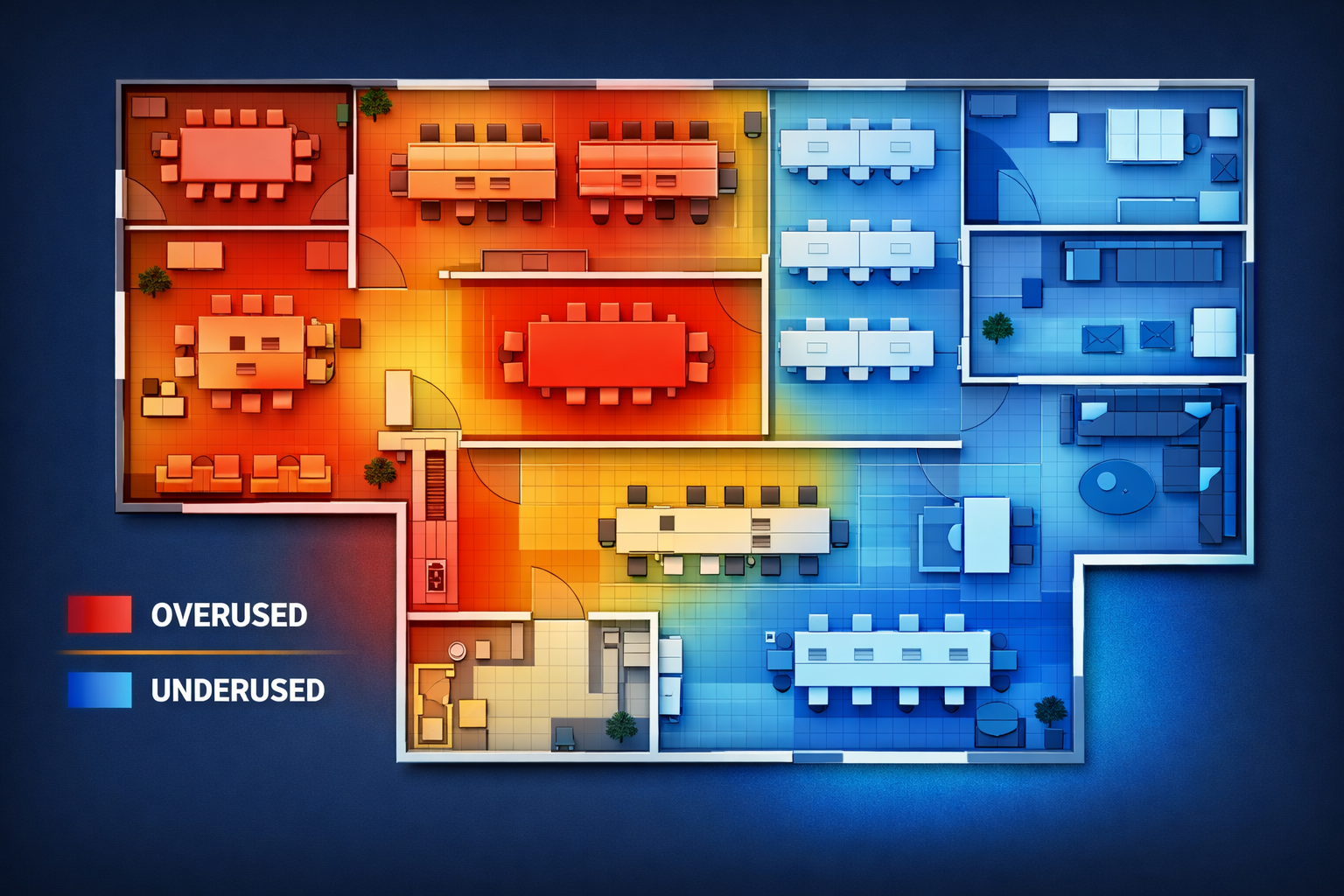
They have a visibility problem.
You’re likely paying for:
Without a space management system, decisions are based on assumptions, not data.
And assumptions are expensive.
Every square foot you don’t track is a cost you can’t justify.
Hybrid work was supposed to reduce costs and increase flexibility.
In reality, for many businesses, it created chaos.
Here’s the issue. You adopted hybrid work, but your workplace never adapted to hybrid behavior.
That gap is exactly where efficiency collapses.
A modern workspace management software closes that gap by aligning space with actual usage, not outdated assumptions.
If you’re still thinking of space management software as a booking tool, you’re underestimating it.
A true space management system gives you:
This is operational control, not just convenience.
Let’s make this a little uncomfortable, because this is where most of the hidden loss sits.
Office space in major US and UK cities is one of your highest fixed costs. Yet a surprising portion of it isn’t doing any real work.
Here’s what’s actually happening behind the scenes:
This creates a dangerous illusion. On paper, your office looks “fully utilized.” In reality, you’re paying premium rent for space that delivers zero return.
Without a space management system, there’s no way to challenge these assumptions. You can’t prove what’s underused, so you keep paying for it.
What this really means is simple. You’re not just wasting space. You’re locking capital into something you don’t need.
A data-driven workspace management software changes that instantly. It shows exactly what’s being used, when, and how often, so you can reduce, redesign, or repurpose space with confidence.
This one doesn’t show up on your balance sheet, which is why it’s ignored. But it quietly drains more money than you think.
Think about a typical workday:
Each of these feels small. But stack them across weeks and teams, and the cost becomes real.
Time lost becomes:
And here’s the bigger issue. This kind of friction frustrates employees. It chips away at their experience and makes the workplace feel disorganized.
A strong workspace management software removes this friction completely.
Employees know where they’re sitting before they arrive. Rooms are booked with real-time availability. Teams coordinate better because the system does the heavy lifting.
You’re not just saving time. You’re protecting productivity at scale.
This is the cost most businesses underestimate.
Your office is a physical representation of your brand. And the moment a visitor walks in, they’re forming an opinion.
Now picture this:
It doesn’t matter how strong your product or service is. That first impression sticks.
Clients, partners, and candidates expect efficiency. If your front desk feels chaotic, it signals deeper operational gaps.
This is where most businesses miss the connection.
Individually, these problems seem manageable.
Together, they create a system that leaks money every single day.
This is exactly why combining space management software with visitor management is no longer optional.
It’s how modern workplaces move from guessing to knowing, from reacting to controlling, and from wasting resources to actually optimizing them.
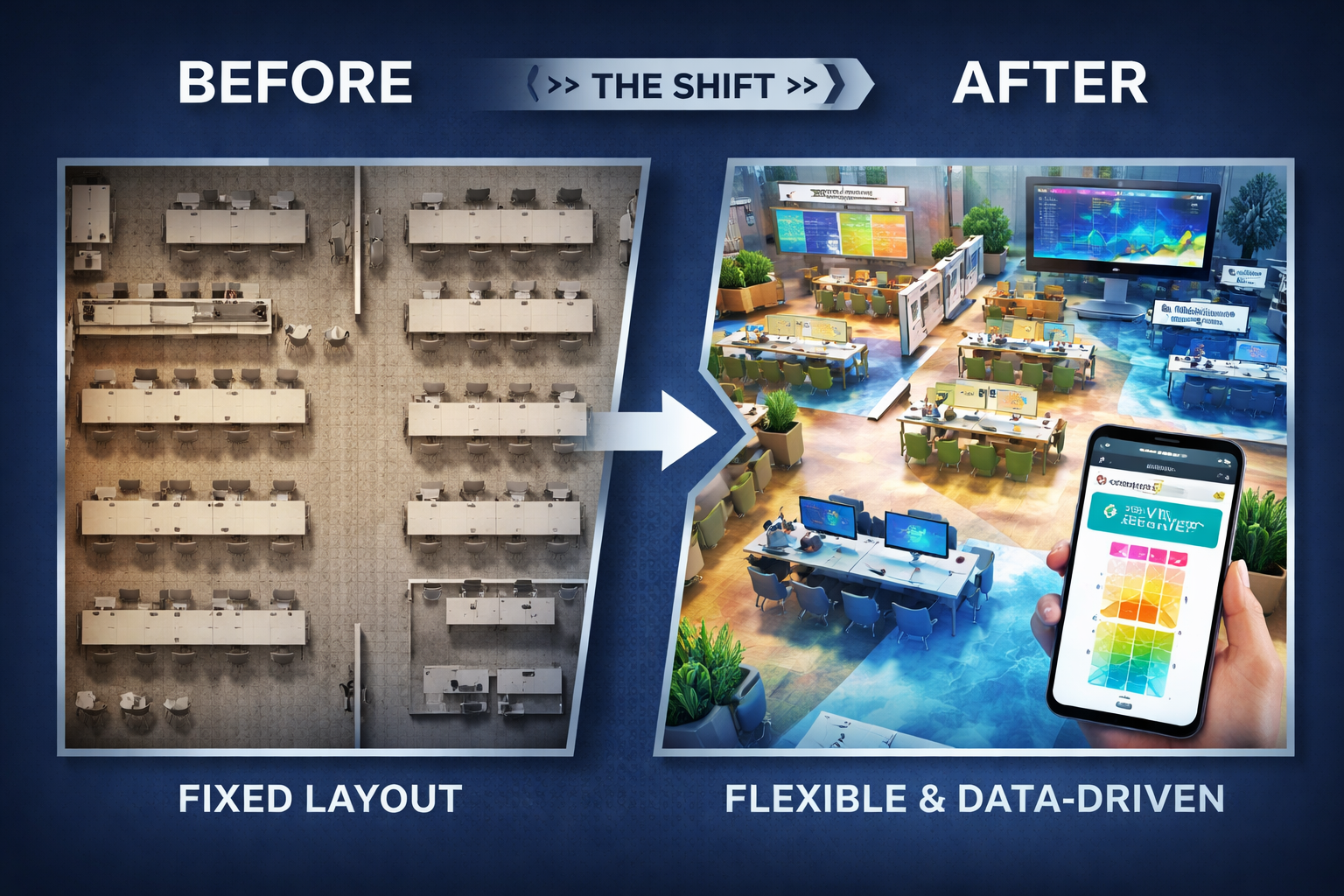
Here’s what efficient workplaces are doing differently in 2026:
They treat office space like a dynamic asset, not a fixed cost.
With the right workspace management software, you can:
Let’s cut through the noise.
Most space management software promises efficiency. Very few actually give you control.
This is where Vizitor stands apart. It’s not just another space management system trying to fix one part of your workplace. It connects the entire experience, from how space is used to how people move through it.
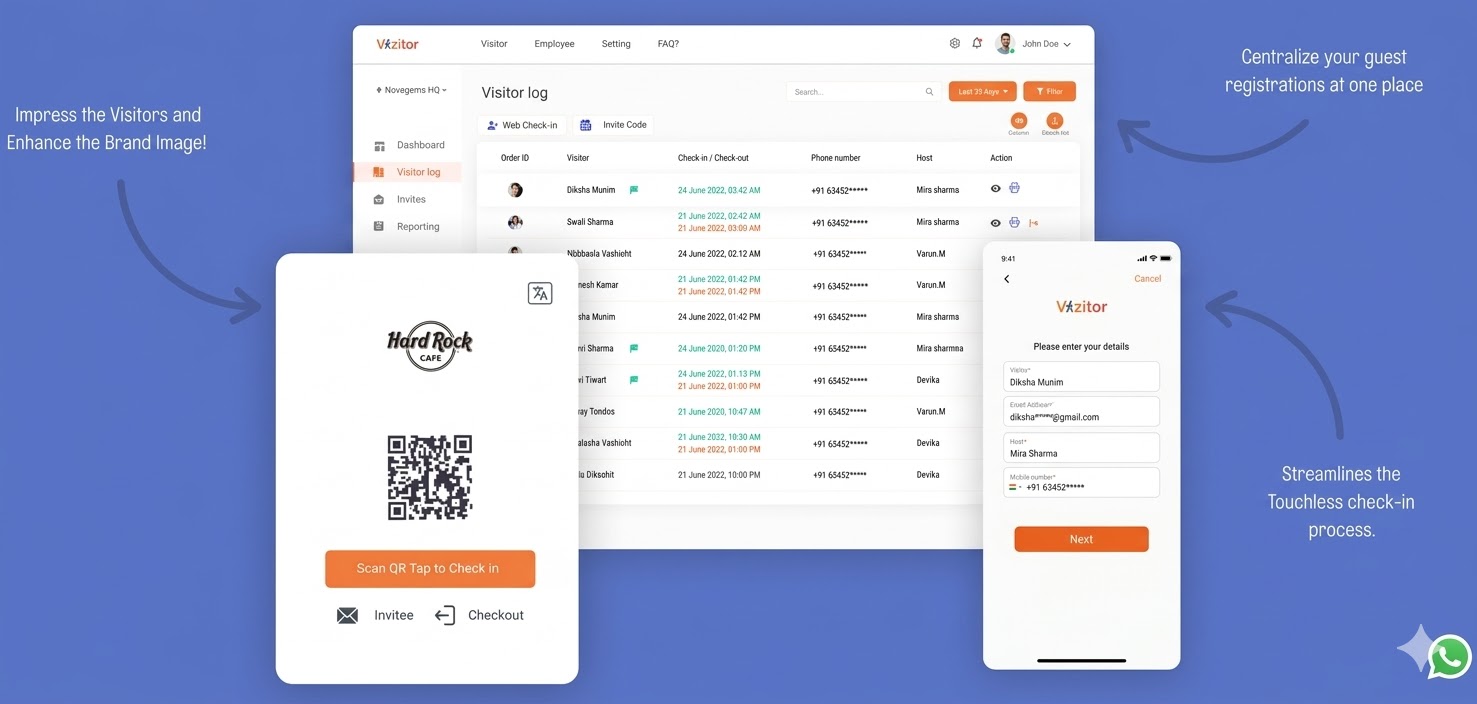
And that’s exactly what businesses need right now.
Most tools will tell you how many desks you have.
Vizitor tells you:
This isn’t static reporting. It’s live visibility.
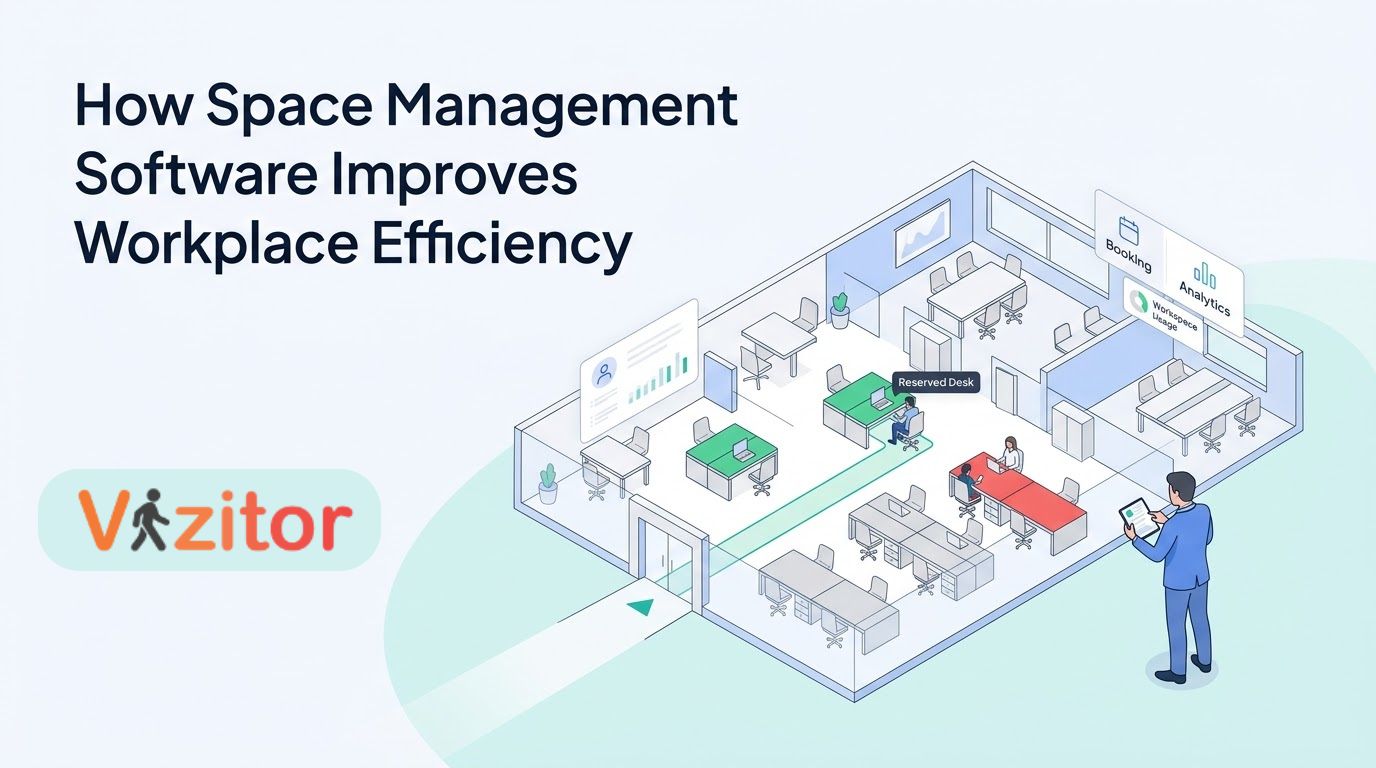
Vizitor provides real-time space utilization tracking and interactive workspace visualization, so you can identify underused areas and optimize layouts immediately instead of guessing
What this really means is simple.
You stop making decisions based on assumptions and start making them based on data.
Most workplace inefficiencies aren’t dramatic. They’re subtle, repetitive, and frustrating.
Vizitor removes this friction.
Employees can:
The system ensures conflict-free scheduling and smooth coordination across teams, reducing wasted time and improving productivity
Here’s where most tools fail.
They were designed for fixed offices and later adjusted for hybrid work.
Vizitor is built for flexibility from the start.
It allows businesses to manage hybrid work environments efficiently by aligning space with real usage instead of fixed assumptions
This is where Vizitor becomes difficult to replace.
Most space management software stops at desks and rooms.
Vizitor connects:
All within one platform.
It offers a centralized system to monitor and manage all workplace resources from a single dashboard, improving coordination and efficiency across operations
This matters because real efficiency doesn’t come from isolated tools.
Data is useless if it just sits on a dashboard.
Vizitor converts usage data into actionable insights:
It provides detailed reports and analytics that help organizations make informed decisions about space utilization and future planning
Here’s the balance most businesses struggle with.
Reduce costs without damaging employee experience.
Vizitor helps you:
By improving space utilization, it reduces operational costs while supporting a more efficient and productive environment
So you’re not downsizing blindly
Most businesses don’t stay static.
You expand. You restructure. You adapt.
Vizitor is designed to scale with you.
It’s built to manage both small setups and large, multi-floor environments without losing efficiency
Here’s the bottom line.
You don’t fix workplace inefficiency by adding more space. That approach just increases your costs while the same problems continue underneath.
You fix it by understanding how your space is actually being used and taking control of it.
Right now, there are decisions being made inside your workplace without clarity. Desks are assigned but unused. Meeting rooms are blocked but empty. Entire sections of your office are costing you money without delivering any value.
And none of it is visible unless you have the right system in place. The longer this continues, the more it compounds.
You’re not just losing space. You’re losing productivity, time, and control over how your workplace operates. Small inefficiencies stack up quietly until they become expensive problems that are harder to fix later.
A modern workspace management software gives you that visibility. A connected space management system gives you control. And when you combine it with a visitor management solution like Vizitor, your entire workplace starts working as one coordinated system instead of disconnected parts.
Book a demo with Vizitor and see how a connected workspace management software and space management system can give you complete control over your workplace operations without increasing your overhead.
No. Mid-sized and growing businesses benefit the most because inefficiencies hit them harder as they scale.
In many cases, within months through reduced space costs and improved utilization.
That’s exactly where it delivers the most value. It aligns office space with unpredictable employee schedules.
Yes. In fact, combining both creates a complete workplace management ecosystem.
Modern tools are designed for fast deployment with minimal disruption.