A visitor management system digitizes the visitor check-in process, replacing manual registers with secure, real-time tracking and automated host notifications. It improves reception/front desk management by reducing check-in time, enhancing security visibility, and supporting compliance. In India, growing workplaces are adopting digital visitor management to handle scale, improve visitor experience, and strengthen operational control.


Published on: Thu, Feb 12, 2026
Read in 5 minutes
Let’s start with something honest.
Most offices in India didn’t wake up one morning thinking, “We need a visitor management system.”
They reached that point because something broke.
A long queue formed at reception.
A VIP waited too long.
An audit asked for visitor records no one could find quickly.
Or someone asked the uncomfortable question:
“Do we actually know who is inside our building right now?”
That’s when reception/front desk management stops being routine and starts becoming operational.
And that’s where a visitor management system comes in.
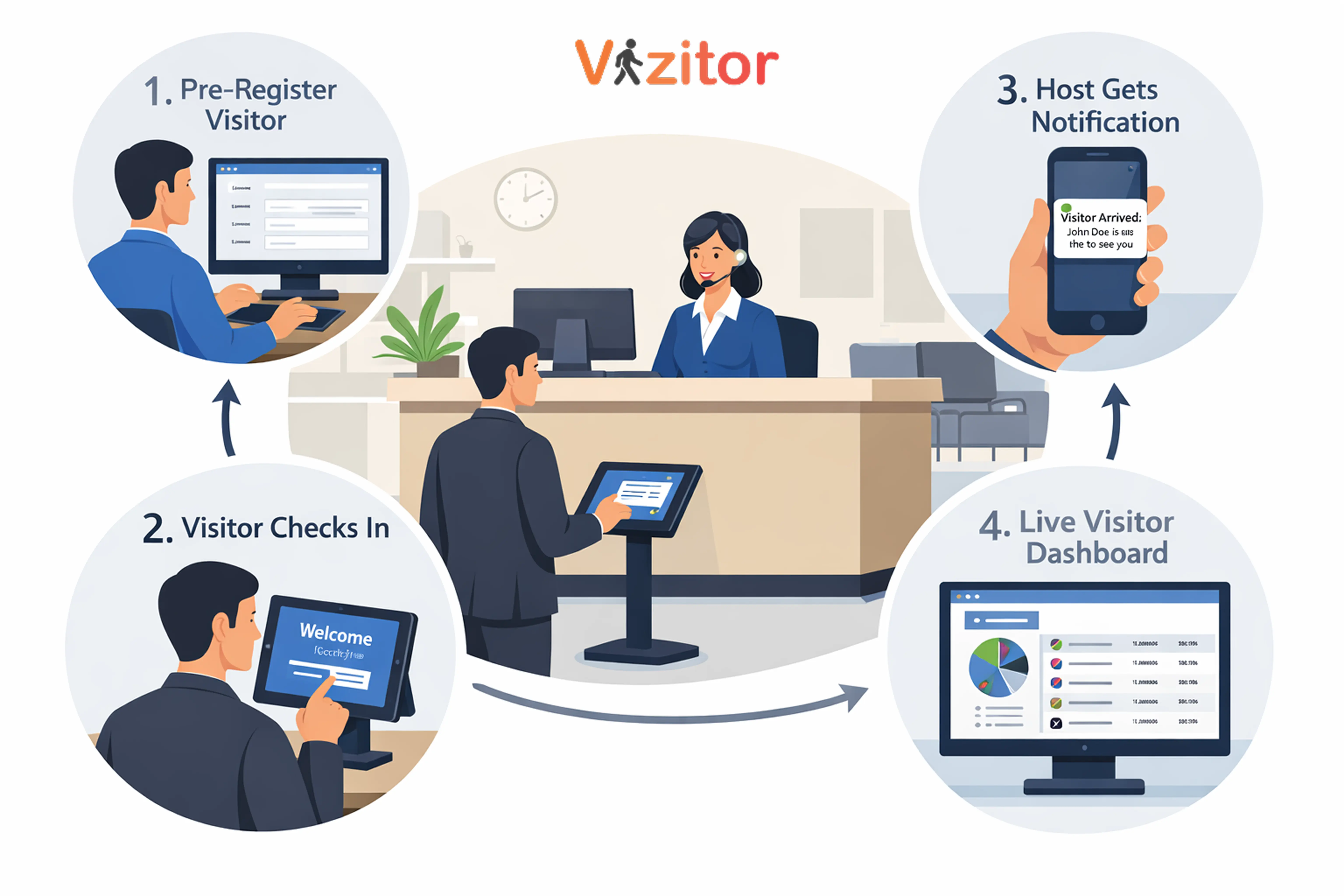
At its core, a visitor management system replaces manual visitor registers with a structured, digital process.
Instead of handwriting names in a logbook, visitors check in through a digital interface. Their information is captured, securely stored, and made instantly visible to authorized teams.
But that’s the technical explanation.
In reality, here’s what happens.
Most of the visits in modern organizations, particularly in emerging organizations in India, are planned.
With a visitor management system:
When the visitor arrives at the reception area, the system is aware of their arrival already.
Mere clicking away. No scrambling. No repetition.
From the perspective of front/reception desk management itself, this would significantly alleviate pressures even during peak hours.
When the visitor arrives, instead of signing a physical register:
This process usually takes less than one minute.
There is no handwriting to wonder about later on. No missing phone numbers. No ambiguous company names.
For the reception teams, it means:
Less manual data entry.
Fewer interruptions.
Clear control over visitor flow.
This is the part many organizations in India underestimate.
A visitor management system doesn’t just record entries.
It shows who is currently inside.
Facilities, security, or operations teams can see:
In emergency scenarios, this real-time visibility becomes critical.
Paper registers simply cannot provide this.
Data privacy is no longer a concern exclusive to the West.
There is also increased awareness regarding digital governance and enterprise compliance in India, and open registers carrying personal information pose threats.
A digital visitor management system:
This level of control is also an expectation for organizations working with clients, vendors, consultants, or auditors. Not optional.
The rise of the visitor management system in India is not based on trends; it is based on scale.
Indian workplaces are:
Those manual reception processes, while acceptable for 20 visitors a day, cannot now cope at 200.
Digital systems provide predictability where there was friction.
Here’s something important.
A visitor management system does not replace reception teams.
It reduces their administrative burden.
Instead of:
They focus on:
Modern reception/front desk management is no longer about paperwork.
It’s about control, coordination, and experience.
Not all systems are equal.
A well-designed visitor management system should:
In the Indian market, scalability and adaptability are especially important because businesses grow quickly and expand across regions.
When organizations evaluate visitor management software, they often look at pricing first.
But the real value shows up in:
These improvements compound over time.
Technically, it digitizes check-in and stores visitor records.
Operationally, it transforms reception/front desk management from reactive paperwork to proactive control.
And strategically, especially in the context of a growing visitor management system in India market, it becomes part of the organization’s security and compliance backbone.
Paper registers worked for a different era.
Modern workplaces need something more structured.
See how a modern visitor management system fits seamlessly into your front desk operations.
[](https://www.vizitorapp.com/contact/)
A visitor management system is a digital solution that replaces manual visitor logs, automates check-ins, notifies hosts, and provides real-time visibility of on-site visitors.
With growing enterprise scale, compliance awareness, and higher visitor traffic, organizations in India require structured, secure visitor tracking beyond paper registers.
No, It reduces administrative tasks and enables reception teams to focus on visitor experience and operational control.
Costs vary, but compared to security risks and inefficiencies of manual logs, digital visitor management offers measurable operational ROI.
Yes, Even smaller workplaces benefit from faster check-ins, improved professionalism, and better recordkeeping.