Conference Room Names: Ideas That Actually Work
This article explains what makes a conference room name effective, then offers 20 creative ideas organized by theme plus five virtual meeting name ideas. It covers common naming mistakes, when renaming rooms genuinely doesn't matter, and how to keep names useful once they're picked.


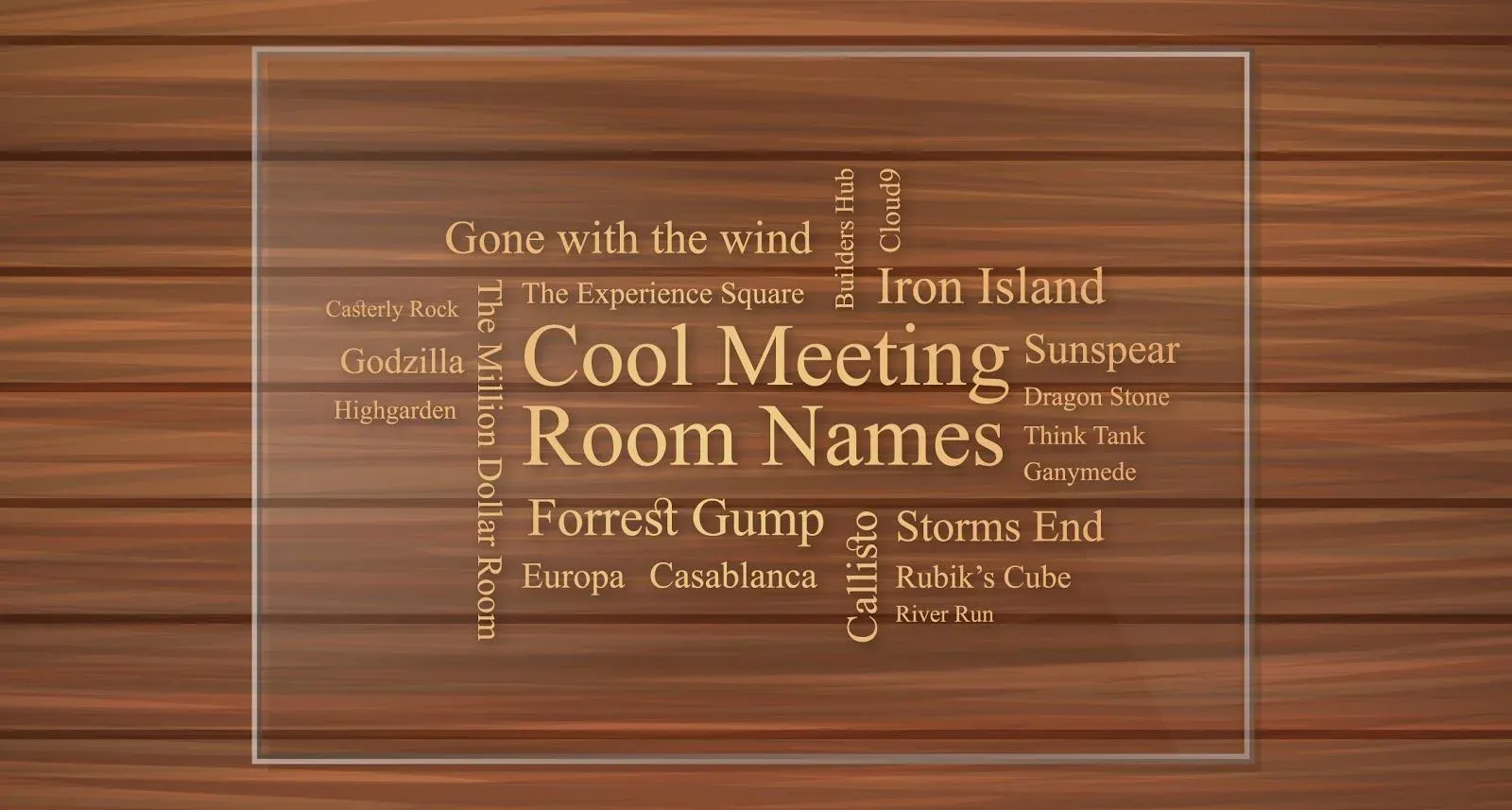
Table of Content
Try Vizitor for Free!
A conference room name is simply what you call a meeting space instead of its room number, “The Think Tank” instead of “Room 4.” It matters because the name shapes how people feel about the meeting before they’ve even sat down: a room called “Meeting Room 3” reads as forgettable, while “The War Room” tells people what kind of conversation to expect.
This guide covers what makes a name work, how to pick ones that fit your company instead of copying a competitor’s list, 20 ideas organized by theme, five ideas for virtual meeting rooms, the naming mistakes that quietly annoy employees, and the honest cases where renaming your rooms isn’t worth the effort.
What makes a good conference room name
A conference room name isn’t just decoration. It affects three things: mood, memory, and brand.
On mood: walking into “The Innovation Hub” primes a different mindset than walking into “Meeting Room 1.” The name sets an expectation for what kind of conversation belongs in that room, whether that’s fast decisions, quiet focus, or open brainstorming. Pairing a strong name with a space that’s actually built for its purpose helps more; see this list of conference room ideas for the physical side of that equation.
On memory: a name is easier to recall than a number, especially once an office has more than four or five rooms. “Meet me in the Brainstorm Bay” sticks in a way “Meet me in Room 4B” doesn’t.
On brand: names can reflect what a company actually values. A team that leads with innovation might name rooms after inventors or breakthrough ideas. A team built on collaboration might lean into names that signal openness and teamwork. Either way, the name should say something true about the company, not just sound clever.
Why conference room names affect meetings
A well-chosen name changes workplace dynamics in a few concrete ways.
It raises engagement. A team walking into “The Innovation Hub” shows up a little more alert than a team walking into “Meeting Room 3.” The effect is small, but it’s real, and it costs nothing to capture.
It reinforces culture. A tech company naming a room “The Code Lab” and a marketing agency naming one “The Storytelling Suite” are both using the room to say something about who they are, to employees and to visitors.
It improves navigation. “Meet me in The Strategy Room” is clearer than “Meet me in Room 4,” provided the name stays consistent everywhere it’s used, including your meeting room booking process and every calendar invite generated from it.
It sets the tone for the work. A room named “The Think Tank” nudges people toward problem-solving. A room named “The Focus Room” signals a distraction-free zone before anyone says a word.
It makes meetings a little more enjoyable. A name like “The Negotiation Nook” or “The Brainstorm Bay” adds a small amount of personality to a part of the day that can otherwise feel like pure routine.
Named your rooms? Now manage bookings automatically
Vizitor's meeting room booking system lets teams reserve named rooms in seconds, shows real-time availability on door displays, and syncs two-way with Google Calendar and Microsoft Outlook.
Explore Meeting Room Booking Book a DemoHow to choose names that fit your company
Match your culture. A law firm naming a room “The Verdict Room” and a startup naming one “The Hustle Hub” are both doing this right, because the name matches how each company actually talks about itself.
Keep it short. “The Vault” beats “The Visionary Strategic Planning Vault.” If a name takes more than two seconds to say out loud, it’s too long for a calendar invite.
Pick one theme and stick to it. A consistent theme, whether that’s innovation, nature, technology, or pop culture, makes an entire floor of rooms easier to learn as a set instead of memorizing each name individually. A few starting points:
- Innovation: Tesla, Edison, Curie
- Nature: Redwood, Everest, Oasis
- Technology: Algorithm, Code Lab, AI Hub
- Pop culture: The Jedi Council, The Hogwarts Hall, The Matrix Room
Leave room for a little humor. “Ctrl + Alt + Del” for an IT team or “The War Room” for a strategy team both work because they’re specific to how that team actually talks, not generic wordplay.
Ask the people who’ll use the rooms. A short survey or a five-minute brainstorm gets you names people will actually use, instead of names a single person picked in isolation and everyone else quietly ignores.
20 conference room name ideas by theme
Innovation and creativity
- The Innovation Hub
- The Think Tank
- The Idea Factory
- The Visionary Vault
- The Pioneer Pavilion
Collaboration and teamwork
- The Collaboration Suite
- The Collaboration Cove
- The Brainstorm Bay
- The Strategy Station
- The Unity Room
Productivity and growth
- The Achievement Arena
- The Growth Hub
- The Solution Space
- The Focus Room
- The Strategy Room
Pop culture and fun
- The Jedi Council
- The Hogwarts Hall
- The Avengers HQ
- The Matrix Room
- The Game of Thrones Chamber
Zoom and virtual meeting room names
Virtual meeting rooms benefit from names too, especially in hybrid teams where the same “room” shows up in a calendar invite dozens of times a week.
- The Digital Den
- The Virtual Collaboration Corner
- The Strategy Suite
- The Focus Zone
- The Collab Corner
Common naming mistakes to avoid
Naming a room after a current employee. It feels personal when you do it, and awkward the day that person leaves the company or moves teams. Name after neutral concepts, not people who might not be there in a year.
Choosing names that only make sense to one team. An inside joke can be a great name for the team that gets it and a source of daily confusion for reception, visitors, or anyone from another department trying to find the room.
Picking names that sound too similar. “The Innovation Hub” and “The Innovation Room” in the same office is a booking mix-up waiting to happen. Keep names distinct enough that nobody has to double-check which one they meant.
Renaming the sign but not the booking system. If the plaque on the door says “The War Room” but the calendar system still lists “Conference Room 4,” people end up in the wrong place. Update the name everywhere it’s used, including your meeting room booking software, on the same day.
Forcing a theme that doesn’t fit. A conservative professional-services firm naming rooms after superhero franchises usually reads as try-hard rather than fun. Pick a theme that matches how the company already talks about itself, not one borrowed from a listicle.
When renaming your rooms doesn’t matter much
A single-room office with one meeting space doesn’t need a naming project; “the meeting room” already does the job.
A fully remote team that meets in person only a few times a year gets little return on a clever naming scheme for physical rooms nobody uses daily. Put the effort into the virtual room names instead, since those get used constantly.
A company mid-reorg, mid-office-move, or without a settled culture yet is better off waiting. Naming rooms works best once there’s an actual identity to reflect; naming them too early just means renaming them again in six months.
And if the real problem is that meetings run late, rooms get double-booked, or nobody can tell which rooms are free, a name won’t fix any of that. That’s a scheduling and visibility problem, and worth solving on its own; this rundown of common conference room struggles covers the usual causes.
Keeping names useful after you’ve picked them
A name only pays off if people actually encounter it consistently.
Put up clear signage, whether that’s a simple plaque, wall art, or a digital display outside the door. Update every calendar system and booking tool with the new name on the same day you announce it, so nobody’s working from two different lists. If a room’s name implies a purpose, like “The Focus Room,” try to keep the room itself matching that purpose rather than letting it become the default overflow space for whatever meeting doesn’t fit elsewhere. And check in with the team after a few months: if a name never comes up naturally in conversation, that’s a sign it needs adjusting, not that people just need more time to get used to it.
Small, consistent effort here matters more than a clever initial name.
If you’re ready to rename your rooms, the fastest way to avoid the “sign says one thing, calendar says another” problem is to update your rooms in your booking system first, then work backward to signage.
Try Vizitor Free
No credit card required. Most teams are live in under 30 minutes. Manage visitors, meeting rooms, queues, and more.
Start Free TrialFrequently Asked Questions
They replace a forgettable number with something people actually remember and enjoy saying. 'The War Room' or 'The Think Tank' primes the mood before anyone sits down, and a consistent naming system makes it faster for staff and visitors to find the right room without checking a directory.
It helps with navigation and brand consistency, but it isn't mandatory. A shared theme, whether that's local geography, company history, or a running joke, makes rooms easier to remember as a set. Mixing themes room by room usually just makes the office harder to navigate.
Keep them short and functional since they show up in calendar invites and screen shares: The Digital Den, The Virtual Huddle, The Strategy Suite, The Focus Zone, and The Collab Corner all work without needing further explanation.
Naming a room after a current employee or executive. It feels personal at first and gets awkward the moment that person leaves the company or the room gets used for something unrelated to them.
Update the room name everywhere it's booked, not just on the door. If the name in your meeting room booking software doesn't match the sign or the calendar invite, people end up in the wrong room or double-booking the right one.
Yes. A single-room office, a fully remote team that rarely meets in person, or a company mid-reorg with no settled culture yet are all cases where a numbered room is fine and a naming project is better spent on something with a bigger payoff.
See Vizitor in action check-in a visitor in under 30 seconds
Trusted by 500+ businesses. QR check-in, badge printing, NDA signing. Plans from $36/mo.