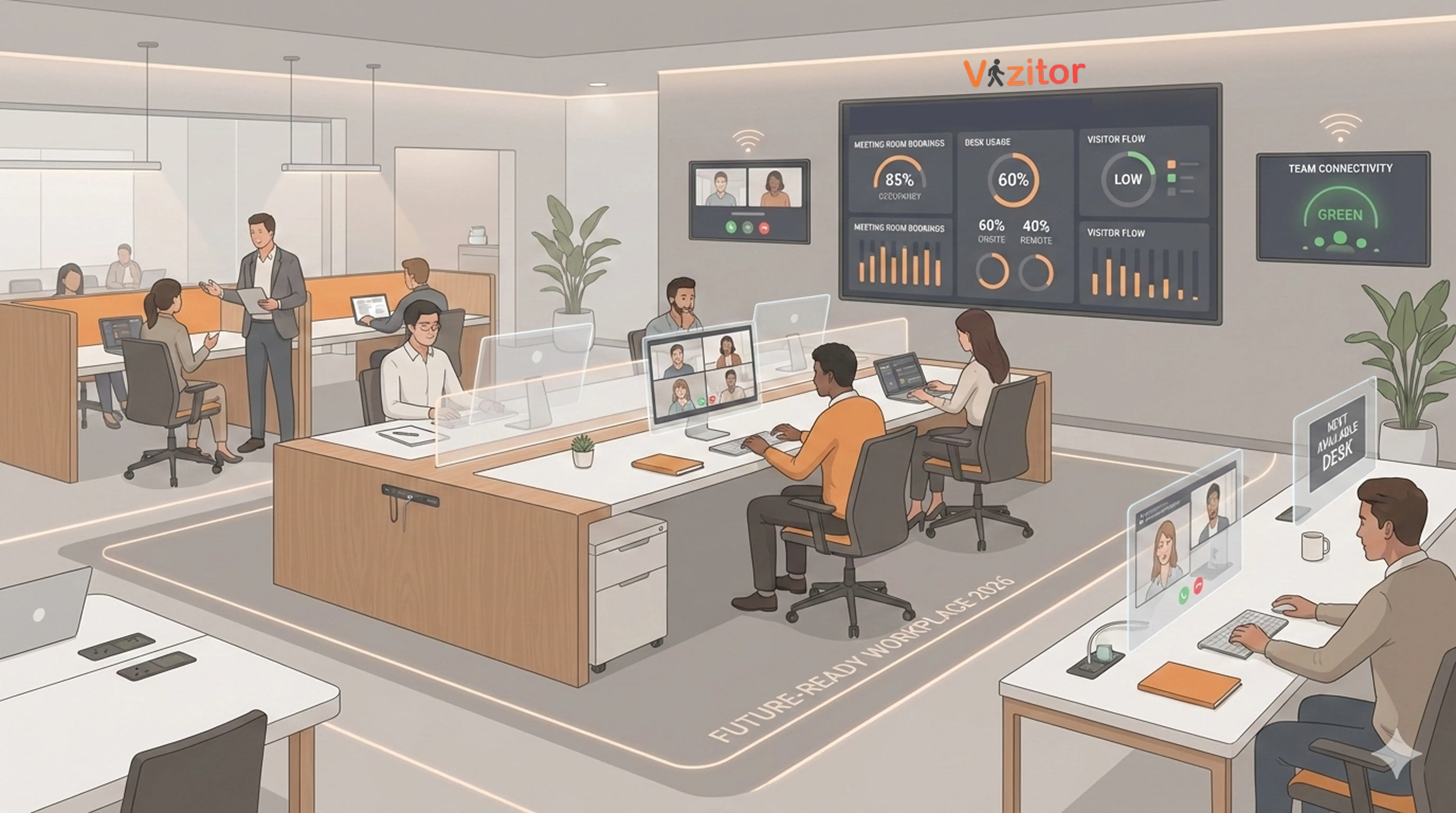
A practical overview of 2026 workplace trends, covering hybrid operations, office readiness, visitor experience, meeting spaces, and technology shaping modern workplaces globally.


Published on: Wed, Dec 31, 2025
Read in 6 minutes
The workplace in 2026 looks very different from what it was just a few years ago.
Not because of flashy perks or office redesigns, but because expectations have fundamentally changed.
Employees expect workspaces to be flexible, predictable, and frictionless.
Leaders expect operations to scale without chaos.
And organizations expect workplaces to support productivity, security, and experience at the same time.
These shifts are shaping the most important workplace trends of 2026, trends that go beyond buzzwords and directly impact how work gets done.
Earlier workplace trends focused heavily on culture, perks, and flexibility narratives.
In 2026, the focus has moved closer to the ground.
Workplace trends today are about:
In short, experience is now built through operations, not policies alone.
By 2026, hybrid work is no longer a benefit. It is the standard operating model.
Employees move fluidly between:
This means workplaces must:
Organizations that still treat hybrid schedules informally often face confusion, overcrowding, or underutilized offices. In contrast, mature workplaces treat hybrid work as an operational discipline, not an informal agreement.
In 2026, employee experience is shaped less by surveys and more by first impressions.
Employees judge workplaces by:
A “ready” workplace reduces cognitive load.
A “messy” workplace creates friction before work even begins.
Readiness has become one of the strongest signals of workplace maturity.
The modern office in 2026 is not a static environment.
It is:
Meeting rooms, desks, collaboration zones, and visitor areas are designed to adapt daily, not remain fixed.
This shift requires:
Organizations that manage offices like living systems perform better than those that manage them like buildings.
Despite advances in collaboration tools, meeting room friction remains one of the most common workplace complaints.
In 2026, high-performing workplaces:
Meeting rooms are no longer just physical spaces, they are productivity infrastructure.
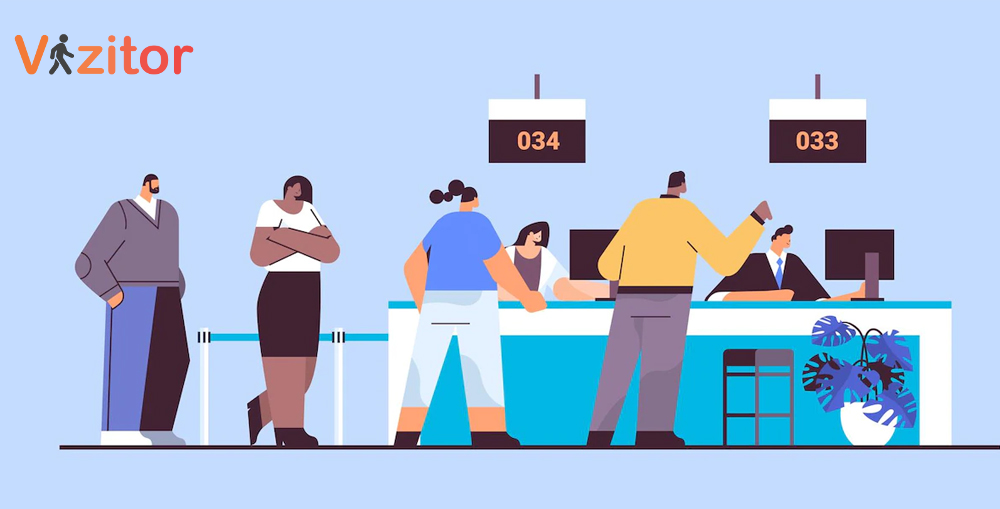
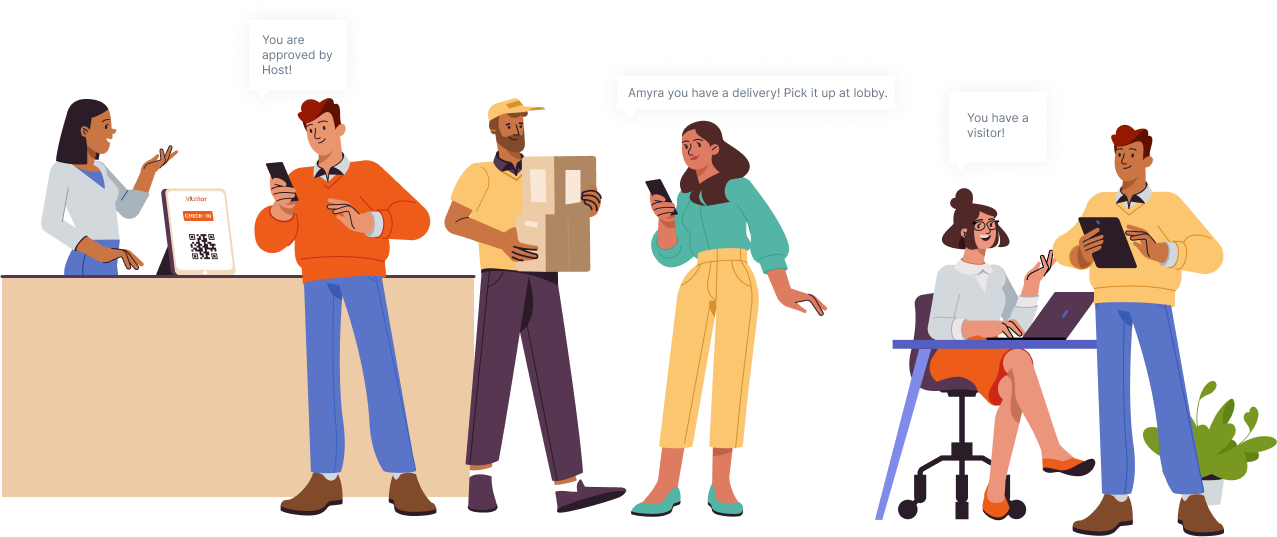
Visitors in 2026 include:
How visitors are handled sends a strong signal about professionalism, security, and trust.
Modern workplaces focus on:
A smooth visitor experience improves both external perception and internal confidence.
Hybrid work has increased deliveries, not reduced them.
Employees receive:
In 2026, workplaces treat delivery handling as a structured process, not an informal task. Clear ownership, defined zones, and visibility reduce clutter and interruptions.
The most successful workplace technology in 2026 is rarely noticed.
Employees expect:
Technology failures stand out more than successes.
As a result, reliability has become more valuable than novelty.
One defining workplace trend in 2026 is a shift from escalation to ownership.
Instead of routing every issue upward, mature workplaces:
This reduces stress, speeds up resolution, and prevents small issues from becoming large disruptions.
In 2026, more communication does not mean better communication.
Workplaces are moving toward:
Instead of multiple reminders, teams benefit from one clear update that sets expectations and removes ambiguity.
Taken together, the workplace trends of 2026 point to one clear conclusion:
The future workplace is built on readiness, clarity, and operational discipline.
Organizations that succeed are not necessarily the most flexible or the most tech-forward. They are the ones that remove friction quietly and consistently.
Employees may not notice everything that works well, but they immediately notice when things don’t.
The workplace of 2026 is less about where people work and more about how smoothly work happens.
As hybrid models stabilize and expectations rise, readiness becomes the foundation of trust, productivity, and employee experience.
Workplaces that adapt to these trends won’t just function better, they’ll feel better to work in.
Vizitor helps modern workplaces bring these moving parts together in one place, giving operations teams clarity and control during critical moments like the New Year restart.
See how Vizitor supports 2026-ready workplaces from Day 1- Click Here
Key workplace trends in 2026 include hybrid work as a standard model, flexible office spaces, improved visitor experiences, reliable workplace technology, and a stronger focus on operational readiness.
In 2026, hybrid work is treated as an operational system rather than an informal arrangement, with clear schedules, space planning, and coordinated workplace processes.
Workplace readiness ensures employees can start work smoothly without delays or confusion. It directly affects productivity, employee experience, and trust in workplace operations.
Technology in 2026 workplaces is expected to be reliable and smooth. Stable Wi-Fi, functional meeting room systems, and secure access matter more than complex tools.
Modern workplace trends reduce friction in daily work. When spaces, systems, and processes work smoothly, employees feel supported, focused, and more productive.
Try Vizitor Free
No credit card required. Setup in under 5 minutes. Manage visitors, queues, meeting rooms, and more.
Start Free Trial