Smart workplaces use the quiet final week of the year to review data, fix operational friction, streamline workflows, and prepare for January. By planning ahead instead of reacting later, they start the new year organized, confident, and ready for higher volume.


Published on: Fri, Dec 26, 2025
Read in 5 minutes
For many workplaces, the final week of the year is treated as a slowdown. Fewer meetings. Half-empty calendars. A general sense of “we’ll deal with it in January.”
Smart workplaces do the opposite.
They use this quiet window to prepare; intentionally, strategically, and calmly; so January doesn’t arrive as a shock, but as a continuation. The result isn’t just a smoother start to the year. It’s momentum.
This is how forward-thinking workplaces turn year-end downtime into a January jumpstart.
The last days of December offer something rare:
time without urgency.
Clients pause. Internal pressure eases. Teams have breathing room. And in that space, smart workplaces step back to ask better questions:
Preparation in December isn’t about setting lofty resolutions. It’s about removing friction before it becomes visible again.
The biggest mistake workplaces make at year-end is relying on memory.
Smart workplaces rely on data.
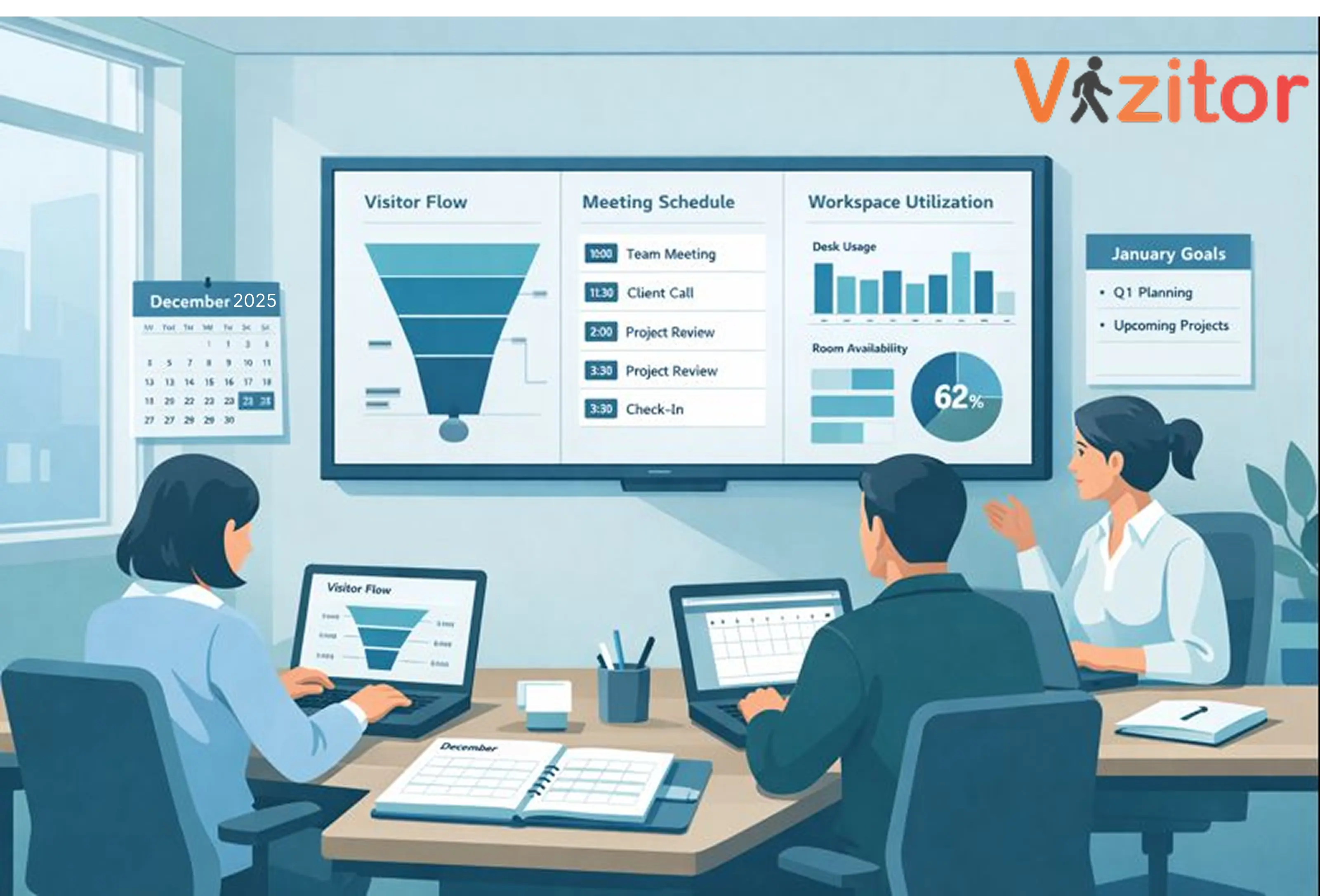
They review:
This isn’t about performance grading. It’s about understanding how the workplace actually functioned not how it was perceived.
January decisions are stronger when they’re based on reality, not assumptions.
Most workplace inefficiencies are small but persistent.
December is the safest time to fix these because:
Smart workplaces understand this:
January chaos is usually December neglect.
Calendars reset in January.
Workflows should reset before that.
The final week is ideal for:
When workflows are clear, January doesn’t feel overwhelming; it feels organized.
January brings energy and volume.
Employees return. Clients visit. Meetings stack up. Deliveries normalize.
Smart workplaces prepare for this by asking:
Preparation replaces reaction.
The quiet end-of-year period is the best time to evaluate experience.
Smart teams walk through the office like a visitor:
January first impressions matter.
December is when you quietly fix them.
Ironically, alignment is easier when there are fewer meetings.
During the final week:
Smart workplaces know alignment isn’t about meetings, it’s about timing.
Reactive workplaces scramble in January.
Smart workplaces arrive ready.
They don’t spend the first two weeks:
Because those issues were already addressed when things were calm.
January becomes productive from day one.
The final week of the year isn’t downtime.
It’s unclaimed strategic time.
Workplaces that use it well:
While others wind down, smart workplaces prepare.
And that’s how January begins not with chaos, but with confidence.
Prepare your workplace before January arrives.
Start planning smarter today.
The final week offers low pressure and fewer disruptions, making it ideal for reviewing operations, fixing bottlenecks, and preparing workflows before January volume returns.
Workplaces should review visitor flow, meeting room usage, delivery handling, and internal workflows to remove friction and improve efficiency.
By resolving small issues early, teams avoid confusion, overcrowding, and reactive fixes when employees, clients, and meetings return in January.
Yes, Fewer people are affected, changes can be tested quietly, and teams can adjust without disrupting daily operations.
Operational data reveals peak traffic times, space usage patterns, and recurring inefficiencies, allowing teams to plan realistically instead of guessing.
Workflows should be reset before calendars. Clear processes make January schedules easier to manage and prevent early-year confusion.
Prepared workplaces reduce stress, improve clarity, and allow employees to focus on meaningful work instead of operational confusion.
Treating December as downtime instead of an opportunity to prepare, leading to rushed fixes and avoidable stress in January.
A prepared workplace ensures smooth check-ins, clear navigation, and efficient meetings from the first week of January.
Workplaces that plan ahead operate more consistently, scale smoothly, and maintain confidence during high-volume periods throughout the year.