Cloud Attendance Management: Why Modern Businesses Are Moving


Table of Content
Try Vizitor for Free!
What Is Cloud Attendance Management?
Definition: Cloud attendance management refers to an attendance tracking system hosted on remote servers and accessed via the internet through web browsers or mobile applications. Unlike on-premise systems that require local servers and IT infrastructure, cloud solutions are managed by the software provider, offering automatic updates, remote accessibility, and subscription-based pricing.
The shift to cloud-based software has transformed nearly every business function, and attendance management is no exception. Organizations that once relied on physical punch clocks connected to local servers are discovering that cloud platforms deliver the same functionality - and much more - without the infrastructure burden.
A cloud-based attendance management system removes the geographic limitations of traditional solutions. Managers can monitor attendance from anywhere. Employees can clock in from any location. Data flows to payroll automatically. And the entire system updates itself without IT intervention.
According to Gartner, over 85% of organizations will adopt a cloud-first strategy by 2026, with workforce management tools being among the fastest-migrating categories. The reason is straightforward: cloud solutions cost less to deploy, scale more easily, and adapt faster to changing business needs.
This guide explains why cloud attendance management has become the default choice for modern businesses and how to make the transition successfully.
Cloud vs. On-Premise: A Clear Comparison
| Factor | Cloud-Based | On-Premise |
|---|---|---|
| Upfront Cost | Low (subscription) | High (servers, licenses) |
| Maintenance | Provider handles it | Your IT team handles it |
| Updates | Automatic, included | Manual, may cost extra |
| Accessibility | Anywhere with internet | Only from local network |
| Scalability | Add users instantly | Requires hardware upgrades |
| Data Security | Provider-managed encryption | Your responsibility |
| Disaster Recovery | Built-in redundancy | Requires separate planning |
| Customization | Configuration-based | Deep customization possible |
| Internet Dependency | Required (offline backup available) | Not required |
| Total Cost (5 years) | Generally lower | Generally higher |
Key Benefits of Cloud Attendance Management
1. Accessibility from Anywhere
This is the defining advantage. Managers check dashboards during travel. HR processes payroll from home. Employees clock in from client sites. Remote teams across time zones use the same system smooth.
For organizations with remote teams or multiple locations, cloud accessibility is not just convenient - it is essential.
2. Lower Total Cost of Ownership
Cloud systems eliminate the need for:
- Dedicated servers
- Server room maintenance and power
- IT staff for system administration
- Periodic hardware replacements
- Software license renewals
Instead, you pay a predictable monthly or annual subscription that includes hosting, maintenance, updates, and support. For small businesses, this makes enterprise-grade attendance management cost-effective for the first time.
3. Automatic Updates
Cloud providers push updates automatically. New features, security patches, and compliance updates arrive without any action from your team. You always run the latest version without scheduling downtime or managing update cycles.
4. Scalability on Demand
Adding 50 new employees? Open a new office? Expanding to another country? Cloud systems scale instantly. You adjust your subscription, configure the new users, and they are operational within hours - not weeks.
5. Built-In Disaster Recovery
Cloud providers maintain redundant data centers, automatic backups, and failover systems. If one server fails, another takes over smooth. Your attendance data is safer in a well-managed cloud environment than on a single local server.
6. Faster Deployment
On-premise systems require hardware procurement, installation, network configuration, and testing before they go live. Cloud systems require only an internet connection and user accounts. Most organizations can be operational within 1-2 weeks.
7. Smooth Integration
Cloud platforms connect easily with other cloud-based tools - payroll systems, HR management software, shift scheduling tools, and workplace management platforms. API-based integration enables data flow without manual intervention.
Security in Cloud Attendance Systems
Security is the most common concern about cloud adoption. In practice, reputable cloud providers invest far more in security than most organizations can afford for their on-premise infrastructure.
What to Look for in Cloud Security
- Encryption: Data encrypted both in transit (TLS/SSL) and at rest (AES-256)
- Access controls: Role-based permissions that limit data access to authorized users
- Multi-factor authentication: Additional login verification beyond passwords
- Audit logging: Detailed records of every system access and data change
- Compliance certifications: SOC 2, ISO 27001, GDPR compliance
- Data residency options: Ability to store data in specific geographic regions
- Regular penetration testing: Independent security assessments
Biometric Data in the Cloud
When using biometric attendance, cloud storage of biometric templates requires extra care. Leading providers store only mathematical templates (not raw images), encrypt them separately from other data, and provide options for local biometric processing with only verification results sent to the cloud.
Who Benefits Most from Cloud Attendance Management
Multi-Location Organizations
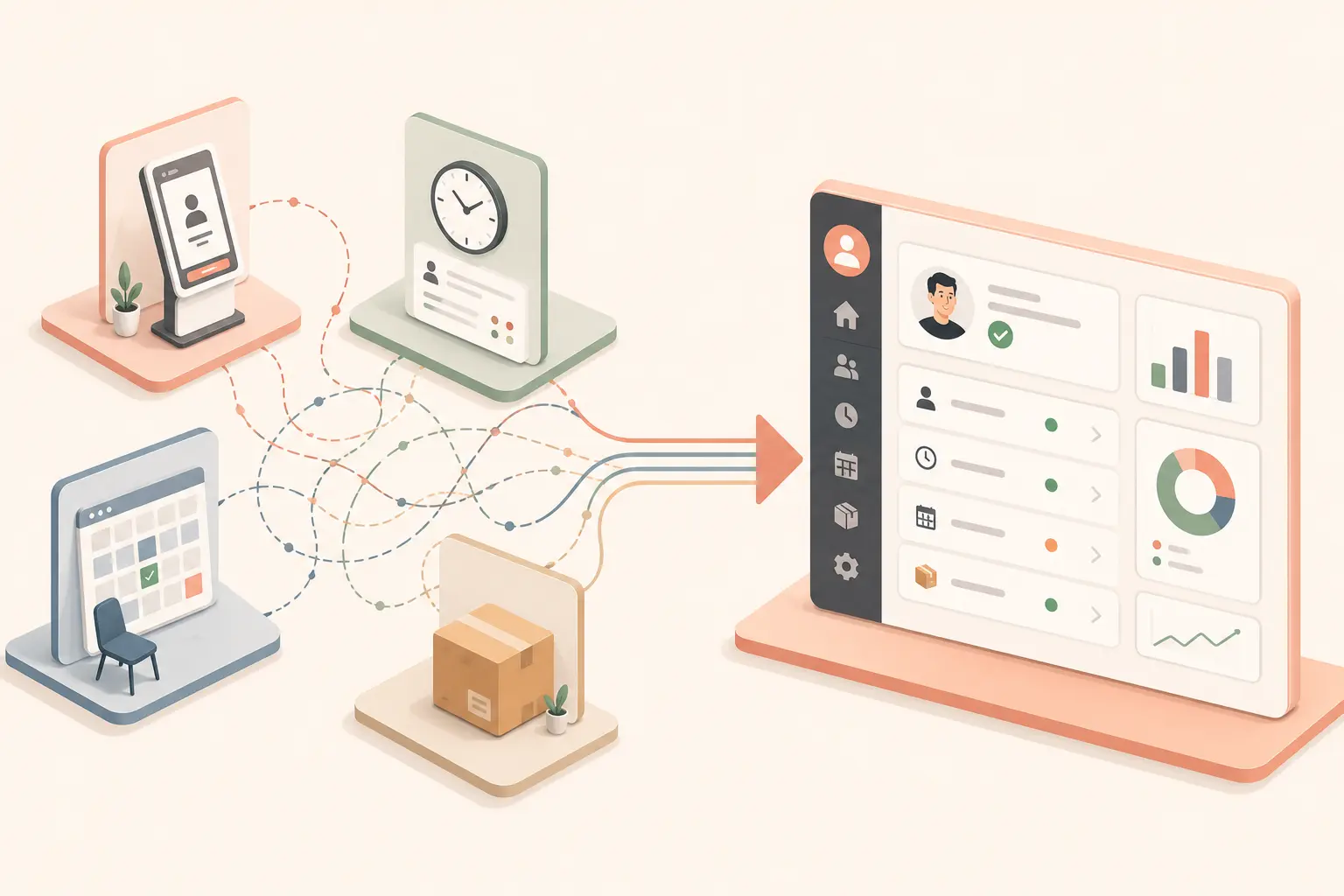
Businesses with offices, stores, or sites in multiple locations need centralized visibility. Cloud platforms aggregate data from every location into a single dashboard, enabling consistent policy enforcement and unified reporting.
Remote and Hybrid Teams
When employees work from home, coffee shops, or co-working spaces, a cloud system with mobile app access and GPS verification ensures accurate tracking regardless of physical location.
Growing Companies
Startups and scaling businesses cannot predict their exact headcount six months from now. Cloud subscriptions flex up and down with your workforce, avoiding overinvestment in hardware that may become insufficient or redundant.
Organizations with Limited IT Resources
Small and mid-size businesses without dedicated IT teams benefit enormously from cloud solutions. The provider handles all technical maintenance, freeing your team to focus on core business activities.
Regulated Industries
Cloud providers that maintain compliance certifications reduce the burden on your organization to build and maintain compliant infrastructure independently.
Migrating from On-Premise to Cloud
Step 1: Audit Your Current System
Document what your existing system does, what integrations exist, what data you need to migrate, and what pain points you want to solve.
Step 2: Define Requirements
List must-have features, nice-to-have features, and integration requirements for the new cloud platform. Include input from HR, IT, operations, and management.
Step 3: Select a Provider
Evaluate providers against your requirements. Prioritize those that offer migration support, training, and a proven track record in your industry. See our best attendance management software comparison for detailed evaluations.
Step 4: Plan Data Migration
Work with the provider to map your existing data structures to the new system. Clean historical data before migration - removing duplicates, correcting errors, and archiving outdated records.
Step 5: Run Parallel Systems
Operate both old and new systems simultaneously for 2-4 weeks. Compare outputs to verify data accuracy and identify any discrepancies before fully transitioning.
Step 6: Train Users
Ensure every user - from employees clocking in to managers running reports - knows how to use the new system. Provide documentation, video tutorials, and live support during the transition period.
Step 7: Go Live and Monitor
Switch fully to the cloud system once parallel testing confirms accuracy. Monitor closely for the first 30 days, addressing issues quickly and gathering user feedback.
Cost Comparison: A Real-World Example
Consider a 200-employee organization evaluating cloud vs. on-premise attendance management:
On-Premise Costs (5-Year TCO)
| Item | Cost |
|---|---|
| Server hardware | $8,000 |
| Software license | $15,000 |
| Installation and setup | $5,000 |
| Annual maintenance (x5) | $12,500 |
| IT staff time (partial, x5) | $25,000 |
| Hardware refresh (Year 3) | $5,000 |
| Total 5-Year Cost | $70,500 |
Cloud Costs (5-Year TCO)
| Item | Cost |
|---|---|
| Subscription ($4/employee/mo x 200 x 60) | $48,000 |
| Initial setup and training | $3,000 |
| Integration configuration | $2,000 |
| Total 5-Year Cost | $53,000 |
Cloud savings: $17,500 (25%) over five years, plus the intangible benefits of automatic updates, anywhere access, and zero IT maintenance burden.
Cloud Features for Specific Industries
Manufacturing
Manufacturing environments benefit from cloud systems that sync data from ruggedized terminals on factory floors to centralized dashboards accessible by plant managers and corporate HR simultaneously.
Healthcare
Healthcare organizations need 24/7 system availability, which cloud platforms deliver through redundant infrastructure. Credential tracking and shift compliance features ensure patient safety standards are maintained.
Construction
Construction companies with temporary job sites cannot install permanent on-premise infrastructure. Cloud platforms with mobile apps and cellular connectivity solve this completely.
Professional Services
Firms that bill clients by the hour benefit from cloud platforms that combine attendance tracking with project time allocation and integrate directly with billing systems.
Frequently Asked Questions
What happens if our internet goes down?
Reputable cloud attendance systems include offline mode. Data is captured locally on devices and terminals, then synced automatically when connectivity resumes. There is no data loss during outages. For environments with unreliable internet, look for systems with robust offline capabilities.
Is our data safe with a cloud provider?
Cloud providers typically invest significantly more in security than individual organizations can afford. Look for SOC 2 Type II certification, ISO 27001 compliance, and transparent security practices. Your data is often safer in a well-managed cloud environment than on a local server.
Can we customize a cloud attendance system?
Yes, though the approach differs from on-premise customization. Cloud systems offer extensive configuration options - custom policies, workflows, approval chains, report templates, and role permissions. Deep code-level customization is typically not available, but modern platforms are flexible enough to accommodate most organizational requirements.
How do we ensure data privacy across different countries?
Look for providers that offer data residency options, allowing you to specify where data is stored geographically. Ensure the provider complies with relevant regulations (GDPR, local data protection laws) and provides data processing agreements.
What is the typical contract structure for cloud attendance software?
Most providers offer monthly or annual subscriptions with per-employee pricing. Annual contracts typically offer 10-20% savings over monthly billing. Some providers require minimum commitments; others offer month-to-month flexibility. Negotiate terms that match your growth trajectory.
Move to Cloud Attendance Management with Vizitor
Vizitor’s cloud-native attendance platform delivers real-time tracking, biometric support, mobile access, and smooth payroll integration - all without a single piece of on-premise infrastructure to manage. Combined with visitor management and workplace security features, Vizitor provides complete workplace visibility from a single cloud dashboard.
Schedule a demo to see cloud attendance management in action, or view pricing plans designed to scale with your organization.
Try Vizitor Free
No credit card required. Setup in under 5 minutes. Manage visitors, queues, meeting rooms, and more.
Start Free TrialSee Vizitor in action check-in a visitor in under 30 seconds
Trusted by 500+ businesses. QR check-in, badge printing, NDA signing. Plans from $36/mo.