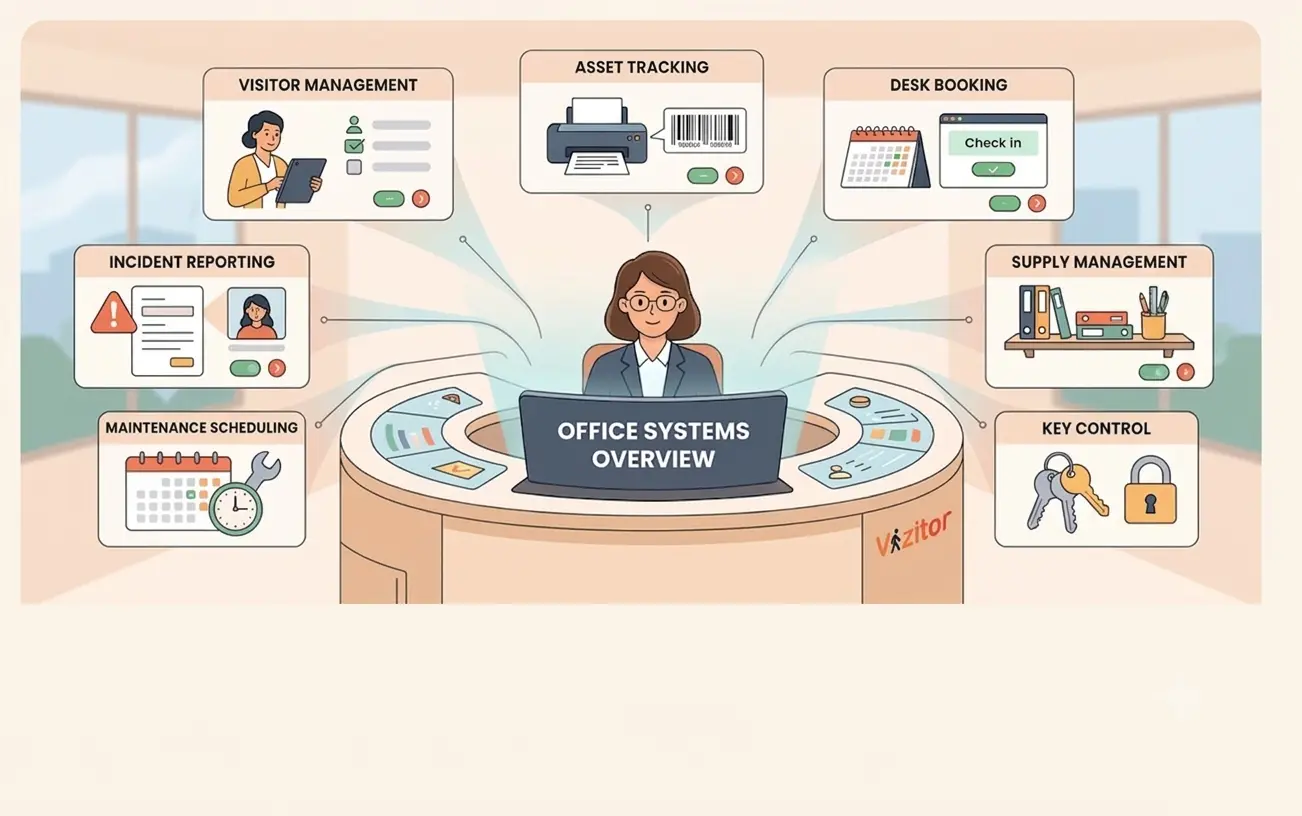
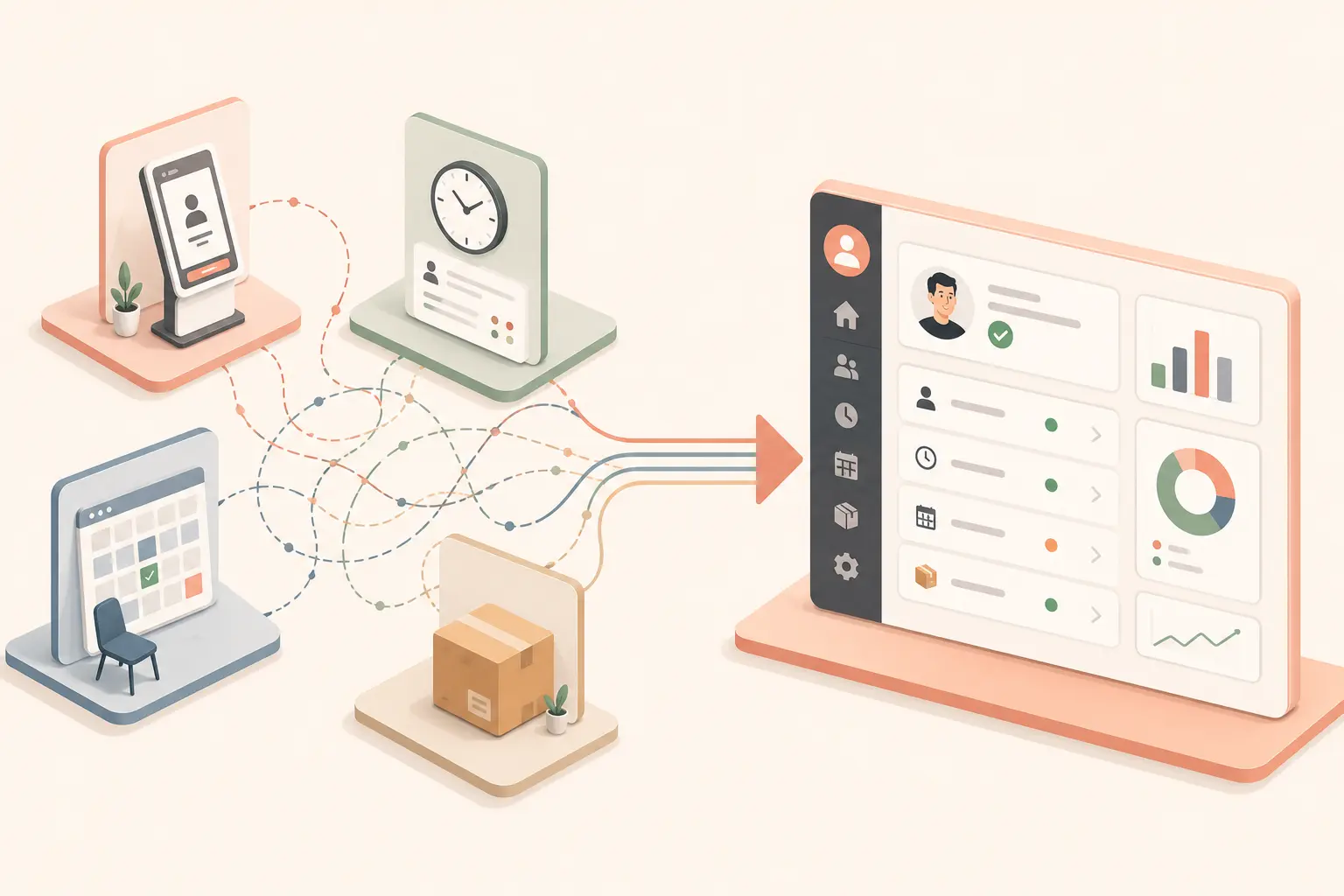
Attendance Management and Compliance


Table of Content
Try Vizitor for Free!
Why Attendance Compliance Cannot Be an Afterthought
Attendance compliance is not a box to check annually. It is a continuous obligation that affects every pay period, every employee, and every location where your organization operates. One miscalculated overtime payment, one missing break record, or one incomplete audit trail can trigger investigations, fines, and lawsuits that cost far more than any attendance system.
The U.S. Department of Labor recovered over $274 million in back wages for workers in fiscal year 2024, with wage and hour violations - including overtime and hour tracking failures - being the most common category. These were not just penalties for large corporations. Small and mid-size businesses face the same scrutiny.
A well-configured attendance management system builds compliance into the daily workflow. Rather than scrambling to produce records when an auditor arrives, the system generates them continuously, automatically, and accurately.
Definition: Attendance compliance refers to an organization’s adherence to federal, state, and local labor laws governing the tracking and recording of employee work hours, overtime, breaks, and absences. It includes the obligation to maintain accurate records and produce them for regulatory inspection.
This guide covers the major compliance areas, how automated attendance systems address them, and practical steps to maintain audit-readiness at all times.
Key Compliance Areas
Overtime Regulations
| Jurisdiction | Overtime Threshold | Rate | Notes |
|---|---|---|---|
| Federal (FLSA) | 40 hours/week | 1.5x | Applies to non-exempt employees |
| California | 8 hours/day OR 40 hours/week | 1.5x (2x after 12 hrs/day) | Daily and weekly thresholds |
| Colorado | 12 hours/day OR 40 hours/week | 1.5x | Includes daily threshold |
| EU Working Time Directive | 48 hours/week (avg over 17 weeks) | Varies by country | Maximum, not just overtime |
| India | 9 hours/day OR 48 hours/week | 2x | Under Factories Act |
Overtime tracking must be automated to handle these varying rules correctly, especially for organizations operating across multiple jurisdictions.
Break Time Requirements
Many jurisdictions mandate specific break periods:
- California: 30-minute meal break before 5th hour; 10-minute rest per 4 hours
- New York: 30-minute meal break for shifts over 6 hours
- EU: 20-minute break for shifts over 6 hours; 11 consecutive hours of rest per 24 hours
- India: 30-minute break after 5 hours of work
An automated system tracks break compliance by recording break start and end times and flagging violations before they accumulate.
Record-Keeping Requirements
Federal and state laws require employers to maintain time records:
- FLSA (U.S.): Records must include hours worked each day and total per week, kept for at least 3 years
- EU GDPR: Records kept for legitimate business purposes with defined retention periods
- India (Factories Act): Attendance registers maintained for 3 years after last entry
Records must be accurate, complete, and available for inspection on short notice.
Child Labor Laws
For organizations employing workers under 18, additional tracking requirements apply:
- Maximum working hours per day and per week
- Prohibited work hours (late night, early morning)
- Required break times
- Restricted occupations and tasks
How Automated Attendance Systems Ensure Compliance
Continuous Monitoring
Rather than reviewing compliance monthly or quarterly, automated systems monitor every clock event in real time. When an employee approaches an overtime threshold, the system alerts the manager before the violation occurs.
Accurate Calculations
Manual overtime calculations are error-prone, especially with complex rules (daily and weekly thresholds, different rates, shift differentials). The system applies the correct rules automatically based on employee classification, location, and pay structure.
Tamper-Proof Audit Trails
Every attendance event - clock-in, clock-out, break, leave request, manager approval, manual correction - is logged with a timestamp and user ID. These audit trails cannot be altered retroactively, providing the documentation auditors need.
Policy Enforcement
The system can enforce compliance rules proactively:
- Block clock-in attempts that would violate maximum hour limits
- Require manager authorization for overtime
- Ensure minimum rest periods between shifts
- Alert when break requirements are not met
Automated Reporting
Generate compliance-specific reports on demand:
- Overtime summary by employee, department, and period
- Break compliance report showing any missed or shortened breaks
- Maximum hour violation report
- Record retention status
Building an Audit-Ready Attendance Process
Step 1: Understand Your Obligations
Map the specific regulations that apply to your organization based on:
- Employee locations (federal, state, local laws)
- Employee classifications (exempt vs. non-exempt, full-time vs. part-time)
- Industry-specific regulations (healthcare, manufacturing, construction)
- Union agreements (if applicable)
Step 2: Configure the System Correctly
Work with your attendance provider to configure rules that match your specific obligations:
- Overtime calculation methods per jurisdiction
- Break time requirements per jurisdiction
- Maximum hour limits
- Record retention periods
Step 3: Train Managers
Compliance failures often occur at the supervisor level. Train managers to:
- Understand overtime authorization procedures
- Respond to system alerts promptly
- Avoid requesting off-the-clock work
- Document schedule changes properly
Step 4: Conduct Regular Self-Audits
Run compliance reports monthly and review:
- Any overtime threshold violations
- Break compliance percentages
- Maximum hour limit adherence
- Record completeness
Step 5: Maintain Clean Records
Ensure that manual corrections (inevitably needed for exceptions) are:
- Documented with a reason
- Approved by an authorized manager
- Logged in the system audit trail
- Reviewed during self-audits
Common Compliance Pitfalls
Pitfall 1: Rounding Errors
Some systems round clock-in times to the nearest quarter hour. If rounding consistently favors the employer, it creates a compliance risk. The FLSA requires that rounding practices balance out over time - they cannot systematically reduce employee hours.
Solution: Configure rounding rules that comply with regulations, or avoid rounding entirely by using precise timestamps.
Pitfall 2: Off-the-Clock Work
If employees regularly start working before clocking in or continue after clocking out, the unrecorded time creates liability.
Solution: Position clock-in terminals before work areas so employees clock in before reaching their stations. Use mobile apps for employees who access email before arriving on-site.
Pitfall 3: Misclassification
Treating non-exempt employees as exempt (or independent contractors as employees) leads to incorrect attendance and overtime handling.
Solution: Work with legal counsel to verify employee classifications. Configure the attendance system with the correct classification for each employee.
Pitfall 4: Inconsistent Enforcement
Applying attendance policies differently across departments or individuals creates discrimination claims.
Solution: Use automated policy enforcement that applies rules consistently. Document any exceptions with clear justification.
Pitfall 5: Inadequate Record Retention
Deleting or losing attendance records before the required retention period exposes the organization to legal risk.
Solution: Use cloud-based systems with automated backup and retention policies. Configure retention periods to meet or exceed the strictest applicable requirement.
Industry-Specific Compliance Considerations
Manufacturing
Manufacturing compliance includes OSHA working hour limits, mandatory rest between shifts, and industry-specific safety regulations that restrict continuous working time for certain tasks.
Healthcare
Healthcare attendance compliance involves shift length limits for patient safety, fatigue management regulations, credential and certification tracking, and union contract provisions for scheduling.
Construction
Construction compliance includes prevailing wage requirements for government contracts, Davis-Bacon Act reporting, and certified payroll submissions that require precise attendance records.
Remote Teams
Remote work compliance adds complexity because employees may work from jurisdictions with different labor laws than the employer’s location.
Technology and Compliance Integration
Your attendance system should integrate with broader compliance infrastructure:
- Payroll systems: Ensure compliant pay calculations flow directly from attendance data
- HR platforms: Employee classification and policy assignments
- Visitor management: Contractor hour tracking and compliance
- Workplace security: Access control aligned with working hour permissions
- Workplace management platform: Unified compliance dashboard
Frequently Asked Questions
What happens if we fail an attendance compliance audit?
Consequences vary by violation severity and jurisdiction but can include back pay obligations (covering all affected employees for the violation period), penalties and fines (which can be significant for repeat offenders), employee lawsuits (individual or class action), increased future audit scrutiny, and reputational damage. The cost of non-compliance almost always exceeds the cost of proper attendance management.
How long must we keep attendance records?
The FLSA requires 3 years for payroll records and 2 years for time cards and schedules. However, state laws may require longer retention. The safest approach is to keep records for 7 years, which covers the longest statute of limitations in most jurisdictions. Cloud systems make long-term retention effortless.
Do we need to track break times for exempt employees?
In most jurisdictions, exempt employees are not subject to break time requirements because they are not covered by overtime and hour tracking rules. However, some states (like California) have break requirements that apply to all employees regardless of exempt status. Check your specific jurisdiction’s rules.
Can employees waive their right to breaks?
In some jurisdictions, employees can voluntarily waive meal breaks under specific conditions (usually requiring written agreement and the ability to revoke the waiver). In other jurisdictions, breaks are mandatory and cannot be waived. Do not assume waivers are permissible without consulting employment law for your location.
How do we handle attendance compliance across multiple states?
Use an attendance system that supports multi-jurisdiction configuration. Assign each employee’s location and applicable regulations, and configure separate overtime, break, and record-keeping rules per jurisdiction. The system should automatically apply the correct rules based on the employee’s assigned location. For organizations with employees in many states, this feature is essential.
Stay Compliant with Confidence
Vizitor’s attendance management platform includes built-in compliance tools that track overtime, monitor break compliance, maintain audit trails, and generate regulatory reports automatically. Combined with visitor management and workplace security features, Vizitor provides comprehensive compliance coverage.
Schedule a demo to see compliance features in action, or explore pricing for plans that include automated compliance tracking.
Try Vizitor Free
No credit card required. Setup in under 5 minutes. Manage visitors, queues, meeting rooms, and more.
Start Free TrialSee Vizitor in action check-in a visitor in under 30 seconds
Trusted by 500+ businesses. QR check-in, badge printing, NDA signing. Plans from $36/mo.