Workplace Management and Employee Experience


Table of Content
Try Vizitor for Free!
Employee Experience Is an Operations Problem
When organizations talk about employee experience, the conversation usually gravitates toward culture, benefits, and management practices. Those factors matter. But for employees who work in physical offices - even part-time in a hybrid model - a significant portion of their daily experience is shaped by operational realities that have nothing to do with culture.
Can they find a desk when they arrive? Is the meeting room they booked actually available? How long does it take a visitor to check in for a meeting? Is the package they ordered sitting somewhere in the mailroom? Does the building feel secure?
These operational moments add up. And when they consistently fail, no amount of cultural programming compensates.
Definition: Workplace employee experience refers to the cumulative quality of an employee’s daily interactions with their physical work environment - from arriving at the building and finding a workspace, to booking meeting rooms, receiving visitors, and navigating facility services. In 2026, this experience is increasingly determined by the effectiveness of workplace management systems rather than standalone perks or policies.
A 2025 Leesman Index report found that employees who rated their workplace operations as “excellent” were 2.4 times more likely to report high overall job satisfaction compared to those with “average” operational ratings. The connection between operational quality and employee sentiment is direct and measurable.
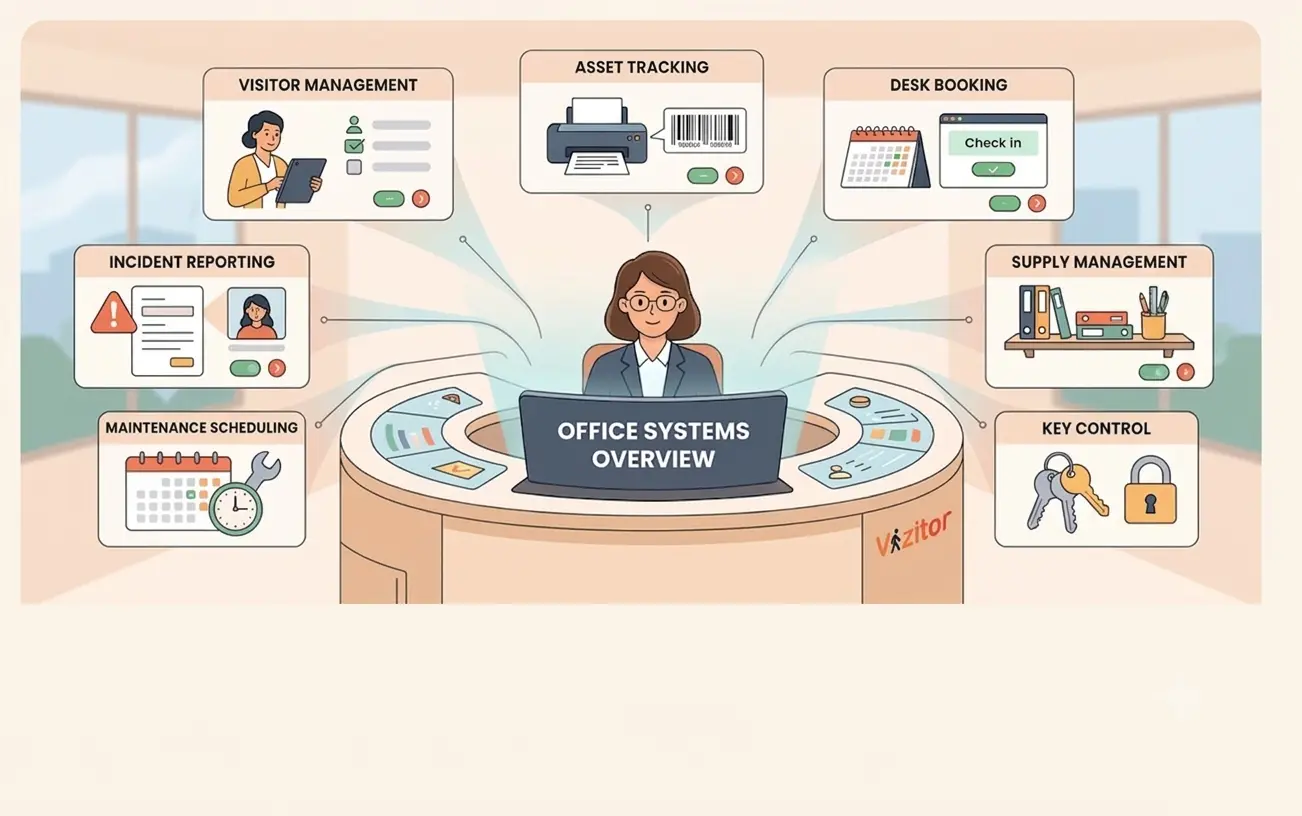
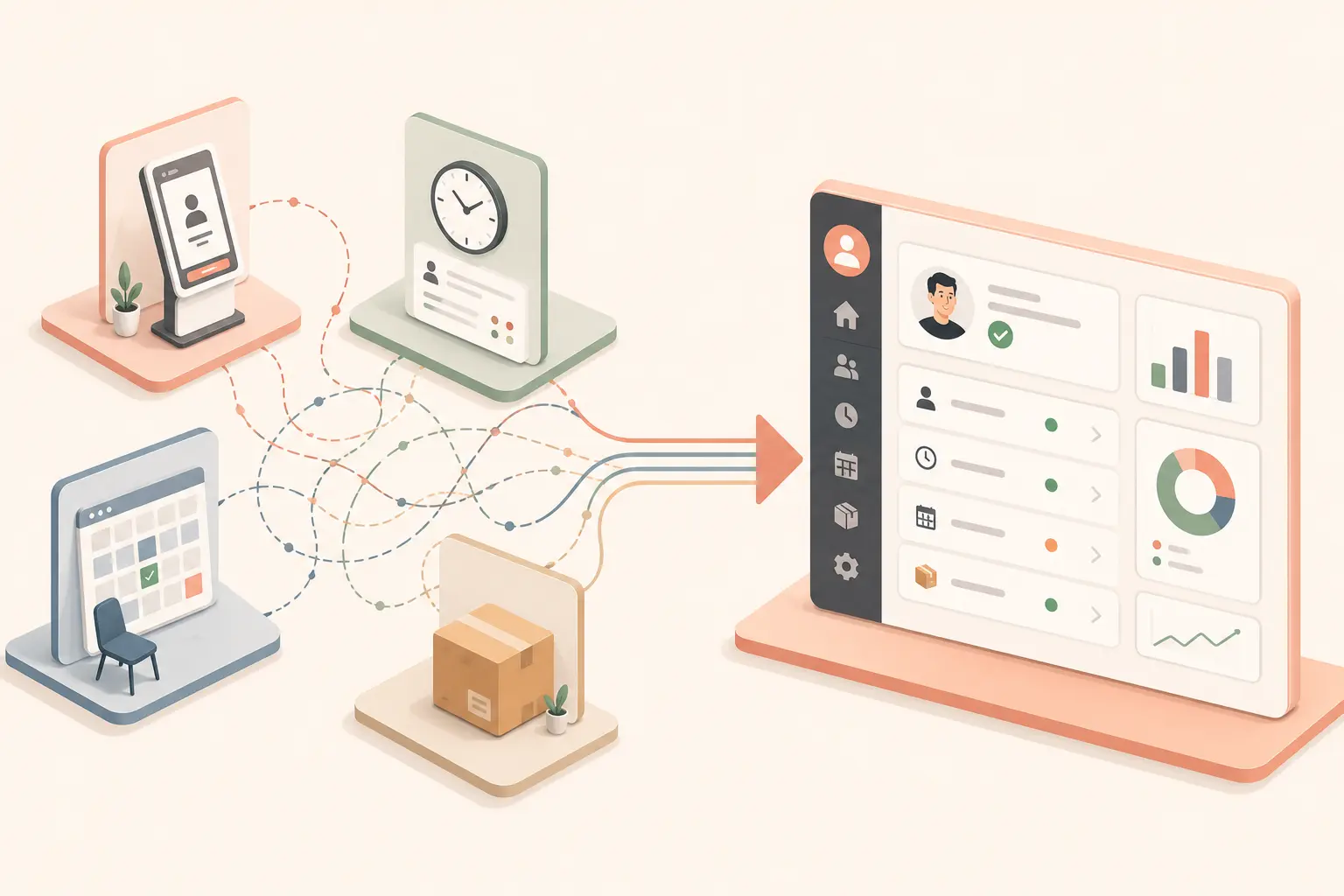
The Vizitor Workplace Management Platform addresses this connection by providing the operational infrastructure that makes daily workplace interactions smooth, predictable, and efficient.
The Moments That Define Employee Experience
Moment 1: Arriving and Settling In
The first 15 minutes of an employee’s day set the tone. In a poorly managed workplace, this period involves:
- Searching for an available desk (10-15 minutes on busy days)
- Discovering that their preferred area is fully occupied
- Waiting for building access if badge systems are slow
- Finding the coffee machine broken and no one aware of it
In a well-managed workplace with a Desk Booking System:
- The employee books a desk from their phone before leaving home
- They arrive, scan a QR code, and sit down
- Nearby colleagues who also booked desks on the same floor are visible in the app
- Facility issues are reported through a digital ticketing system and resolved quickly
Time-to-desk: the measurable interval between entering the building and being settled and productive. Best-in-class workplaces achieve this in under 5 minutes. Poorly managed ones routinely exceed 20 minutes.
Moment 2: Booking and Using Meeting Spaces
Meeting room frustration is one of the most common workplace complaints. The typical problems:
- All rooms appear booked, but many are actually empty (ghost bookings)
- The room that is available is too large or too small for the group
- Technology in the room (displays, video conferencing) does not work reliably
- The meeting before ran over, and there is no mechanism to enforce end times
A Meeting Room Booking System with auto-release, size-appropriate suggestions, and equipment status visibility transforms this experience.
Moment 3: Hosting Visitors
When employees invite clients, partners, or candidates to the office, the visitor experience reflects on them personally. Common friction points:
- Visitors waiting at reception for 10-15 minutes while the front desk calls the host
- Hosts not being notified that their visitor has arrived
- Visitors not knowing where to go after check-in
- Embarrassing manual processes (paper logbooks, handwritten badges)
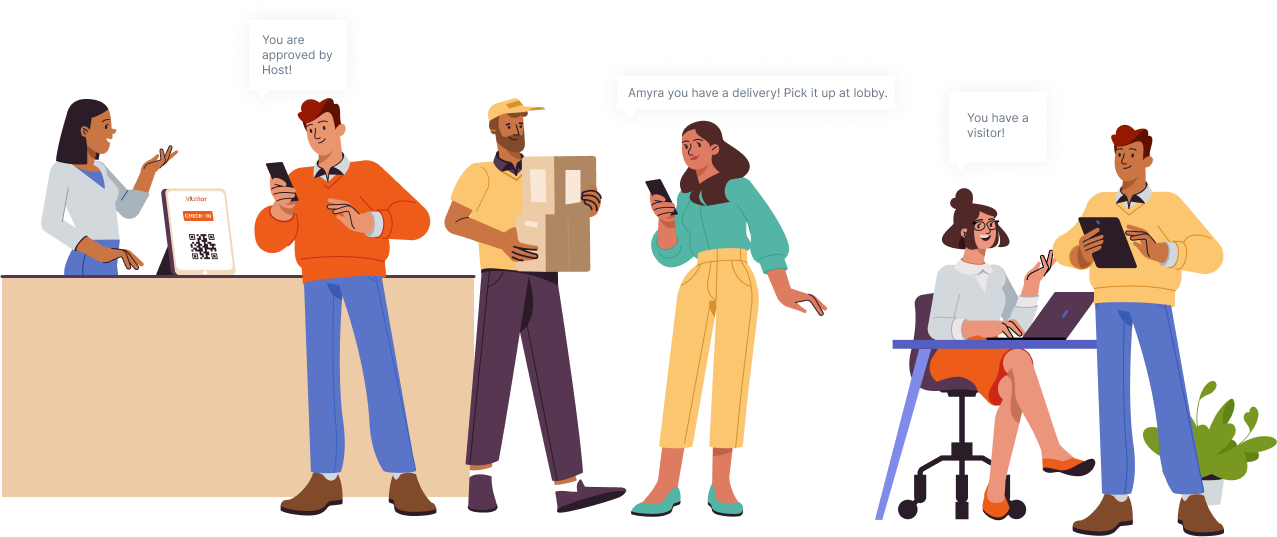
A Visitor Management System with pre-registration, instant host notification, and digital badge printing eliminates this friction. The employee looks professional, and the visitor feels welcomed.
Moment 4: Receiving Deliveries
Online shopping and work-related deliveries mean that employees regularly have packages arriving at the office. Without a Delivery Management System, packages accumulate at reception, recipients are never notified, and items go missing.
With a digital system, the employee receives a notification the moment their package is logged, and they know exactly where to collect it.
Moment 5: Feeling Safe
Security is often invisible until it fails. But employees notice - consciously or unconsciously - whether their workplace feels controlled and safe. Unscreened visitors wandering through office areas, propped-open security doors, and a lack of emergency protocols all erode the sense of safety.
Integrated Workplace Security Management provides visible, well-managed security that employees trust without it being intrusive.
Measuring Employee Experience Through Operations
The shift in 2026 is from surveying employee experience to measuring it through operational data.
| Experience Dimension | Operational Metric | Target |
|---|---|---|
| Ease of starting the day | Time-to-desk | Under 5 minutes |
| Meeting room access | Booking-to-usage ratio (elimination of ghost bookings) | Above 85% |
| Visitor hosting quality | Visitor check-in time | Under 30 seconds |
| Service responsiveness | Facility issue resolution time | Under 4 hours |
| Delivery reliability | Time from package receipt to notification | Under 5 minutes |
| Space comfort | Occupancy rate per zone (avoiding overcrowding) | 60-80% |
| Safety perception | Security incident frequency | Trending downward |
These metrics are not proxies. They directly represent the operational moments that shape how employees feel about their workplace.
How Workplace Management Platforms Improve Each Dimension
Reducing Friction
Every unnecessary step, wait time, and manual process is friction. Workplace management platforms systematically reduce friction by:
- Replacing manual desk searches with digital booking
- Replacing email-based room booking with real-time availability
- Replacing phone-based visitor notification with instant push alerts
- Replacing paper attendance with app-based check-in
- Replacing manual delivery tracking with automated notifications
The cumulative effect of reducing friction across dozens of daily interactions is significant. It is the operational equivalent of compound interest.
Enabling Choice
Employees experience the workplace more positively when they have agency. Modern platforms provide:
- Choice of desk location based on preference, team proximity, or amenity access
- Choice of meeting room size appropriate for the meeting
- Choice of check-in method (app, badge, kiosk)
- Visibility into building occupancy to decide whether to come in or work remotely
Creating Predictability
Few things frustrate employees more than unpredictability. Arriving to find no desks available. Showing up for a meeting to find the room occupied. Sending a visitor to the wrong floor.
Workplace management platforms create predictability by:
- Guaranteeing booked desks and rooms
- Providing real-time occupancy visibility
- Sending confirmations and reminders
- Auto-releasing unused bookings to maintain accuracy
Supporting Hybrid Teams
Hybrid work amplifies the need for good workplace management. When employees come to the office only 2-3 days per week, every on-site day must be worthwhile. If they arrive to find their team is not there, the room they need is unavailable, or the office feels empty and uninviting, they question why they came in at all.
Platforms that show team member on-site schedules, enable collaborative desk booking (booking adjacent desks with teammates), and display daily occupancy forecasts help employees plan in-office days that are genuinely productive and social.
The Link Between Employee Experience and Business Outcomes
Improving employee experience through better workplace operations is not a soft benefit. It connects to measurable business outcomes:
- Retention. Gallup research shows that employees who are satisfied with their workplace environment are 41% less likely to leave within 12 months.
- Productivity. The Leesman Index data shows that employees in well-managed workplaces self-report 23% higher productivity.
- Collaboration quality. When meeting rooms work reliably and teams can coordinate in-office days, collaboration quality improves measurably.
- Employer brand. The workplace experience that visitors (candidates, clients, partners) have during visits directly shapes external perception.
Organizations tracking employee experience as an operational metric - rather than just a survey score - gain actionable insights that drive continuous improvement.
Building an Employee Experience Strategy Around Operations
Step 1: Map the Employee Journey
Document every physical interaction an employee has with the workplace from arrival to departure. Identify friction points, wait times, and failure modes at each step.
Step 2: Instrument the Journey
Deploy workplace management tools that generate data at each touchpoint - desk booking, room booking, visitor management, attendance tracking, and delivery management.
Step 3: Establish Baselines
Measure current performance on operational metrics (time-to-desk, room utilization, visitor check-in time, etc.) before making changes.
Step 4: Optimize Iteratively
Use data to identify the highest-friction points, implement improvements, measure the impact, and move to the next priority. This is a continuous process, not a one-time project.
Step 5: Correlate with Sentiment
Overlay operational data with employee satisfaction surveys to validate that operational improvements are translating into experience improvements. Over time, you may find that operational metrics are leading indicators of sentiment - problems show up in the data before they show up in surveys.
Frequently Asked Questions
How is employee experience different from employee engagement? Employee engagement measures emotional commitment to the organization. Employee experience measures the quality of daily interactions with the workplace - physical, digital, and cultural. Experience drives engagement. When the daily experience is consistently good, engagement follows. When the experience is consistently frustrating, engagement declines regardless of other factors.
Can workplace management really impact retention? Yes. While compensation and management quality are the top retention drivers, workplace experience is a significant factor - especially for knowledge workers who have choices about where to work. A 2025 Gartner survey found that 73% of employees consider workplace quality when evaluating job offers, and 31% cited workplace frustration as a contributing factor in their decision to leave a previous employer.
How do we measure ROI on employee experience improvements? The most direct metrics are retention rate changes (cost of replacement avoided), productivity indicators (output per employee), and absenteeism rates. For example, if improving workplace operations reduces voluntary turnover by 5% and the average replacement cost is $15,000 per employee, a 200-person company saves $150,000 annually.
Does improving employee experience require a large budget? Not necessarily. Many of the highest-impact improvements come from eliminating friction rather than adding amenities. Auto-releasing ghost-booked meeting rooms costs nothing in additional spending but significantly improves room access. Digital visitor management improves both employee and visitor experience while reducing reception costs.
How do we get leadership buy-in for experience-focused workplace improvements? Frame the conversation around business metrics rather than experience metrics. Talk about retention costs, productivity gains, and real estate optimization rather than “making employees happy.” When the financial case is clear, experience investments become easy to justify.
Making the Workplace Worth the Commute
In a world where remote work is always an option, the physical workplace must earn employee attendance. It earns it not through ping-pong tables or free snacks, but through operational excellence - smooth arrival, reliable spaces, efficient visitor handling, responsive services, and a sense of security.
The Vizitor Workplace Management Platform provides the operational foundation for workplaces that people actually want to use. Book a demo to see how the platform transforms daily workplace interactions, or explore pricing to understand the investment.
For related strategies, see our guides on workplace management trends in 2026, workplace digital transformation, and workplace management for startups.
Try Vizitor Free
No credit card required. Setup in under 5 minutes. Manage visitors, queues, meeting rooms, and more.
Start Free TrialSee Vizitor in action check-in a visitor in under 30 seconds
Trusted by 500+ businesses. QR check-in, badge printing, NDA signing. Plans from $36/mo.