Workplace Operations Management


Table of Content
Try Vizitor for Free!
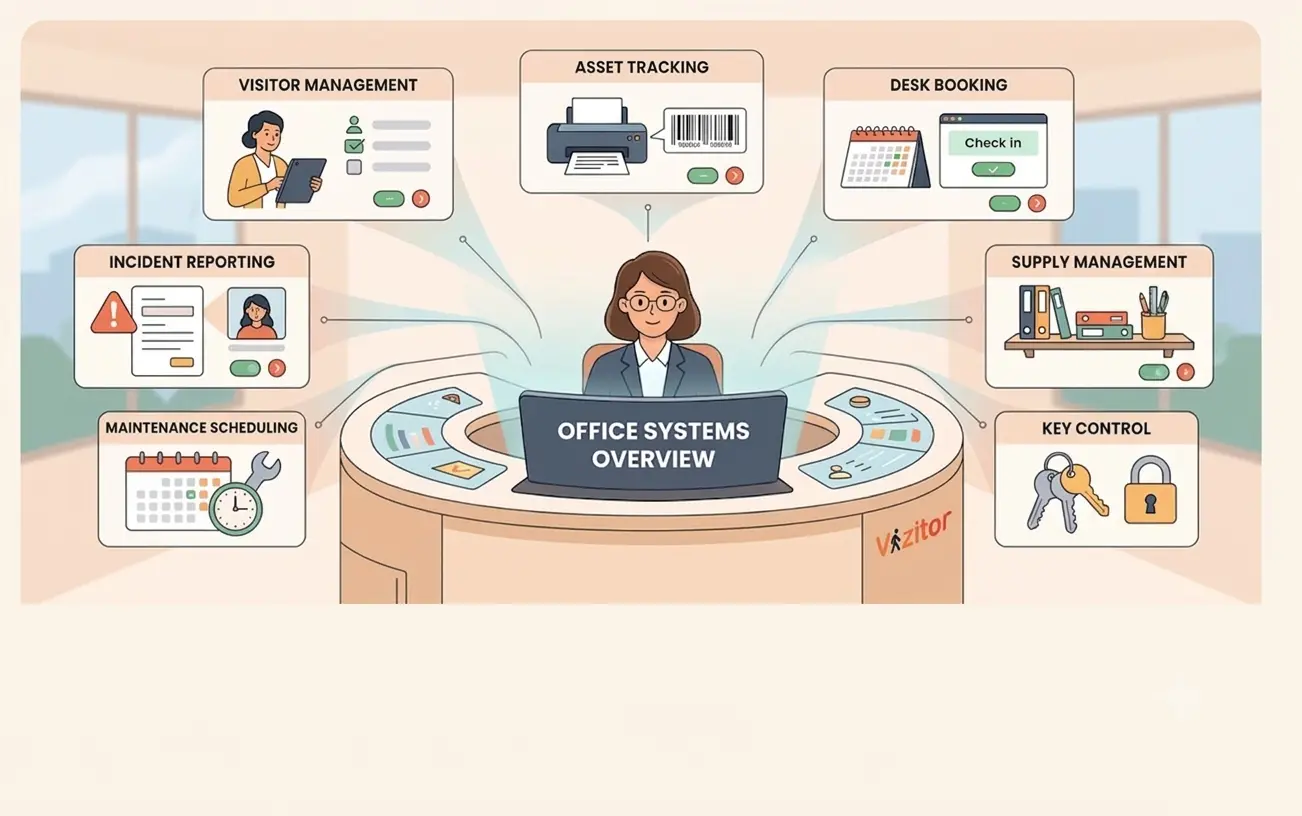
Workplace operations management is the systematic coordination of all daily processes, workflows, and resources within a physical work environment. It encompasses managing people flow (visitors, employees, service queues), space utilization (desks, rooms, common areas), logistics (deliveries, mailroom, equipment), safety and compliance, and the technology systems that support these functions. Effective workplace operations management ensures that every aspect of the workplace runs smoothly, securely, and cost-effectively.
What Is Workplace Operations Management?
Workplace operations management is the discipline of making physical workplaces function efficiently on a daily basis. While strategy determines what a workplace should be, operations management determines how it actually runs.
Every day, a typical office handles dozens of operational processes. Visitors arrive and need to be checked in. Employees need workspaces and meeting rooms. Packages arrive and need to reach recipients. Queues form at service counters. Equipment needs maintenance. Compliance requirements need documentation.
Workplace operations management coordinates all of these processes so they happen reliably, efficiently, and with minimal friction. It sits at the intersection of facility management, workplace experience, and workplace technology.
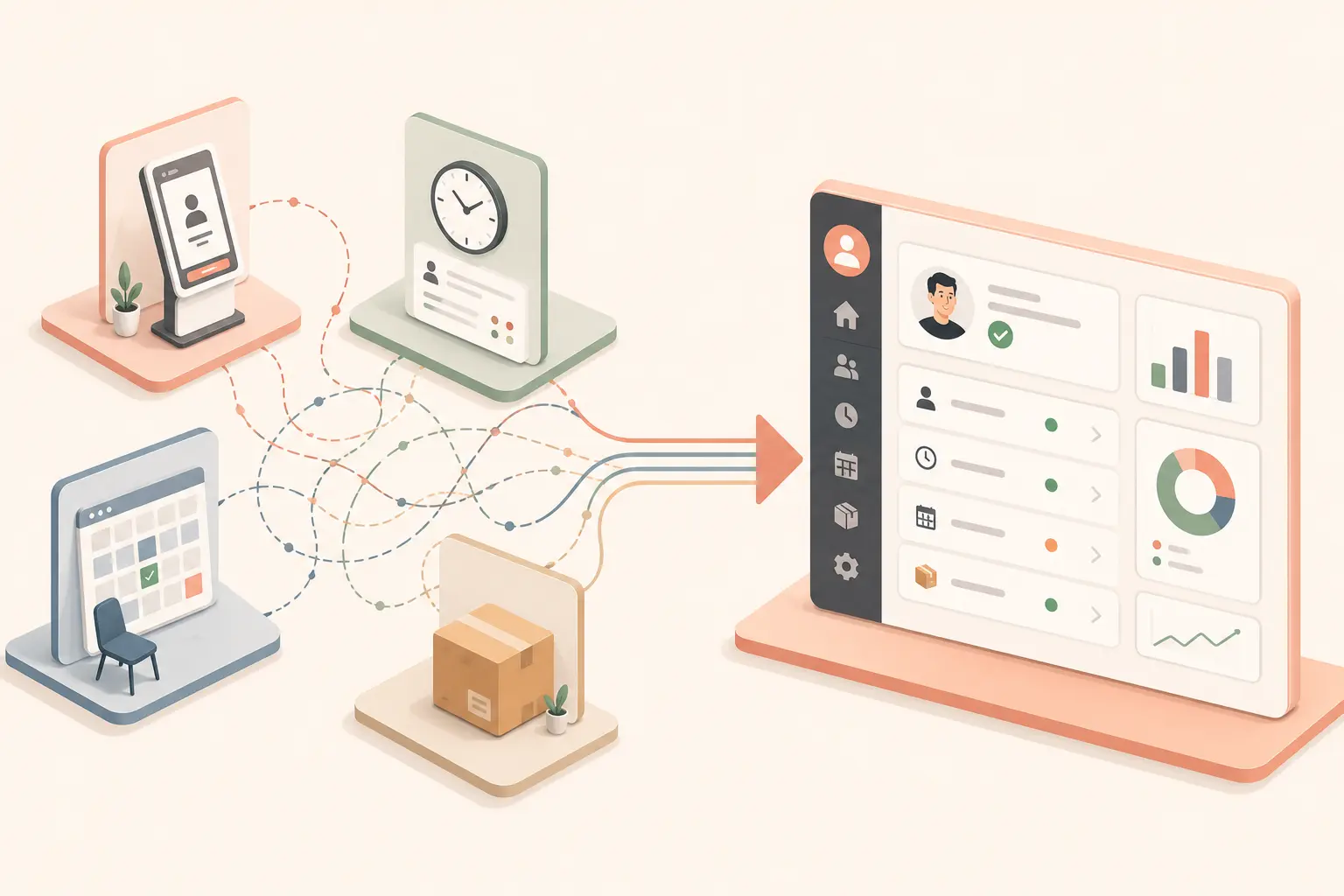
The role of a workplace management platform in operations management is to automate routine processes, provide real-time visibility into operations, and generate data that enables continuous improvement. Without technology, workplace operations management relies on manual coordination, which does not scale.
According to McKinsey’s 2025 Workplace Operations Report, organizations that systematically optimize their workplace operations reduce operational costs by 18% to 25% while improving employee satisfaction scores by an average of 22 points (McKinsey & Company, 2025).
Key Processes in Workplace Operations Management
Workplace operations management covers six core process areas. Each area contains multiple workflows that must be coordinated.
1. People Flow Operations
People flow operations manage the movement of everyone who enters, uses, and exits the workplace.
Visitor operations. The visitor lifecycle includes pre-registration, arrival notification, identification verification, check-in, badge issuance, host escort, meeting facilitation, and check-out. A visitor management system automates this entire workflow. In effective workplace operations management, visitor data connects to space management (lobby congestion), security (access permissions), and meeting room booking (room assignment).
Employee flow. Daily employee operations include attendance logging, desk booking confirmation, room reservations, and end-of-day check-out. In hybrid environments, employee flow varies daily, making real-time tools essential.
Queue operations. When people wait for services, whether at a help desk, cafeteria, or reception, queue management systems ensure fair, efficient service delivery with minimal wait times.
2. Space Operations
Space operations ensure that physical areas within the workplace are available, functional, and efficiently used.
Desk operations. Desk booking processes manage reservation, check-in, release, cleaning, and maintenance of workstations. In hot-desking environments, desk operations must handle rapid turnover and ensure hygiene standards.
Room operations. Meeting room booking processes handle reservation, setup (equipment, catering), occupancy confirmation, auto-release, and post-meeting reset. Room operations also include managing room display panels and calendar sync.
Common area operations. Cafeterias, lounges, break rooms, and collaboration zones require monitoring for capacity, cleanliness, and equipment availability.
3. Logistics Operations
Logistics operations manage the flow of physical goods through the workplace.
Delivery operations. Delivery management processes handle package receipt, logging, notification, storage, and pickup confirmation. For large campuses, this includes routing deliveries to the correct building and floor.
Mailroom operations. Mailroom management processes sort, store, distribute, and track physical mail. This includes handling sensitive documents, registered mail, and inter-office mail.
Equipment and supplies. Managing shared equipment (projectors, whiteboards, adapters), office supplies, and consumables is a daily operational function.
4. Safety and Compliance Operations
Safety and compliance operations ensure that the workplace meets legal, regulatory, and organizational standards.
Access control. Managing who can enter which areas, at what times, and under what conditions. Workplace security management systems enforce these policies automatically.
Emergency preparedness. Maintaining up-to-date evacuation lists, conducting drills, and ensuring emergency equipment is functional and accessible.
Compliance documentation. Generating and maintaining records for GDPR, SOC 2, HIPAA, ITAR, fire safety, and other regulatory requirements.
Health and safety. Monitoring indoor air quality, managing sanitation schedules, and enforcing capacity limits.
5. Maintenance Operations
Maintenance operations keep the physical infrastructure in working order.
Reactive maintenance. Responding to equipment failures, HVAC issues, plumbing problems, and other breakdowns.
Preventive maintenance. Scheduling regular inspections, filter replacements, equipment servicing, and system updates.
Vendor management. Coordinating external service providers for cleaning, security, landscaping, and specialized maintenance.
6. Communication Operations
Communication operations ensure that operational information reaches the right people at the right time.
Notifications. Visitor arrival alerts, delivery notifications, booking confirmations, and schedule changes.
Announcements. Building-wide communications about maintenance windows, policy changes, events, and emergencies.
Feedback collection. Gathering employee input on workspace quality, tool usability, and operational pain points.
Optimization Strategies for Workplace Operations Management
Effective workplace operations management is not about running existing processes faster. It is about identifying waste, eliminating unnecessary steps, and creating systems that improve over time.
Strategy 1: Automate Repetitive Processes
Identify operations that happen the same way every day and automate them. Visitor check-in, desk booking confirmation, delivery notification, and room release are all candidates for automation. A workplace management platform provides the automation engine for these workflows.
Strategy 2: Eliminate Handoffs
Every time information passes from one person or system to another, there is a risk of delay, error, or loss. Reduce handoffs by using integrated systems. When a visitor checks in, the host notification should be automatic, not relayed through a receptionist.
Strategy 3: Use Data to Identify Bottlenecks
Workplace operations generate data at every step. Visitor check-in times, room utilization rates, queue wait times, delivery pickup times, and maintenance response times are all measurable. Use this data to identify bottlenecks and prioritize improvements.
Strategy 4: Standardize Across Locations
Organizations with multiple sites often have different operational processes at each location. Standardizing core processes (visitor check-in, room booking policies, delivery handling) ensures consistency, simplifies training, and enables portfolio-wide analytics.
Strategy 5: Design for Exceptions
Good workplace operations management handles the 95% of routine events automatically, freeing human attention for the 5% that require judgment. Design your systems to escalate exceptions (VIP visitors, oversized deliveries, equipment failures) while handling standard events without intervention.
Strategy 6: Close the Feedback Loop
Create channels for employees to report operational issues and provide feedback. More importantly, close the loop by communicating what action was taken. Operations improve faster when the people experiencing them have a voice.
Comparison: Manual vs. Technology-Enabled Workplace Operations
| Process | Manual Approach | Technology-Enabled Approach |
|---|---|---|
| Visitor check-in | Paper logbook, receptionist calls host | QR code scan, automatic host notification |
| Desk reservation | First-come, email request | App-based booking with floor map |
| Room booking | Paper sheet on door, email admin | Calendar-integrated booking with auto-release |
| Delivery tracking | Mailroom calls recipient | Automatic notification with pickup confirmation |
| Attendance logging | Manual register, badge swipe only | Mobile check-in, facial recognition, GPS |
| Queue management | Physical line, “take a number” | Virtual queue with estimated wait time |
| Space utilization | Walk-through observation | Sensor data, booking analytics, heatmaps |
| Maintenance requests | Email or phone call | Digital request with tracking and SLA |
| Compliance reporting | Spreadsheet compilation | One-click automated report generation |
| Emergency evacuation | Paper roll call | Real-time digital occupancy list |
Technology’s Role in Workplace Operations Management
Technology transforms workplace operations management from reactive coordination to proactive optimization.
Unified Platforms
A workplace management platform connects all operational functions in a single system. This eliminates data silos, reduces manual coordination, and enables cross-functional optimization. For example, visitor volume data combined with room booking data reveals whether you need more or fewer meeting rooms.
Mobile-First Operations
Mobile apps put workplace operations in employees’ pockets. Desk booking, room reservations, visitor notifications, queue status, and delivery alerts are all accessible on a phone. This reduces dependency on front desk staff and admin teams.
Real-Time Dashboards
Operations dashboards give facility managers a live view of building occupancy, room utilization, pending deliveries, open maintenance tickets, and active visitors. This visibility enables proactive intervention rather than reactive firefighting.
Workflow Automation
Automated workflows handle routine operations without human intervention. When a package arrives, the system logs it, notifies the recipient, and tracks pickup. When a room booking is missed, the system releases the room. When a visitor checks out, the system updates the occupancy count.
Predictive Analytics
Advanced workplace operations management uses historical data to predict future needs. Predictive models forecast tomorrow’s desk demand, next week’s visitor volume, and next month’s maintenance requirements. This enables proactive resource allocation.
Integration Layer
Workplace operations do not exist in isolation. Integration with HRIS (for employee data), calendar systems (for scheduling), access control (for security), and communication tools (for notifications) ensures that operations management is connected to the broader organizational technology ecosystem.
Building a Workplace Operations Management Framework
Here is a practical framework for establishing or improving workplace operations management in your organization.
Step 1: Map Current Operations
Document every operational process in your workplace: who does it, how it works, what tools are used, how long it takes, and where the pain points are.
Step 2: Measure Current Performance
Establish baseline metrics for key operations: visitor check-in time, room utilization rate, delivery pickup time, maintenance response time, and employee satisfaction with operations.
Step 3: Prioritize by Impact
Rank operational improvements by their impact on employee experience, cost savings, and compliance. Start with the highest-impact items.
Step 4: Select and Deploy Technology
Choose a workplace management platform that addresses your top priority areas. Implement in phases, starting with two to three modules.
Step 5: Train and Communicate
Train all stakeholders on new processes and tools. Communicate the reasons for changes and the benefits employees will experience.
Step 6: Measure, Learn, Iterate
Track performance metrics monthly. Identify what is working and what needs adjustment. Workplace operations management is an ongoing practice, not a one-time project.
Frequently Asked Questions
What does a workplace operations manager do?
A workplace operations manager oversees the daily functioning of a physical work environment. Responsibilities typically include managing front desk and visitor operations, coordinating space allocation and room booking, overseeing delivery and mailroom logistics, maintaining safety and compliance programs, managing vendor relationships, and using technology to automate and optimize these processes. The role requires both tactical execution skills and strategic thinking about how the workplace supports organizational goals.
How does workplace operations management differ from facility management?
Facility management focuses on the physical building: HVAC, plumbing, electrical systems, structural maintenance, and vendor contracts. Workplace operations management includes facility management but extends to people-facing functions like visitor management, space booking, queue management, and employee workplace experience. The key distinction is that facility management is building-centric while workplace operations management is people-and-process-centric.
What technology is essential for workplace operations management?
At minimum, effective workplace operations management requires a visitor management system, a desk and room booking tool, an attendance tracking system, and a space analytics dashboard. Ideally, these are modules within a unified workplace management platform rather than separate tools. Additional valuable technologies include queue management software, delivery tracking systems, and IoT sensors for real-time occupancy data.
How do you measure workplace operations efficiency?
Key metrics include average visitor check-in time (target under 30 seconds), meeting room utilization rate (target 60% to 75%), desk utilization rate (target 65% to 80% in hybrid environments), average delivery pickup time (target under 4 hours), maintenance request resolution time (target under 24 hours for standard requests), and employee satisfaction with workplace operations (target above 80%). Tracking these metrics monthly reveals trends and improvement opportunities.
Can small businesses benefit from workplace operations management?
Yes. While large enterprises have dedicated operations teams, small businesses can benefit from even basic workplace operations management through technology. A simple visitor management system, a room booking tool, and basic space analytics can significantly improve daily operations for businesses with as few as 25 employees. The key is choosing solutions that are simple to deploy and maintain, such as modular workplace management platforms that scale with your needs.
Streamline Your Workplace Operations
Effective workplace operations management is the foundation of a workplace that works. It ensures that visitors are welcomed, employees have the spaces they need, deliveries reach recipients, and every operational process runs reliably and efficiently.
Vizitor’s workplace management platform provides the unified technology layer for managing all workplace operations from a single dashboard.
Try Vizitor Free
No credit card required. Setup in under 5 minutes. Manage visitors, queues, meeting rooms, and more.
Start Free TrialSee Vizitor in action check-in a visitor in under 30 seconds
Trusted by 500+ businesses. QR check-in, badge printing, NDA signing. Plans from $36/mo.