Workplace Management for Government


Table of Content
Try Vizitor for Free!
Why Government Offices Need Modern Workplace Management
Government offices serve millions of citizens daily. From passport offices and municipal corporations to district courts and regulatory agencies, these facilities handle some of the highest foot traffic of any workplace category. Yet many government offices still operate with manual visitor logs, paper-based attendance registers, and first-come-first-served queuing that creates long wait times and citizen frustration.
The challenge is not a lack of intent. It is a lack of integrated systems purpose-built for the specific demands of public sector operations.
Definition: Workplace management for government is the use of digital platforms to coordinate the movement of citizens, staff, and resources within public sector facilities - including visitor registration, queue management, staff attendance, space scheduling, delivery tracking, and physical security - with the goal of improving service delivery while maintaining strict compliance with government regulations.
According to a 2025 report by the World Bank’s GovTech initiative, government agencies that digitized citizen-facing operations saw a 35% improvement in service delivery times and a 28% increase in citizen satisfaction scores. These are not incremental gains. They represent a fundamental shift in how the public experiences government services.
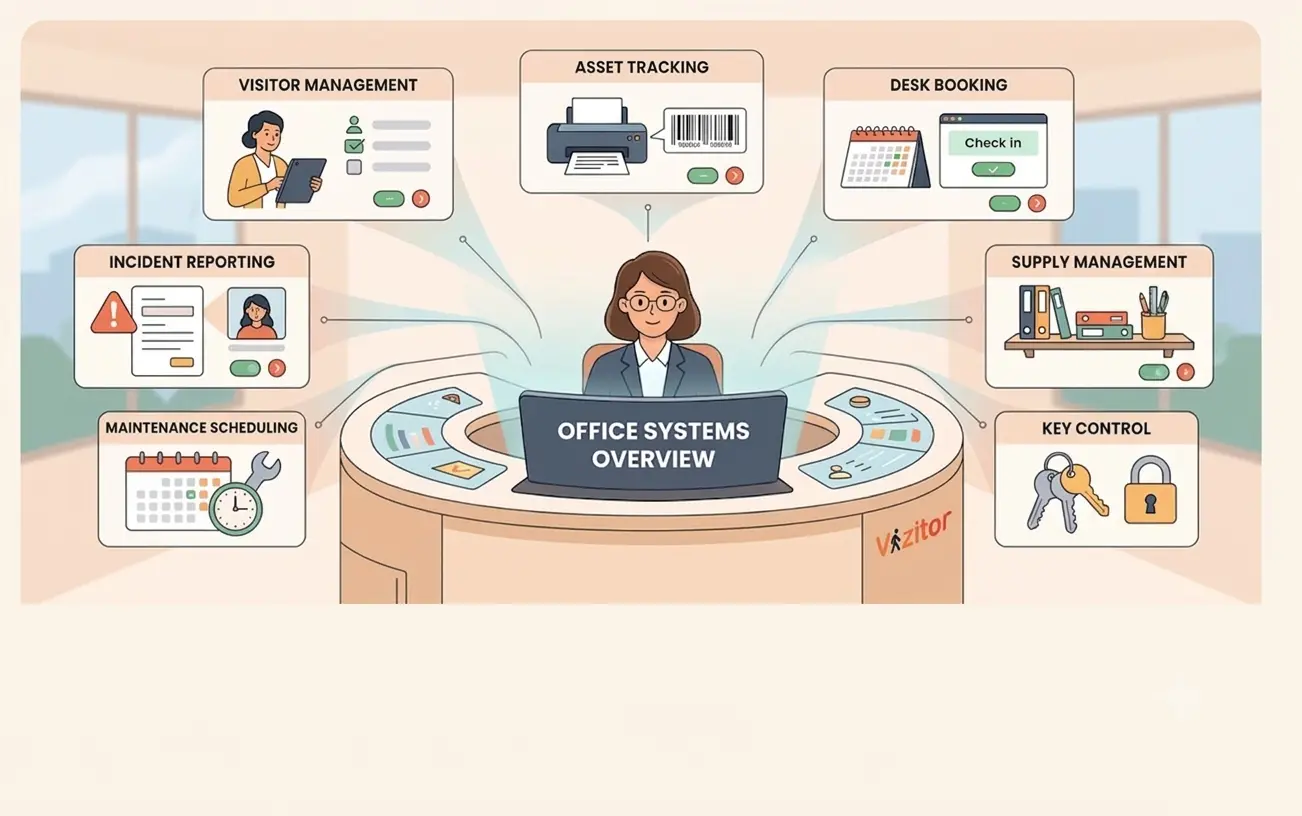
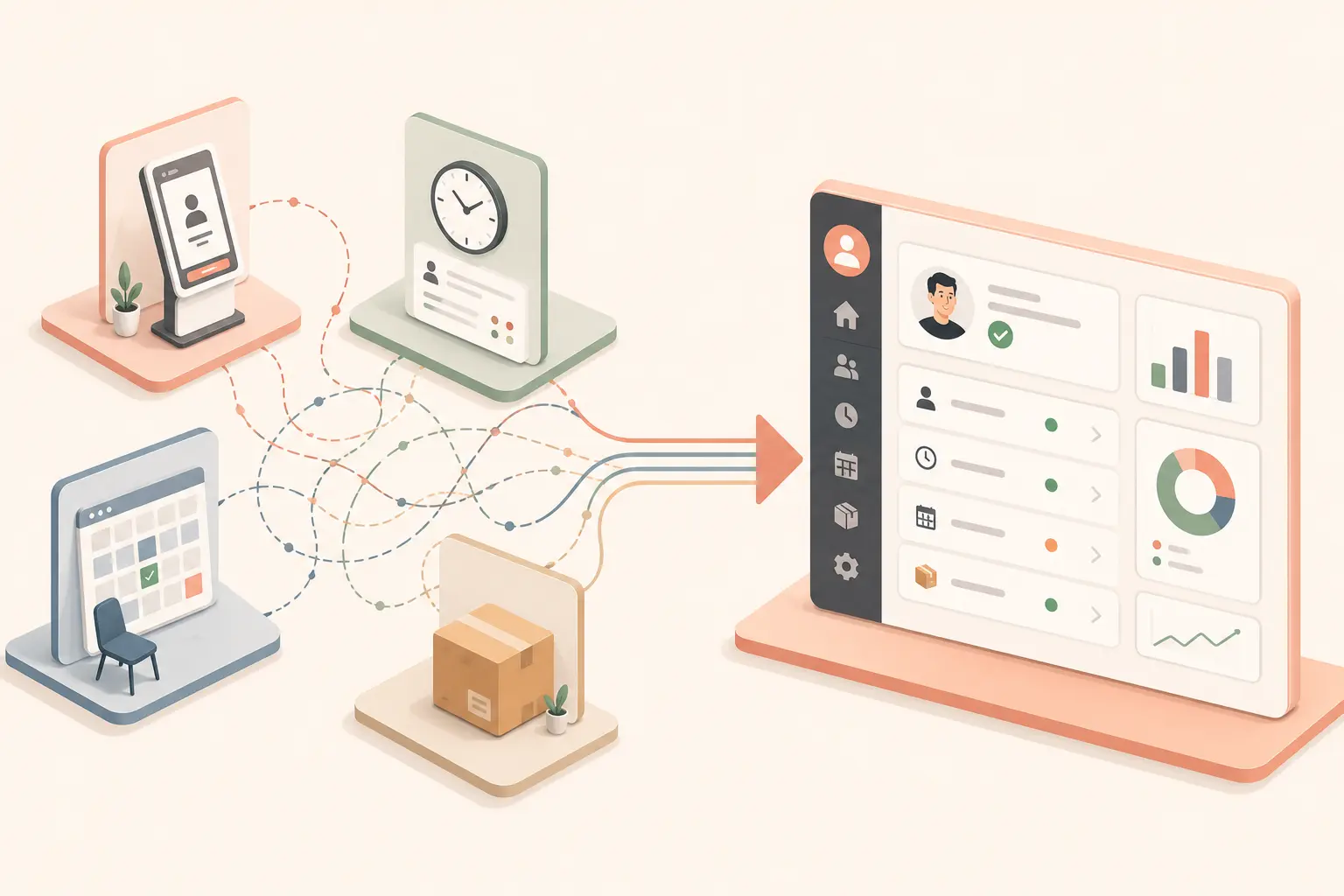
The Vizitor Workplace Management Platform provides government offices with a unified system for managing every aspect of facility operations - from citizen queue management and visitor screening to staff attendance and building security.
Key Challenges in Government Facilities
Citizen Flow and Queue Management
The most visible problem in government offices is long wait times. Citizens arrive for services - permit applications, license renewals, tax filings, document verifications - and often spend hours in unstructured queues with no visibility into wait times or service availability.
A Queue Management System transforms this experience by providing:
- Token-based or appointment-based queuing
- Real-time wait time estimates displayed on screens and sent via SMS
- Service-specific queues that route citizens to the correct counter
- Priority handling for senior citizens, persons with disabilities, and other designated groups
Visitor and Citizen Registration
Government facilities receive a mix of citizens seeking services, vendors, contractors, advocates, government officials from other agencies, and media personnel. Each requires different identification, screening, and access protocols.
A Visitor Management System configured for government handles:
- Aadhaar or government ID-based verification
- Pre-registration for scheduled appointments
- Walk-in registration with configurable screening workflows
- VIP and official visitor protocols
- Restricted area access management
Staff Attendance and Accountability
Government attendance tracking has traditionally relied on manual registers, which are prone to proxy attendance and difficult to reconcile across large facilities with hundreds of employees.
An Attendance Management System provides biometric or app-based check-in, shift tracking, leave integration, and real-time dashboards that give supervisors instant visibility into attendance patterns.
Facility Space Management
Government offices often operate in large complexes with multiple departments sharing space. Conference rooms, hearing rooms, training halls, and multi-purpose spaces need coordinated scheduling.
A Meeting Room Booking System prevents double-bookings, tracks utilization, and ensures that premium spaces are used efficiently rather than sitting empty while other departments struggle for space.
Security and Access Control
Government buildings require layered security - public areas, restricted zones, classified sections, and emergency-only areas. Managing access across these layers manually is both labor-intensive and error-prone.
Workplace Security Management provides badge-based access control, restricted zone enforcement, real-time occupancy monitoring, and emergency lockdown capabilities.
Comparison: Traditional vs. Digital Government Workplace Management
| Function | Traditional Approach | Digital Platform Approach |
|---|---|---|
| Citizen queuing | First-come-first-served, no visibility | Token/appointment system with real-time wait times |
| Visitor registration | Paper logbooks at entry gates | Digital registration with ID verification |
| Staff attendance | Manual registers, monthly reconciliation | Real-time digital tracking with biometric verification |
| Room booking | Phone calls to admin, frequent conflicts | Self-service booking with availability visibility |
| Mail and file tracking | Manual dispatch registers | Digital tracking via Delivery Management System |
| Security | Guard logs, manual badge issuance | Integrated access control with zone management |
| Reporting | Manual compilation, weeks to generate | Real-time dashboards and automated reports |
Implementation Scenarios
District and Municipal Offices
These high-traffic facilities serve citizens for property registrations, birth and death certificates, utility connections, and permit applications. The primary need is managing citizen flow efficiently while maintaining accurate records.
Key implementations:
- Service-specific queue management with estimated wait times
- Appointment scheduling to reduce walk-in pressure
- Digital citizen registration that creates an audit trail
- Staff attendance tracking across shifts and departments
Courthouses and Legal Facilities
Courts manage a complex mix of litigants, advocates, witnesses, court staff, and judicial officers. Security is paramount, and access to certain areas (judge’s chambers, evidence rooms) must be strictly controlled.
Key implementations:
- Visitor screening with case-linked access permissions
- Restricted zone management for sensitive areas
- Hearing room scheduling and utilization tracking
- Staff and officer attendance with shift support
Regulatory and Licensing Agencies
These offices process applications - business licenses, environmental permits, trade registrations - that follow defined workflows. Digital queue management and appointment scheduling eliminate the chaos of unstructured walk-in traffic.
Key implementations:
- Appointment-based citizen flow management
- Application-stage-based queuing (submission, review, collection)
- Document and file delivery tracking
- Inter-departmental meeting room coordination
Government Training Institutes
Training facilities for government employees need classroom scheduling, trainee attendance tracking, and visitor management for guest faculty and external speakers.
Key implementations:
- Classroom and training room booking with Desk Booking System for shared spaces
- Trainee and instructor attendance tracking
- Guest speaker and visitor registration
- Supply and material delivery management
Compliance and Governance Requirements
Government workplace management must comply with:
- Right to Information (RTI) Act: Visitor and service records must be maintainable and retrievable
- Official Secrets Act: Classified areas require strict access control and audit trails
- Data Protection Laws (DPDP Act): Citizen data collected during registration must be handled with privacy protections
- Government e-Governance Standards: Digital systems must meet interoperability and security standards set by government IT policies
- Accessibility Requirements: Systems must accommodate citizens with disabilities, including multi-language support and accessible interfaces
A platform designed for government environments builds these requirements into its architecture rather than treating them as afterthoughts.
Measurable Outcomes
Government facilities implementing integrated workplace management typically achieve:
- 40-60% reduction in citizen wait times through structured queue management
- 80% faster visitor processing at entry points
- Near-elimination of proxy attendance through biometric verification
- 25-35% improvement in space utilization across shared facilities
- Significant reduction in citizen complaints related to wait times and service delivery
Building the Case for Government Adoption
Government procurement decisions require clear justification. The strongest arguments are:
- Citizen satisfaction. Long queues and opaque processes erode public trust. Digital queue management and appointment scheduling demonstrate a commitment to citizen-centric service delivery.
- Operational accountability. Real-time attendance, visitor logs, and space utilization data provide transparency that manual systems cannot match.
- Cost efficiency. Reduced manual processing, better space utilization, and lower paper and printing costs deliver measurable savings.
- Digital India alignment. Workplace digitization aligns with national digital governance initiatives and demonstrates progressive administration.
Frequently Asked Questions
Can the platform work in government facilities with limited internet connectivity? Yes. Vizitor supports offline operation modes that continue functioning during network outages. Data syncs automatically when connectivity is restored. This is critical for government offices in areas with unreliable internet infrastructure.
How does the system handle the volume of citizens in high-traffic government offices? The platform is designed for scale. Queue management supports thousands of tokens per day, visitor registration processes check-ins in under 30 seconds, and the system architecture handles concurrent usage across hundreds of counters and entry points without performance degradation.
Is the platform available in regional languages? Multi-language support is essential for government applications. The platform supports configurable language options for citizen-facing interfaces (kiosks, SMS notifications, display screens) to ensure accessibility across diverse populations.
How does procurement work for government agencies? Vizitor supports standard government procurement processes and is available on Government e-Marketplace (GeM) and through direct procurement channels. The team provides documentation and support for tender and RFP processes.
What security certifications does the platform hold? The platform maintains industry-standard security certifications and complies with government IT security guidelines. Data encryption, access controls, audit logging, and regular security assessments ensure the platform meets public sector security requirements.
Taking the Next Step
Government offices that modernize their workplace operations do not just improve efficiency. They rebuild citizen trust through faster service, transparent processes, and accountable operations.
The Vizitor Workplace Management Platform is built for the scale, security, and compliance demands of government facilities. Request a demo to see the platform configured for public sector operations, or explore pricing for your facility type and size.
For related sector guides, see our resources on workplace management for healthcare, education, and retail.
Try Vizitor Free
No credit card required. Setup in under 5 minutes. Manage visitors, queues, meeting rooms, and more.
Start Free TrialSee Vizitor in action check-in a visitor in under 30 seconds
Trusted by 500+ businesses. QR check-in, badge printing, NDA signing. Plans from $36/mo.