Workplace Experience Platform: What It Is and How It Differs


Table of Content
Try Vizitor for Free!
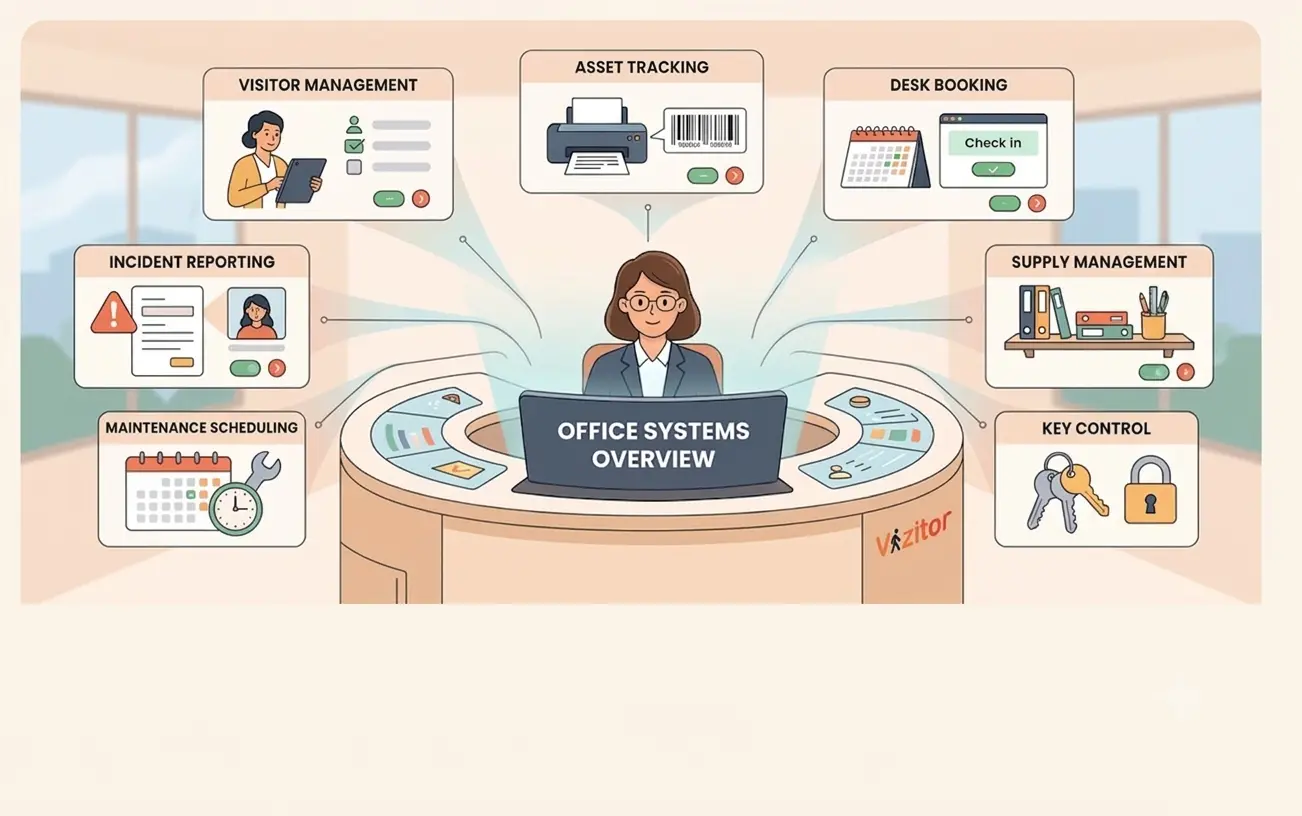
Workplace experience platform (WXP) is a technology solution designed to optimize the employee’s interaction with their physical work environment. While a workplace management system focuses on operational efficiency (managing spaces, visitors, queues, and compliance), a workplace experience platform emphasizes the employee’s perspective: making it easy to find and book spaces, navigate the office, connect with colleagues, access services, and provide feedback. In practice, the best solutions combine both operational management and employee experience into a single platform.
What Is a Workplace Experience Platform?
A workplace experience platform puts the employee at the center of workplace technology design. Instead of asking “How do we manage this building efficiently?", it asks “How do we make this workplace work well for the people who use it every day?”
This distinction matters because operational efficiency and employee experience are not always the same thing. A system that optimizes room utilization by enforcing strict booking policies might be operationally efficient but frustrating for employees. A system that lets employees book anything anytime might deliver a great experience but lead to wasted resources.
The best workplace experience platforms balance both: they deliver operational efficiency through the lens of employee experience. They make the efficient choice the easy choice.
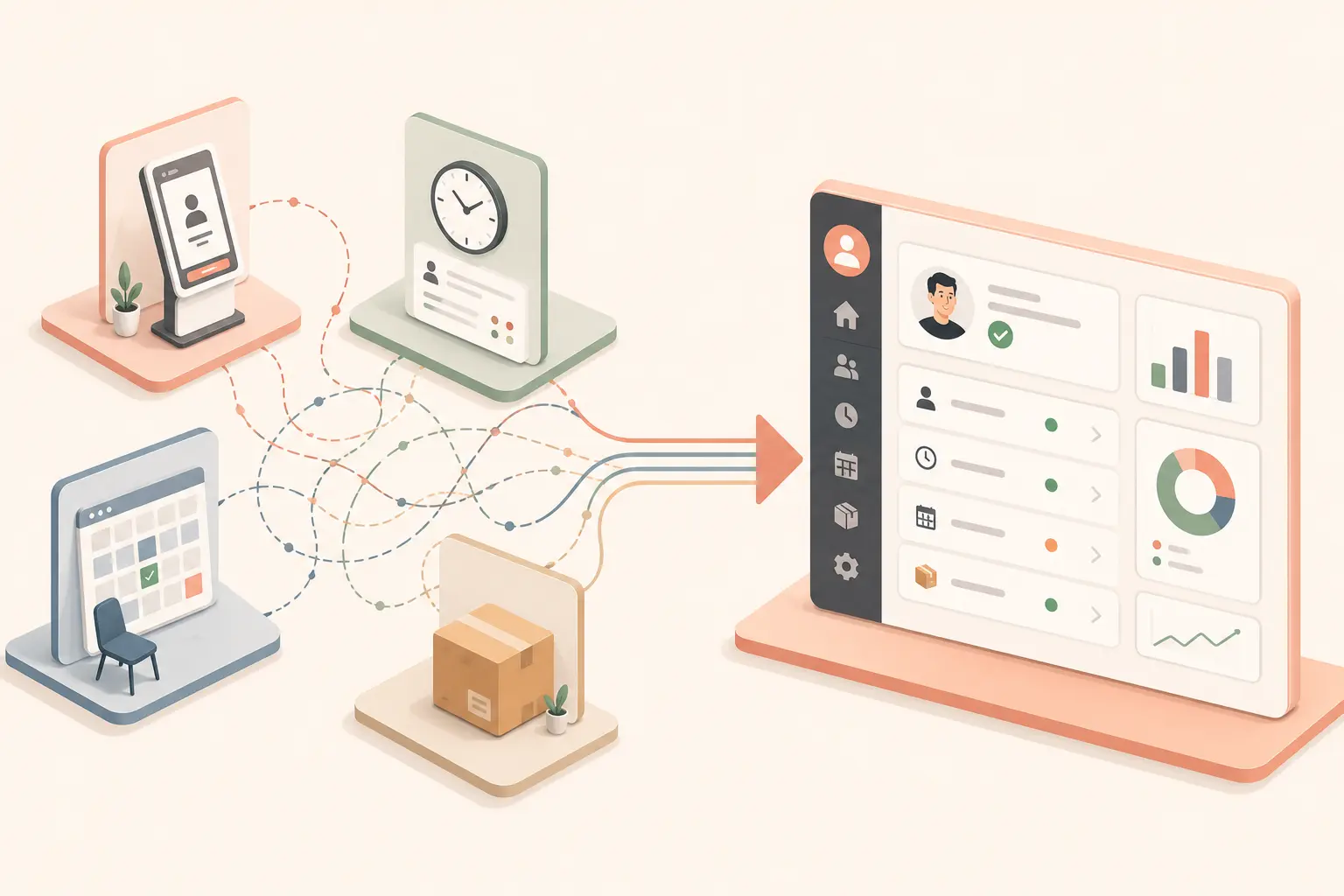
A workplace management platform that is designed with employee experience in mind functions as both an operational system and an experience platform. This convergence is the direction the market is heading.
According to Gartner’s 2025 Digital Workplace Survey, organizations with dedicated workplace experience platforms report 34% higher employee satisfaction with their physical work environment compared to those using operations-only tools (Gartner, 2025).
Core Components of a Workplace Experience Platform
Unified Employee App
The most visible component of a workplace experience platform is the employee-facing mobile app. Through this single app, employees can:
- Book a desk for the day with one tap.
- Reserve a meeting room with calendar integration.
- See which colleagues are in the office and where they are sitting.
- Check their delivery and mail status.
- Join a virtual queue for services.
- View real-time floor maps with available spaces highlighted.
- Access wayfinding to navigate to their desk, meeting room, or visitor.
- Submit feedback on their workspace experience.
The key design principle is consolidation: one app for everything workplace-related, rather than separate apps for booking, notifications, and facilities.
Colleague Finder and Team Coordination
In hybrid environments, knowing who is in the office matters. A workplace experience platform provides visibility into team members’ office schedules, enabling employees to coordinate in-office days and book spaces near teammates.
This feature transforms the office from a place you go to a place you choose to go because your team is there. It adds social context to space booking.
Personalized Recommendations
Advanced workplace experience platforms learn from employee behavior and provide personalized suggestions. “You usually sit on the third floor on Tuesdays. Desk 3-14 is available. Book it?” or “Your 2 PM meeting has four participants. Huddle Room B is the right size and available.”
Personalization reduces cognitive load. Instead of browsing floor maps and comparing options, employees receive tailored recommendations based on their patterns and preferences.
Wayfinding and Navigation
For large campuses and multi-floor offices, wayfinding helps employees navigate to their booked desk, meeting room, or visitor’s location. Interactive maps, turn-by-turn directions, and location-aware search make the physical workplace as navigable as a digital one.
Service Requests and Communication
Employees interact with workplace services constantly: requesting IT support, reporting maintenance issues, ordering supplies, booking catering. A workplace experience platform centralizes these requests in the same app employees use for booking and navigation, eliminating the need to search for the right email address or service portal.
Feedback and Sentiment Tracking
A workplace experience platform includes mechanisms for employees to rate their workspace, report issues, and suggest improvements. Aggregated feedback data reveals trends in satisfaction, identifies recurring pain points, and provides a continuous signal for workplace optimization.
Workplace Experience Platform vs. Workplace Management System
The distinction between these two categories is real but narrowing. Here is how they compare.
| Dimension | Workplace Experience Platform (WXP) | Workplace Management System (WMS) |
|---|---|---|
| Primary design focus | Employee experience | Operational efficiency |
| Core question | “Is this easy and enjoyable for employees?” | “Are operations running smoothly and cost-effectively?” |
| Primary users | Employees (end users) | Facility managers, admins, security |
| Mobile app priority | Central, polished, consumer-grade | Functional, often secondary to admin dashboard |
| Colleague visibility | Core feature | Not typically included |
| Personalization | AI recommendations, learned preferences | Standard configurations |
| Wayfinding | Often included | Rarely included |
| Feedback mechanisms | Built-in, continuous | Separate survey tools |
| Visitor management | Light (host-side notifications) | Deep (full lifecycle) |
| Queue management | Sometimes included | Deep (virtual queuing, analytics) |
| Compliance and security | Light | Comprehensive (audit trails, screening) |
| Space analytics depth | Moderate (utilization trends) | Deep (portfolio-level optimization) |
| Attendance management | Light (office day tracking) | Comprehensive (shifts, overtime, leave) |
The Convergence
The market is converging. Pure workplace experience platforms are adding operational depth (compliance, security, analytics). Pure workplace management systems are improving their employee-facing experience (mobile apps, personalization, wayfinding).
Organizations benefit most from a solution that delivers both: operational depth for facility managers and security teams, combined with an employee experience that people actually want to use.
A workplace management platform that prioritizes user experience design represents this convergence. It manages operations comprehensively while delivering a polished, intuitive experience to end users.
Employee-Centric Design Principles
Whether you call it a workplace experience platform or a workplace management platform, these design principles determine whether employees will actually use it.
Principle 1: One App, Not Ten
Employees should not need separate apps for desk booking, room reservations, visitor notifications, queue management, and feedback. Consolidate all workplace interactions into a single mobile app with an intuitive interface.
Principle 2: Speed Over Completeness
Most workplace interactions should take under 10 seconds. Book a desk: two taps. Reserve a room: three taps. Check delivery status: one tap. Prioritize speed for common actions, even if it means simplifying options.
Principle 3: Smart Defaults
Reduce decision fatigue by providing smart defaults. Pre-select the employee’s preferred floor, suggest the same desk they used last week, default to the right room size for the meeting participant count. Let employees override defaults, but make the default action the right action 80% of the time.
Principle 4: Social Context
Show who else is in the office. Let employees see their team’s plans for the week. Enable group desk booking. The office is a social environment, and the technology should reflect that.
Principle 5: Proactive, Not Reactive
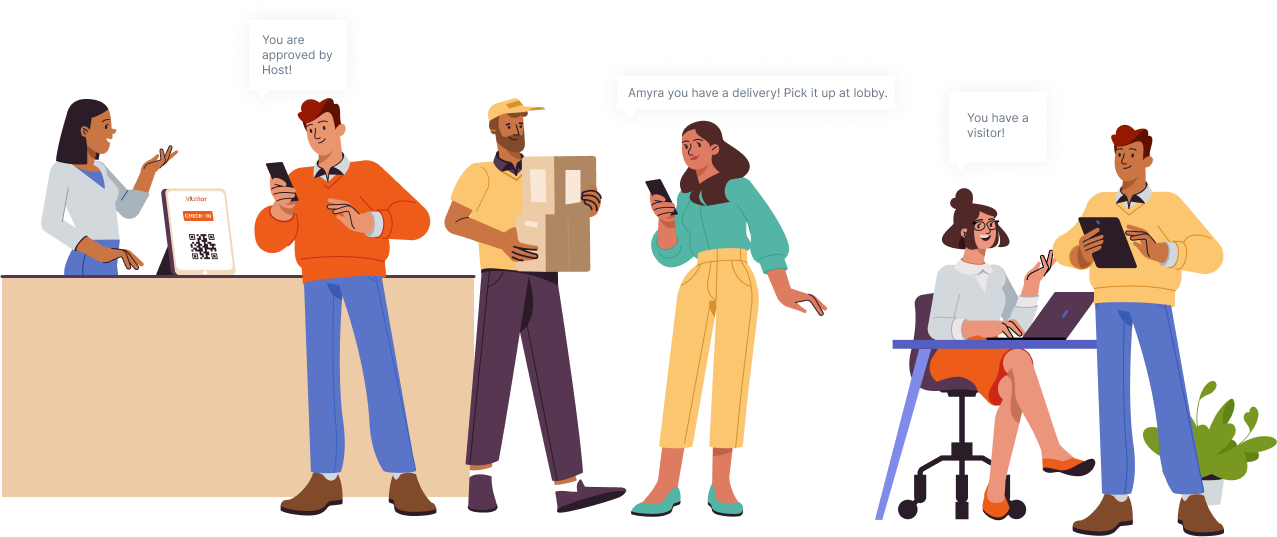
Push relevant information to employees instead of making them search. “Your visitor has arrived.” “Your package is ready for pickup.” “Your meeting room changed to Room C.” “The fourth floor is at 90% capacity today; the third floor has availability.”
Principle 6: Feedback Loop
Make it easy to report issues and provide feedback in the moment. A one-tap rating after checking out of a desk or room provides continuous experience data. Acting on that feedback and communicating improvements closes the loop and builds trust.
Evaluating Workplace Experience Platforms
Assessment Criteria
Employee adoption potential. Does the platform have a consumer-grade mobile experience that employees will voluntarily use? Request a trial and have actual employees (not just administrators) test it.
Operational depth. Does the platform provide sufficient operational capabilities for facility managers, security teams, and compliance requirements? Experience without operational substance is insufficient.
Integration breadth. Does the platform integrate with your calendar system, communication tools, HRIS, and access control? Integration determines whether the platform fits naturally into existing workflows.
Personalization capability. Can the platform learn from employee behavior and provide personalized recommendations? This is a differentiator between basic and advanced platforms.
Analytics quality. Does the platform provide insights that are actionable, not just informational? Can you identify specific improvements based on the data it generates?
Multi-site consistency. If you have multiple locations, does the platform provide a consistent experience across all sites while accommodating local differences?
Industry Examples
Technology Companies
Tech companies were early adopters of workplace experience platforms. With highly mobile, hybrid workforces and strong expectations for consumer-grade tools, tech organizations use WXPs for flexible desk booking, team coordination, and data-driven space planning.
Professional Services Firms
Law firms, consulting firms, and accounting firms use workplace experience platforms to manage client-facing meeting rooms, coordinate visiting professionals across offices, and optimize space in expensive downtown real estate.
Healthcare Administration
Hospital administrative offices use workplace experience platforms for staff workspace management, while patient-facing areas rely on queue management and visitor management capabilities. The combination of experience and operational functions is critical in healthcare.
Manufacturing Corporate Offices
While factory floors use specialized systems, corporate and R&D offices in manufacturing organizations use workplace experience platforms for the same purposes as other industries: desk booking, room management, visitor check-in, and space optimization.
Frequently Asked Questions
What is a workplace experience platform?
A workplace experience platform is a technology solution that optimizes how employees interact with their physical work environment. It provides a unified mobile app for booking desks and rooms, navigating the office, connecting with colleagues, accessing services, and providing feedback. Unlike operations-only tools that focus on administrative efficiency, a workplace experience platform prioritizes the end-user experience while still supporting operational needs.
How does a workplace experience platform differ from a workplace management system?
The primary difference is design focus. A workplace experience platform is designed around the employee’s perspective, emphasizing ease of use, personalization, and satisfaction. A workplace management system is designed around operational efficiency, emphasizing compliance, analytics, and administrative control. In practice, the best solutions combine both approaches, and the market is converging toward platforms that deliver operational depth with consumer-grade employee experience.
Do I need a separate workplace experience platform if I have a workplace management system?
Not necessarily. If your existing workplace management system provides a strong employee-facing mobile app with intuitive booking, wayfinding, colleague visibility, and feedback mechanisms, it may already serve as your workplace experience platform. Evaluate your current system against the employee experience criteria in this guide. If the employee-facing experience is weak, consider either upgrading your platform or adding an experience layer.
What metrics indicate that my workplace experience platform is working?
Key metrics include employee adoption rate (percentage of employees actively using the platform weekly), booking completion rate (percentage of bookings made through the platform vs. informal methods), employee satisfaction scores (workplace experience survey results), time-to-book (average time to complete a desk or room reservation), and feedback volume (employees actively providing ratings and comments indicates engagement with the platform).
How does a workplace experience platform support hybrid work?
Hybrid work is the primary use case for workplace experience platforms. When employees choose which days to work in the office, they need tools to book desks, reserve rooms, see who else will be there, and navigate the space. The platform turns what could be a chaotic, uncertain experience into a planned, social, and productive one. It also provides the data organizations need to right-size their space for hybrid models.
Create a Workplace People Love to Use
The best workplace experience platform is one that employees actually use, not because they have to, but because it makes their work day better. It combines operational rigor with design thinking, providing the management capabilities your team needs and the experience your employees deserve.
Vizitor’s workplace management platform delivers both operational depth and a polished employee experience, with modules for visitor management, desk and room booking, queue management, attendance, and space analytics.
Try Vizitor Free
No credit card required. Setup in under 5 minutes. Manage visitors, queues, meeting rooms, and more.
Start Free TrialSee Vizitor in action check-in a visitor in under 30 seconds
Trusted by 500+ businesses. QR check-in, badge printing, NDA signing. Plans from $36/mo.