Mailroom Automation: How to Digitize and Streamline Your Mail



Table of Content
Try Vizitor for Free!
Mailroom Automation: How to Digitize and Streamline Your Mail Operations
Key Takeaway: Mailroom automation replaces manual logging, verbal notifications, and paper sign-offs with digital workflows that process packages in seconds instead of minutes – reducing mailroom labor by 60-75%, cutting package loss rates to near zero, and giving your organization a complete audit trail for every delivery.
Your mailroom is probably the least digitized part of your entire organization. While every other function has moved to cloud platforms and automated workflows, most corporate mailrooms still rely on handwritten registers, phone calls, and the hope that packages do not disappear.
Mailroom automation fixes this by applying the same principles of digital workflow automation that transformed HR, finance, and operations – to the one area that has been left behind.
This guide walks you through everything you need to know about automating your mailroom: what it involves, the specific processes you can automate, the tools and technology available, how to implement it, and the measurable results you can expect.
What Is Mailroom Automation?
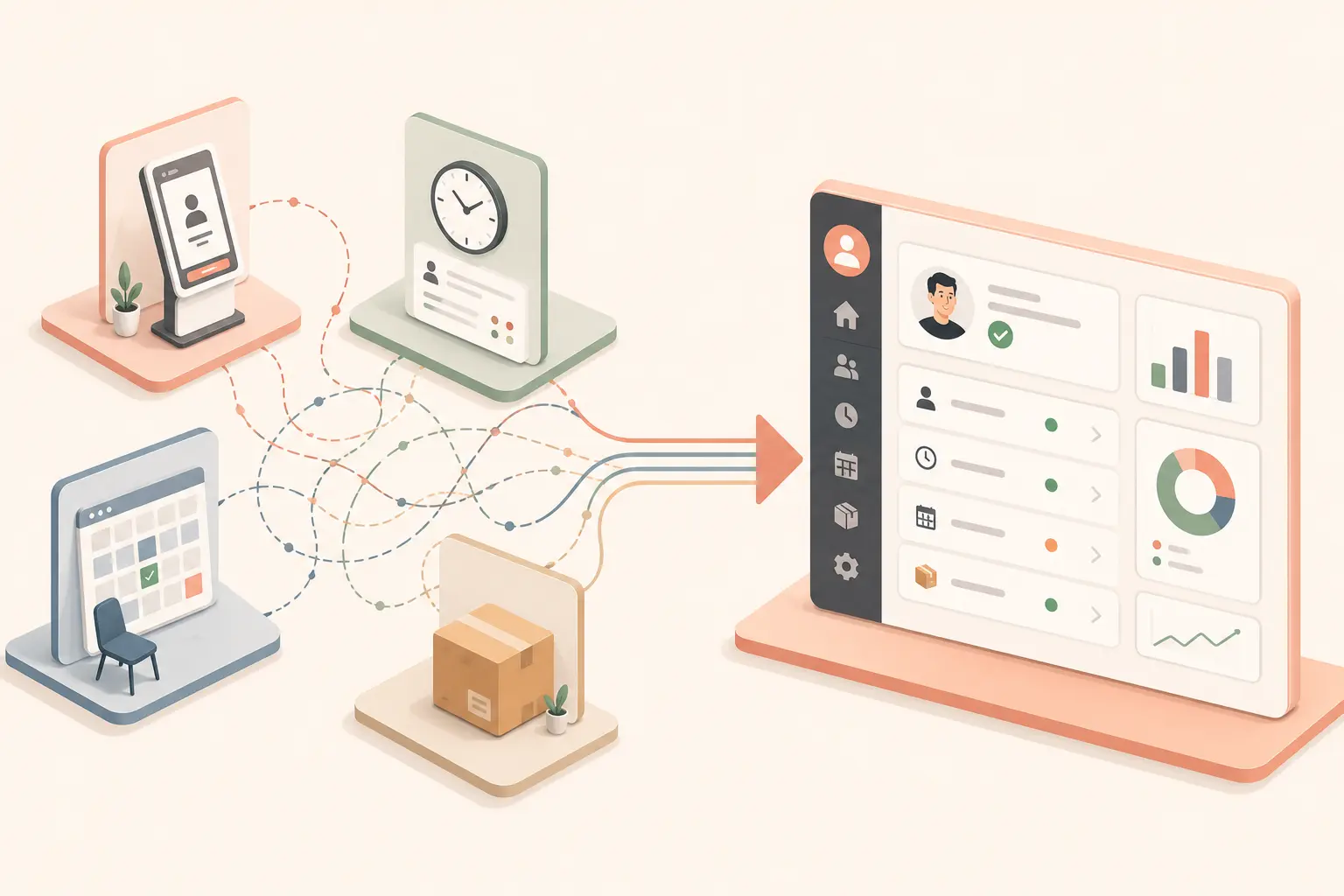
Mailroom automation is the use of software and technology to digitize and streamline the processes involved in receiving, sorting, tracking, notifying, and handing over mail and packages in a workplace. It transforms manual, time-consuming tasks into fast, reliable digital workflows.
Here is what mailroom automation looks like in practice:
| Manual Process | Automated Process |
|---|---|
| Write recipient name in paper log | Scan barcode or type name with auto-complete |
| Call or walk to recipient’s desk | Instant SMS/email/WhatsApp notification |
| Mentally track uncollected packages | Automated reminders at set intervals |
| Paper signature at pickup | Digital signature or OTP verification |
| Manually count weekly deliveries | Real-time analytics dashboard |
| Search through register pages to find a record | Instant digital search by name, date, or type |
The goal is simple: eliminate every manual step that adds time, introduces errors, or creates security gaps in your mail handling process.
Why Automate Your Mailroom Now?
The Volume Demand
Global parcel volumes continue to climb. Pitney Bowes projects over 250 billion parcels shipped worldwide by 2027. A meaningful share of those land at office mailrooms. Manual processes that worked when you received 10 packages a day collapse when you receive 50 or 100.
The Hybrid Work Reality
With employees splitting time between office and home, traditional notification methods (walking to someone’s desk, calling their landline) fail frequently. Automated multi-channel notifications are the only reliable way to reach hybrid workers about their deliveries.
The Compliance Pressure
Industries like healthcare, finance, legal, and government face increasing scrutiny over how they handle incoming mail and packages. Regulators expect documented chain of custody – something paper logs cannot reliably provide but automated systems do by default.
The Talent Reallocation Opportunity
Front-desk and mailroom staff spend a disproportionate amount of time on manual delivery processing. Automation frees them to focus on higher-value tasks like visitor hospitality, facility coordination, and security management.
The 6 Mailroom Processes You Should Automate
1. Package Intake and Logging
The manual way: Staff writes down the recipient name, sender, date, and package description in a paper register. This takes 2-3 minutes per package and is prone to errors (misspelled names, illegible handwriting, skipped entries).
The automated way: Staff scans the package barcode or QR code, or types the first few letters of the recipient’s name and selects from an auto-populated employee directory. The system logs the timestamp, sender details (from the label), and package type automatically. Total time: 15-30 seconds per package.
Impact: 80% reduction in logging time. Near-zero data entry errors.
2. Recipient Notification
The manual way: Staff calls the recipient’s desk phone (no answer – they are in a meeting), sends an email (gets buried in inbox), or physically walks to their desk (they are working from home).
The automated way: The system instantly sends notifications through multiple channels simultaneously – SMS, email, WhatsApp, Slack, Microsoft Teams, or mobile app push. The recipient gets notified within seconds, regardless of where they are.
Impact: Notification delivery time drops from minutes-to-hours to seconds. Pickup rates improve dramatically.
3. Reminder and Escalation Workflows
The manual way: Staff tries to remember which packages have been sitting too long. They might do a weekly cleanup. Most uncollected packages are discovered too late.
The automated way: The system automatically sends reminders at configurable intervals:
- 2-4 hours: Friendly reminder to the recipient
- 24 hours: Second reminder with pickup location
- 3 business days: Escalation to recipient’s manager or department admin
- 7 business days: Trigger return-to-sender or alternative disposition workflow
Impact: Uncollected package rate drops from 15-20% to under 3%.
4. Proof of Handover
The manual way: The recipient signs a paper register (if they sign at all). The signature is often illegible, and there is no way to verify it after the fact.
The automated way: The recipient verifies their identity through:
- OTP verification – A one-time code sent to their registered phone
- Digital signature – On a tablet or smartphone screen
- Photo capture – Photograph of the recipient at handover
- Badge/ID scan – Employee ID card verification
Impact: Complete, verifiable chain of custody for every package. Disputes become resolvable.
5. Storage and Location Management
The manual way: Packages are placed wherever there is space. When someone comes to pick up, staff searches through piles of packages.
The automated way: Each package is assigned a specific storage location (shelf number, bin code, locker number) at intake. The location is included in the notification, so the recipient knows exactly where to go. The system tracks storage occupancy in real time.
Impact: Pickup time at the mailroom reduced by 50-70%. Storage capacity optimized.
6. Reporting and Analytics
The manual way: If management wants data on mailroom operations, someone has to manually count entries in a register and create a report. This happens rarely, if ever.
The automated way: The system provides a real-time analytics dashboard with:
- Daily, weekly, and monthly delivery volumes
- Average time from notification to pickup
- Uncollected package rates
- Peak delivery times and days
- Package type distribution
- Department-wise delivery breakdown
Impact: Data-driven decisions on staffing, storage, and process optimization – without manual effort.
Mailroom Automation Technology Stack
Here are the technology components that make up a modern automated mailroom:
Core Software: Mailroom Management Platform
This is the central system that orchestrates all automated workflows. Look for a platform like Vizitor’s mailroom management software that provides:
- Package logging with scanning support
- Multi-channel notification engine
- Automated reminder and escalation workflows
- Digital proof of handover
- Storage location management
- Analytics and reporting dashboard
- Integration APIs for connecting with other systems
Hardware: Minimal Requirements
One of the advantages of modern mailroom automation is that it requires very little hardware:
- A tablet or computer at the mailroom station (you likely already have this)
- A barcode scanner (optional – most systems support camera-based scanning on tablets)
- Smart lockers (optional – for self-service pickup in high-volume environments)
There is no need for expensive hardware installations. Cloud-based software means the system runs in a browser or app.
Integrations: Connecting the Ecosystem
The automation platform should connect with:
- HRMS – For the employee directory (names, departments, contact details)
- Visitor management system – To link vendor deliveries with visitor check-ins
- Communication tools – Slack, Microsoft Teams, email servers, SMS gateways
- Delivery management system – If front-desk deliveries and mailroom operations are managed separately
- Access control – For pickup authorization in high-security environments
Step-by-Step Guide to Automating Your Mailroom
Step 1: Map Your Current Process (Week 1)
Before automating, document what you have:
- How many packages arrive daily? (Track for at least one week)
- What types of packages? (Courier, personal, vendor, food, confidential)
- How are recipients notified today? (Phone, email, walk-over, not at all)
- How are packages stored? (Organized shelves, random pile, no system)
- How is pickup verified? (Paper sign-off, verbal confirmation, nothing)
- What are the biggest pain points? (Lost packages, slow notifications, front-desk overload)
Step 2: Define Your Automation Goals (Week 1)
Be specific about what you want to achieve:
- Reduce package logging time to under 30 seconds per item
- Achieve instant notification delivery (under 60 seconds)
- Reduce uncollected package rate to under 5%
- Eliminate unverified handovers (100% digital proof of pickup)
- Generate weekly operational reports without manual effort
Step 3: Select Your Platform (Week 2)
Evaluate mailroom management software based on:
- Feature completeness – Does it cover all 6 automation areas above?
- Ease of use – Can staff learn it in under an hour?
- Notification channels – Does it support the channels your employees use?
- Integration capability – Will it connect with your HRMS and communication tools?
- Multi-location support – If you have multiple offices
- Pricing – Transparent, predictable, aligned with your budget
Vizitor offers all of these capabilities as part of a broader workplace management platform that includes visitor management, delivery management, desk booking, and more.
Step 4: Prepare Your Environment (Week 2-3)
- Clean your employee directory – Ensure names, departments, phone numbers, and emails are current
- Label your storage areas – Number shelves, bins, or lockers clearly
- Set up a mailroom station – Tablet or computer positioned for easy scanning and logging
- Configure notification preferences – Set default channels and allow employees to customize
- Define escalation rules – Reminder intervals and escalation paths
Step 5: Configure and Test (Week 3)
- Import employee directory into the platform
- Set up notification templates for different package types
- Configure reminder intervals and escalation workflows
- Test the full flow with sample packages – log, notify, remind, collect, verify
- Verify integrations are working (HRMS sync, Slack/Teams notifications)
Step 6: Train Staff (Week 3-4)
- Mailroom staff – Hands-on training with real packages (usually 30-60 minutes)
- Front-desk staff – If they handle deliveries that bypass the mailroom
- All employees – Brief communication on how notifications work and what to do when they receive one
Step 7: Pilot and Optimize (Week 4)
- Start with one building, floor, or department
- Collect feedback from mailroom staff and recipients after 1 week
- Adjust workflows based on feedback (notification timing, escalation rules, storage assignments)
- Measure against your goals from Step 2
Step 8: Full Rollout (Week 5+)
- Expand to all locations and departments
- Send an organization-wide announcement about the new system
- Monitor KPIs for the first month: logging time, notification speed, pickup rates, loss rates
- Review and optimize monthly based on analytics
Measuring the ROI of Mailroom Automation
Direct Cost Savings
| Category | Before Automation | After Automation |
|---|---|---|
| Staff time on manual logging and notification | 2-4 hours/day | 30-60 minutes/day |
| Lost/misrouted packages (replacement cost) | 8-12% loss rate | Under 1% loss rate |
| Employee time searching for deliveries | 10-20 min/person/week | Near zero |
| Paper, printing, register costs | Ongoing | Eliminated |
Indirect Benefits
- Improved employee satisfaction – No more frustration over lost or delayed deliveries
- Better front-desk experience – Staff freed from delivery drudgery to focus on visitor hospitality
- Compliance readiness – Audit-ready records available instantly
- Scalability – The automated system handles 100 packages as easily as 10
Sample ROI Calculation
For a mid-size office (500 employees, 60 packages/day):
- Annual labor savings: Rs 3,50,000 (staff time reallocation)
- Package loss prevention: Rs 1,80,000 (reduced replacement costs)
- Employee productivity gains: Rs 2,40,000 (less time wasted on delivery issues)
- Total annual benefit: ~Rs 7,70,000
- Typical annual software cost: Rs 60,000 - Rs 1,50,000
- ROI: 400-1,200% in the first year
Common Mistakes in Mailroom Automation (and How to Avoid Them)
Mistake 1: Automating Without Understanding Current Workflows
The fix: Always map your current process first. Automation should streamline your workflows, not replicate bad processes digitally.
Mistake 2: Choosing Email-Only Notifications
The fix: Email has a poor real-time open rate. Always include SMS or WhatsApp as a notification channel for time-sensitive delivery alerts.
Mistake 3: Skipping the Pilot Phase
The fix: Run a 1-2 week pilot with a subset of your organization. It reveals workflow issues and usability gaps before they affect everyone.
Mistake 4: Not Training Recipients
The fix: Do not just train mailroom staff. Communicate to all employees how the new system works – how they will be notified, where to pick up, and how to verify their identity.
Mistake 5: Ignoring Analytics After Launch
The fix: Review your mailroom analytics weekly for the first month, then monthly. The data will reveal optimization opportunities you would never spot otherwise.
Mistake 6: Not Integrating with Existing Systems
The fix: Connect your mailroom automation platform with your HRMS (for accurate employee data) and communication tools (for reliable notifications). Standalone systems create data silos.
The Future of Mailroom Automation
AI-Driven Package Processing
Computer vision and natural language processing will enable automatic label reading – point a camera at a package and the system identifies the recipient, sender, and package type without any manual input.
Autonomous Internal Delivery
Delivery robots will carry packages from the mailroom to employees’ desks or designated pickup points within the building, eliminating the need for recipients to visit the mailroom entirely.
Predictive Mailroom Management
Machine learning algorithms will analyze delivery patterns to predict daily volumes, peak times, and staffing needs – enabling proactive rather than reactive mailroom management.
Zero-Touch Smart Lockers
Automated locker systems will receive, sort, and store packages without human intervention. Recipients receive an access code and pick up at their convenience, 24/7.
Sustainability Integration
Future systems will track packaging waste, delivery consolidation opportunities, and carbon footprint data to support corporate sustainability goals and ESG reporting.
Why Vizitor for Mailroom Automation
Vizitor provides a complete mailroom automation solution designed for modern workplaces:
- Fast package intake – Scan or type with auto-complete from your employee directory
- Instant multi-channel notifications – SMS, email, WhatsApp, and in-app alerts
- Automated reminders and escalation – Configurable workflows that eliminate manual follow-up
- Digital proof of handover – OTP and digital signature verification
- Storage location tracking – Assign and communicate specific pickup locations
- Real-time analytics – Dashboard with volume trends, pickup metrics, and operational insights
- Part of a complete platform – Integrates with visitor management, delivery management, attendance, desk booking, and meeting room booking on one workplace management platform
- Quick implementation – Most organizations go live in under two weeks
- Responsive support – Dedicated onboarding and ongoing assistance
Request a demo to see Vizitor’s mailroom automation in action, or view pricing to find the plan that fits your organization.
Frequently Asked Questions
What is mailroom automation?
Mailroom automation is the use of software and technology to digitize manual mail and package handling processes. It automates package logging (via scanning or digital entry), recipient notification (through SMS, email, WhatsApp, Slack), reminder escalations for uncollected items, proof of pickup (digital signature or OTP), and operational reporting. The goal is to eliminate every manual step that introduces delays, errors, or security gaps.
How much does mailroom automation cost?
Costs depend on the platform, feature set, and organization size. Cloud-based solutions like Vizitor offer monthly subscription plans that are accessible to organizations of all sizes. Hardware requirements are minimal – typically just a tablet or computer you already have. Most organizations achieve full ROI within 2-3 months through labor savings and package loss reduction.
What is the ROI of automating the mailroom?
For a mid-size organization (500 employees), the typical annual benefit is Rs 5-10 lakhs through reduced staff time, fewer lost packages, and improved employee productivity. Against annual software costs of Rs 60,000-1,50,000, this translates to 400-1,200% ROI in the first year. The exact figures depend on your delivery volume and current level of manual processing.
How long does it take to automate a mailroom?
With a cloud-based solution, the full process – from initial setup through pilot to full rollout – typically takes 3-5 weeks. Configuration and testing take 1-2 weeks, pilot runs for 1-2 weeks, and full rollout follows. Mailroom staff usually become comfortable with the system within a single day of hands-on training.
Can mailroom automation work in organizations with multiple locations?
Yes. Modern platforms like Vizitor support multi-location management from a single dashboard. Each site can have its own mailroom station, storage locations, and staff, while central administration maintains visibility and reporting across all locations. This is especially valuable for organizations with multiple offices or campus-style setups.
What happens if a package arrives for someone who is not in the employee directory?
The system flags the package as unmatched and allows mailroom staff to manually enter recipient details or route the package to a department admin for identification. Good systems also suggest close name matches in case of spelling variations on the label. Keeping your employee directory current through HRMS integration minimizes these cases.
Do employees need to install an app for mailroom automation?
Not necessarily. Most notifications can be delivered through channels employees already use – SMS, email, WhatsApp, Slack, or Microsoft Teams. A dedicated app is optional and adds convenience (push notifications, package history, delegate management) but is not required for the core workflow to function.
Explore the full Delivery and Mailroom content cluster: Delivery Management System Guide, Mailroom Management Software Guide, Digital Mailroom Solutions, and Workplace Package Tracking. See how Vizitor’s workplace management platform brings delivery, mailroom, visitor management, and more into one unified system.
Try Vizitor Free
No credit card required. Setup in under 5 minutes. Manage visitors, queues, meeting rooms, and more.
Start Free TrialSee Vizitor in action check-in a visitor in under 30 seconds
Trusted by 500+ businesses. QR check-in, badge printing, NDA signing. Plans from $36/mo.