Delivery Management System: The Complete Guide for Modern



Table of Content
Try Vizitor for Free!
Delivery Management System: The Complete Guide for Modern Workplaces (2026)
Key Takeaway: A delivery management system automates the entire lifecycle of workplace deliveries – from package arrival and logging to employee notification and secure handover – eliminating lost packages, reducing front-desk workload by up to 75%, and creating a verifiable chain of custody for every item that enters your building.
Every modern office has a delivery problem it just does not know how bad it is yet. Between e-commerce orders, courier documents, food deliveries, and vendor shipments, the average corporate office now receives 30-50 packages per 100 employees every single day (Pitney Bowes Parcel Shipping Index, 2025). Without a delivery management system in place, those packages pile up in lobbies, get misrouted, or simply vanish – costing organizations time, money, and employee trust.
This complete guide covers everything you need to know about delivery management systems in 2026: what they are, how they work, the features that matter, the ROI you can expect, and how to choose the right solution for your workplace.
What Is a Delivery Management System?
A delivery management system (DMS) is software that digitizes the process of receiving, logging, routing, and handing over deliveries within a workplace. It replaces manual logbooks, sticky notes, and scattered spreadsheets with a centralized digital platform that tracks every package from the moment it arrives at reception until the intended recipient picks it up.
Think of it as the operating system for your mailroom and front desk – one that ensures no delivery is lost, every recipient is notified instantly, and there is a complete digital audit trail for compliance and accountability.
How a Delivery Management System Works (Step by Step)
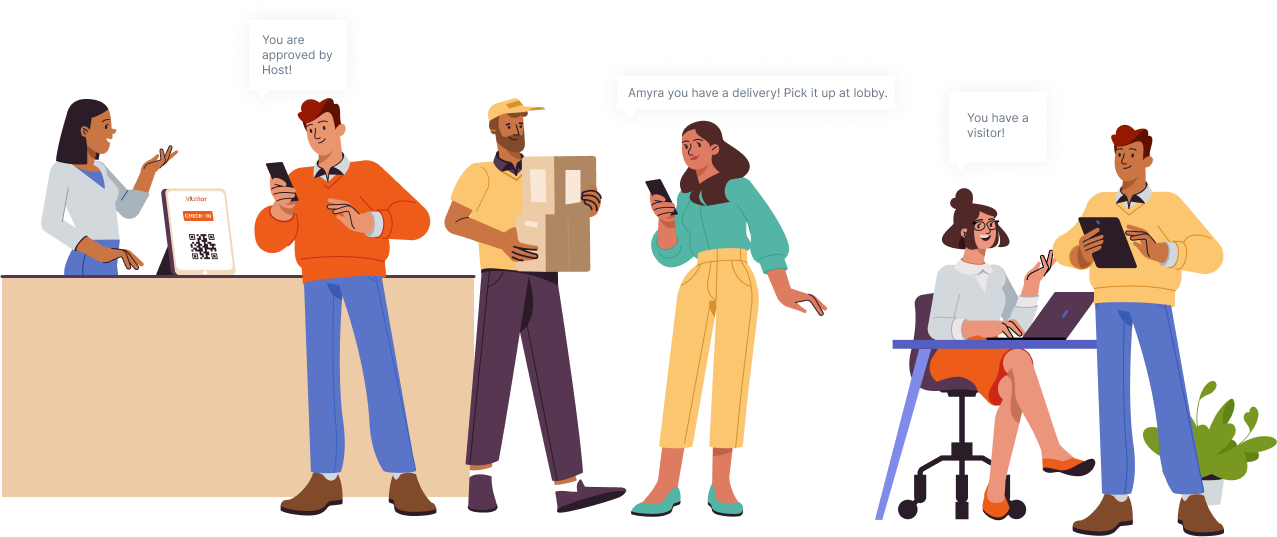
- Package arrives – The front-desk agent or mailroom staff scans the package label or enters recipient details.
- System logs the delivery – The DMS records the sender, recipient, timestamp, package type, and optionally a photo.
- Recipient is notified – An automatic SMS, email, or app push notification alerts the employee.
- Reminder sent if uncollected – If the package is not picked up within a configurable window, the system sends follow-up reminders.
- Secure handover – The recipient collects the package, signs digitally (or via OTP), and the system closes the loop.
- Analytics captured – Delivery volume trends, average pickup times, and uncollected items are logged for reporting.
Why Every Workplace Needs a Delivery Management System in 2026
The Volume Problem Is Only Getting Bigger
Global parcel volumes surpassed 200 billion per year in 2025 (Statista, 2025). A significant share of those parcels land at office front desks. With hybrid work models meaning employees are not always on-site, the challenge of getting the right package to the right person at the right time has intensified.
The Hidden Cost of Manual Delivery Handling
Organizations that rely on paper logbooks and manual notification processes face several costly problems:
- Lost and misplaced packages – Industry surveys suggest 1 in 10 workplace deliveries go unclaimed or are misrouted when managed manually (PackageX Workplace Delivery Report, 2024).
- Front-desk overload – Reception staff spend an estimated 2-3 hours per day handling deliveries in offices with 500+ employees.
- Security vulnerabilities – Untracked packages in lobbies create theft risk and compliance gaps, especially in regulated industries.
- Employee frustration – Missed deliveries and delayed notifications erode trust and waste employee time hunting for packages.
The Shift to Digital Is Non-Negotiable
According to a JLL Future of Work survey, 78% of corporate real estate leaders plan to digitize mailroom and delivery operations by the end of 2026. The reason is simple: manual processes cannot scale, and the cost of lost productivity far outweighs the investment in automation.
Core Features of a Modern Delivery Management System
Not all delivery management platforms are equal. Here are the features that separate a robust solution from a basic digital log.
1. Automated Package Logging
The foundation of any DMS. When a delivery arrives, the system should allow barcode/QR scanning, manual entry, or photo capture to log the package instantly. The best systems auto-populate recipient details from your employee directory.
2. Instant Multi-Channel Notifications
Recipients should be notified the moment their package is logged – via SMS, email, WhatsApp, Slack, Microsoft Teams, or a mobile app push notification. The more channels, the faster the pickup.
3. Configurable Reminder Escalations
If a package sits uncollected for too long, the system should automatically escalate – first with reminders to the recipient, then optionally to their manager or a designated delegate. This keeps lobby clutter under control.
4. Digital Proof of Handover
When the recipient picks up their package, the system captures a digital signature, OTP verification, or photo confirmation. This creates an airtight chain of custody.
5. Package Categorization and Tagging
Not all deliveries are equal. A good DMS lets you tag packages by type – courier, food delivery, personal package, confidential document, vendor shipment – and apply different workflows to each category.
6. Storage Location Tracking
For large offices with dedicated mailrooms or multiple storage points, the ability to assign a shelf, bin, or locker number to each package makes retrieval fast and error-free.
7. Multi-Location and Multi-Floor Support
Enterprise organizations need a DMS that works across multiple buildings, floors, and cities with centralized visibility and local management.
8. Analytics and Reporting Dashboard
Data-driven decisions require data. Look for systems that provide:
- Daily/weekly/monthly delivery volume trends
- Average time to pickup
- Uncollected package rates
- Peak delivery hours
- Staff workload metrics
9. Integration with Workplace Systems
A delivery management system should integrate with your visitor management system, access control, employee directory (HRMS), and communication tools. This eliminates data silos and creates a unified workplace experience.
10. Mobile Accessibility
Both mailroom staff and recipients should be able to interact with the system on their phones – logging deliveries on-the-go or receiving notifications and confirming pickup from anywhere.
Feature Comparison: Basic vs. Advanced Delivery Management Systems
| Feature | Basic DMS | Advanced DMS (e.g., Vizitor) |
|---|---|---|
| Package logging | Manual entry only | Scan + auto-populate from directory |
| Notifications | Email only | SMS, Email, WhatsApp, Slack, Teams |
| Reminders | None | Auto-escalation with configurable intervals |
| Proof of handover | Paper signature | Digital signature, OTP, photo |
| Multi-location | Single site | Unlimited sites with centralized dashboard |
| Analytics | Basic counts | Full dashboard with trends and export |
| Integrations | None | VMS, HRMS, access control, messaging |
| Package categorization | No | Yes, with custom workflows per type |
| Storage tracking | No | Shelf/bin/locker assignment |
Benefits of Implementing a Delivery Management System
Operational Efficiency
- Reduce front-desk delivery handling time by 60-75% through automation
- Eliminate manual logbook maintenance and the errors that come with it
- Cut average package pickup time from hours to minutes with instant notifications
Security and Compliance
- Create a complete audit trail for every delivery – who received it, when it arrived, when it was picked up, and who signed for it
- Reduce package theft and loss with end-to-end tracking
- Meet compliance requirements in industries like finance, healthcare, and government that mandate delivery documentation
Employee Experience
- No more hunting for packages – employees know exactly when and where to pick up their delivery
- Reduce interruptions – no need to call or walk to reception to check on a package
- Support hybrid workers – notifications can prompt employees to collect packages on their next office day
Cost Savings
The financial impact of a delivery management system is significant:
- Labor savings: Redeploying 2+ hours of daily front-desk time to higher-value tasks
- Loss prevention: Reducing package loss rates from ~10% to under 1%
- Space optimization: Better storage tracking means you need less mailroom space
- Productivity gains: Employees spend less time chasing deliveries and more time on actual work
According to CBRE research, organizations that digitize mailroom operations see an average ROI of 300-400% within the first year, primarily through labor reallocation and loss reduction.
How to Calculate the ROI of a Delivery Management System
Use this framework to build a business case for your organization:
Step 1: Quantify Current Costs
- Hours spent daily by front-desk/mailroom staff on manual delivery handling
- Number of lost or misplaced packages per month and their replacement cost
- Employee hours wasted searching for or following up on deliveries
- Compliance penalty risk if your industry requires delivery documentation
Step 2: Estimate Savings with a DMS
- Staff time saved: (Hours saved per day) x (Hourly cost) x (Working days per year)
- Loss prevention: (Packages lost per month) x (Average replacement cost) x 12
- Productivity gains: (Employee hours saved per week) x (Average hourly rate) x 52
Step 3: Compare Against DMS Cost
Most cloud-based delivery management systems like Vizitor’s solution operate on a monthly subscription model, making the math straightforward. For most organizations with 200+ employees, the system pays for itself within 2-3 months.
Industries That Benefit Most from a Delivery Management System
Corporate Offices and Tech Parks
High employee counts, multiple floors, and heavy e-commerce delivery volumes make corporate offices prime candidates. The sheer volume demands automation.
Co-Working Spaces
With multiple companies sharing a single address, delivery routing is complex. A DMS ensures packages reach the right tenant every time.
Healthcare Facilities
Hospitals and clinics receive sensitive medical supplies, lab samples, and pharmaceutical deliveries that require documented chain of custody and temperature-sensitive handling.
Educational Institutions
Universities and large schools manage deliveries for departments, faculty, students, and administrative offices – each with different notification preferences and pickup locations.
Government Buildings
Compliance requirements for documenting incoming packages are strict in government facilities. A DMS provides the audit trail that manual processes cannot.
Manufacturing and Warehousing
Large industrial campuses with multiple entry points need a centralized system to track deliveries across gates, docks, and internal departments.
How to Choose the Right Delivery Management System
1. Assess Your Delivery Volume
Start by understanding your current scale. An office receiving 20 packages a day has different needs than one receiving 200. Choose a system that is right-sized today but can scale as you grow.
2. Map Your Notification Requirements
Which channels do your employees actually use? If your workforce lives in Slack or Teams, a system that only sends emails will underperform. Choose a DMS with multi-channel notification support.
3. Evaluate Integration Needs
Does the DMS integrate with your existing visitor management system, HRMS, or access control? Integration eliminates double data entry and creates a unified front-desk experience.
4. Check Multi-Location Support
If you have more than one office, you need a system with centralized management and per-site administration. Avoid solutions that require separate instances for each location.
5. Review Security and Compliance Features
For regulated industries, ensure the DMS provides audit trails, data encryption, role-based access control, and data retention policies that meet your compliance needs.
6. Test the User Experience
The system will be used by front-desk staff under time pressure. If it is not intuitive and fast, adoption will suffer. Always run a pilot before committing.
7. Evaluate Vendor Support and Roadmap
Choose a vendor that provides responsive support, regular updates, and a clear product roadmap. Delivery management is evolving fast – you want a partner that keeps pace.
Common Challenges in Delivery Management (and How a DMS Solves Them)
| Challenge | Without a DMS | With a DMS |
|---|---|---|
| Packages pile up in the lobby | No visibility into what is uncollected | Auto-reminders escalate until pickup |
| Wrong person picks up a package | No verification at handover | OTP/digital signature required |
| Front desk overwhelmed during peak hours | Manual logging creates bottleneck | Scan-and-notify in seconds |
| No record of who received what | Paper logs get lost or are illegible | Full digital audit trail |
| Hybrid employees miss deliveries | No way to notify remote workers | Multi-channel alerts with next-office-day reminders |
| Management has no visibility | No data on delivery volumes or trends | Real-time analytics dashboard |
Delivery Management as Part of a Workplace Management Platform
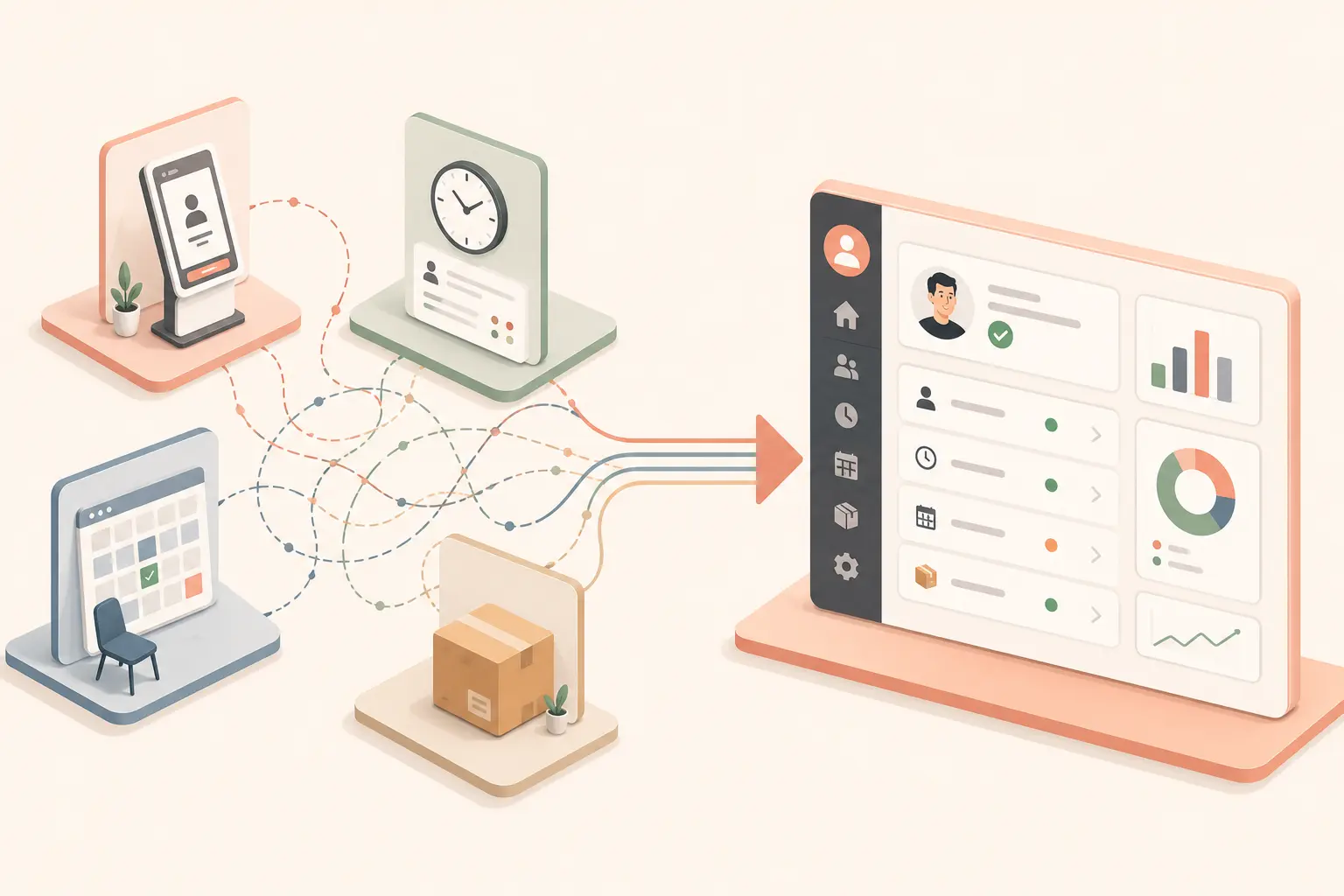
A delivery management system delivers the most value when it is part of a broader workplace management platform. When your DMS connects with:
- Visitor management – Vendor deliveries and visitor check-ins flow through a single system
- Desk booking – Employees booking desks for a specific day can be notified of pending packages
- Meeting room booking – Catering and equipment deliveries for meetings are tracked automatically
- Mailroom management – Letters, parcels, and internal mail all managed in one place
- Attendance tracking – The system knows who is on-site and can route notifications accordingly
This integrated approach is exactly what Vizitor’s workplace management platform provides – a unified system where delivery management is one module in a comprehensive workplace experience.
Setting Up a Delivery Management System: Implementation Checklist
Here is a practical checklist for rolling out a DMS in your organization:
- Audit current delivery volumes – Track incoming packages for 2 weeks to establish a baseline
- Map delivery workflows – Document how packages currently flow from arrival to pickup
- Define package categories – List all delivery types (courier, food, personal, confidential, vendor)
- Set notification preferences – Determine which channels work best for your workforce
- Configure reminder intervals – Decide how long before escalation (e.g., 2 hours, 4 hours, next day)
- Set up storage locations – If applicable, label shelves, bins, or lockers for the system
- Integrate with existing systems – Connect to HRMS for employee directory, VMS for visitor deliveries
- Train front-desk staff – Run hands-on training sessions with real packages
- Pilot with one floor or department – Test for 1-2 weeks before full rollout
- Communicate to employees – Announce the new system and explain how notifications work
- Go live and monitor – Track metrics for the first month and optimize workflows
The Future of Delivery Management in the Workplace
Several trends are shaping the next generation of delivery management systems:
AI-Powered Package Recognition
Computer vision and OCR technology will enable automatic label reading – the system scans the package, reads the label, identifies the recipient, and logs everything without manual input.
Smart Locker Integration
Automated parcel lockers are becoming common in large offices. Future DMS platforms will integrate directly with smart lockers, assigning packages to specific compartments and sending unlock codes to recipients.
Predictive Delivery Analytics
Machine learning will help predict peak delivery days and times, allowing mailroom staff to plan ahead and ensuring adequate coverage during high-volume periods.
Drone and Robot Delivery Integration
As internal delivery robots and drone delivery become more common in large campuses, delivery management systems will need to orchestrate these automated handoffs.
Sustainability Tracking
Organizations increasingly want to track the carbon footprint of their delivery operations. Future DMS platforms will provide sustainability dashboards showing packaging waste, delivery consolidation opportunities, and environmental impact.
Why Vizitor for Delivery Management?
Vizitor’s delivery management system is purpose-built for Indian and global workplaces that need a reliable, scalable, and easy-to-use solution. Here is what sets it apart:
- Part of a complete workplace platform – Delivery management works alongside visitor management, mailroom management, attendance tracking, desk booking, and meeting room booking
- Multi-channel notifications – SMS, email, WhatsApp, and in-app alerts ensure no delivery goes unnoticed
- Digital proof of handover – OTP and digital signature options create an airtight chain of custody
- Multi-location support – Manage deliveries across all your offices from a single dashboard
- Fast implementation – Most organizations are up and running within a week
- Responsive support – Dedicated onboarding and ongoing assistance from the Vizitor team
Ready to eliminate lost packages and streamline your delivery operations? Request a demo or explore pricing to get started.
Frequently Asked Questions
What is a delivery management system and how does it work?
A delivery management system is software that automates the process of receiving, logging, tracking, and handing over deliveries in a workplace. When a package arrives, the system logs it (via scan or manual entry), instantly notifies the recipient through SMS, email, or messaging apps, tracks the package until pickup, and captures a digital proof of handover. It replaces paper logbooks with a complete digital workflow.
How much does a delivery management system cost?
Pricing varies based on features, number of locations, and delivery volume. Cloud-based solutions like Vizitor typically offer monthly subscription plans starting at cost-effective rates for small offices, scaling up for enterprise deployments. Most organizations see ROI within 2-3 months through time savings and loss reduction alone.
Can a delivery management system integrate with our existing workplace tools?
Yes. Modern delivery management platforms integrate with HRMS systems (for employee directories), visitor management systems (for vendor deliveries), communication tools like Slack and Microsoft Teams, and access control systems. Vizitor’s platform is designed for smooth integration with your existing workplace technology stack.
What types of deliveries can the system handle?
A robust DMS handles all delivery types: courier packages, food deliveries, personal parcels, confidential documents, vendor shipments, internal mail, and equipment deliveries. You can configure different workflows and notification rules for each category.
How does a delivery management system improve workplace security?
The system creates a complete chain of custody for every delivery – recording who sent it, when it arrived, where it was stored, who picked it up, and how they verified their identity. Digital signatures and OTP verification prevent unauthorized pickups. The full audit trail supports compliance requirements in regulated industries.
Is a delivery management system difficult to implement?
No. Cloud-based solutions like Vizitor require no hardware installation beyond what you already have (a computer or tablet at reception). Implementation typically takes less than a week, including configuration, employee directory import, and staff training. Most front-desk teams are comfortable with the system within a day of hands-on use.
How does a delivery management system handle deliveries for employees who work remotely?
When a package arrives for an employee who is not on-site, the system sends a notification and can be configured to hold the package with periodic reminders. Some organizations set up delegate collection – a colleague or department admin can pick up on behalf of the remote employee. The system tracks these delegated pickups with full documentation.
Looking for more ways to optimize your workplace operations? Explore our guides on mailroom management software, digital mailroom solutions, and workplace package tracking. Or discover how Vizitor’s complete workplace management platform brings delivery management, visitor management, and more into a single unified system.
Try Vizitor Free
No credit card required. Setup in under 5 minutes. Manage visitors, queues, meeting rooms, and more.
Start Free TrialSee Vizitor in action check-in a visitor in under 30 seconds
Trusted by 500+ businesses. QR check-in, badge printing, NDA signing. Plans from $36/mo.