Gifts, Guests, and Meetings: December in the Office Made Easy


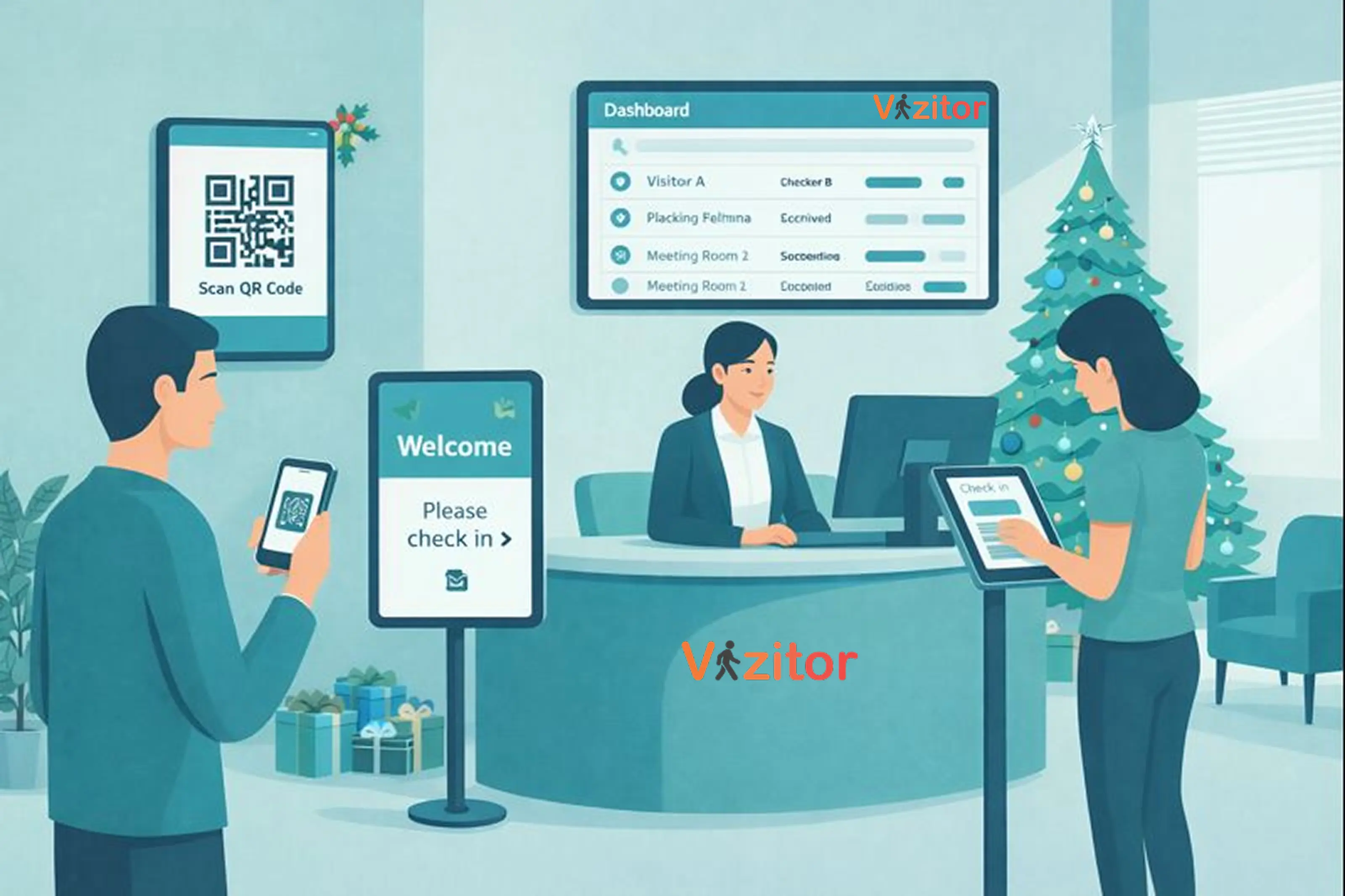
Table of Content
Try Vizitor for Free!
Deck the Halls, Not the Stress
December in the office is the intersection of festive energy and operational intensity. Looming year-end deadlines, holiday parties, increased visitor traffic, a surge in package deliveries, and back-to-back planning sessions all converge in the same four weeks. For facilities managers and office administrators, December is less “the most wonderful time of the year” and more “the month where everything happens at once.”
The modern office becomes a complex logistical puzzle in December. Managing it well requires more than extra hands at reception. It requires efficient digital workflows, structured visitor management, and intelligent scheduling that can absorb the increased load without creating chaos.
This guide explores the strategies that make December manageable, using tools like Vizitor to keep guests welcome, deliveries tracked, and meetings running on schedule.
I. Understanding the December Office Dynamics
The final month of the year combines multiple operational pressures that individually would be manageable but together require deliberate planning:
- Visitor volume: Clients, vendors, partners, and temporary holiday staff all contribute to a higher influx of people. Front desk activity increases significantly, and any bottleneck there affects the entire office’s first impression.
- Holiday deliveries: Corporate gifts, personal packages, office supplies, and client gifts all arrive in compressed timeframes. Without a system to track and notify, packages pile up at reception and staff spend time chasing down their own deliveries.
- Meetings and events: Year-end reviews, holiday celebrations, strategic planning sessions, and client dinners require more room bookings, more AV setup, and more coordination than the average month.
- Employee availability: Remote work, flexible holiday schedules, and PTO create gaps in coverage that affect who is available to host visitors, attend meetings, or manage deliveries.
Recognizing these pressures early and planning for them specifically is how offices navigate December without burning out the people running them.
II. Optimizing Visitor Management for the Holiday Season
Visitors are a constant in December. Clients come for year-end reviews. Candidates attend interviews scheduled before the holiday freeze. Vendors drop off gifts and promotional materials. Temporary workers report for onboarding.
Without a structured visitor management process, all of this converges on the front desk and creates delays, confusion, and a poor first impression for guests who have never visited before.
Best Practices for December Visitor Efficiency
Pre-Registration and Digital Check-Ins Encouraging pre-arrival registration through a system like Vizitor means that when a visitor arrives, their information is already in the system. A QR code scan or quick tablet confirmation is all that is needed. This cuts check-in time from several minutes to seconds and dramatically reduces the queue at reception during peak hours.
Self-service check-in kiosks allow visitors to check themselves in without needing a receptionist to be free. In December, when the front desk is managing deliveries, fielding calls, and coordinating with employees, this self-service capability removes a major source of bottleneck.
Queue Management When multiple visitors arrive simultaneously, structured queue management prevents the kind of disorganized pileup that creates a chaotic first impression. A digital queue system shows visitors their position, estimated wait time, and any preparation steps they should take while waiting. This creates a calm, organized reception area even during high-traffic periods.
Automated Host Notifications When a visitor checks in, an automatic notification goes to their host: a push notification, SMS, or email with the visitor’s name and arrival time. The host can acknowledge and confirm arrival or delegate to a colleague. No phone calls to the front desk, no manual messaging, no visitors waiting because the receptionist forgot to call upstairs.
Professional Environment Maintenance The reception area is the first physical thing visitors experience. During December, the temptation is to cover everything in seasonal decorations. The better approach is restraint: subtle, professional seasonal touches that communicate warmth without overwhelming the space or compromising wayfinding. Keep the area tidy, well-lit, and easy to navigate even for first-time visitors.
The visitor management experience in December directly shapes the impressions that carry clients into the new year. A smooth, professional check-in on a busy December afternoon signals organizational competence in a way that a formal presentation cannot match.
III. Streamlined Delivery Management
The holiday season is synonymous with packages. Corporate gift programs send outbound deliveries to clients and partners. Employees receive personal deliveries at the office. Vendors ship promotional materials and samples. Office supply orders increase ahead of the holiday freeze. All of this arrives at the front desk simultaneously.
Without a structured delivery management process, the front desk becomes a storage room. Packages pile up. Staff spend time trying to find the right recipient. Valuable items sit unclaimed. And the already-stretched reception team is now also managing logistics.
Best Practices for Delivery Efficiency in December
Centralized Digital Delivery Logs Maintain a digital record of every incoming package: sender, recipient, carrier, tracking number, and arrival timestamp. This creates a complete chain of custody for every item and allows recipients to look up their own deliveries without asking the front desk.
Designated Pickup Points Organize secure, designated storage areas for package pickup rather than keeping everything at the front desk. Label areas by alphabetical range or department. This eliminates the need for reception staff to physically search for a specific package each time someone comes to claim a delivery.
Automated Recipient Notifications When a package arrives and is logged in the system, an automatic notification goes to the recipient: a message with the package description, sender, and pickup location. This eliminates the “has my package arrived?” questions that consume front desk time throughout the day and ensures recipients claim their deliveries promptly rather than letting them pile up uncollected.
Scheduled High-Volume Delivery Periods If your office receives deliveries throughout the day, coordinate with your delivery management plan to concentrate large shipments in specific windows. This allows you to have the right staff available for processing and prevents the morning rush from completely overwhelming the front desk before the office day has properly started.
Outbound Gift Coordination For offices running corporate gift programs, have a clear process for outbound gifts: a master list of recipients, a confirmed schedule with the shipping vendor, and a single point of contact responsible for tracking. The last thing your team needs in December is discovering that 30 client gifts were never sent because no one owned the task.
Efficient delivery management in December protects the front desk’s capacity for visitor management and creates a cleaner, more professional environment for everyone passing through.
See how Vizitor handles meeting room booking
Join 2,000+ workplaces using Vizitor to eliminate scheduling conflicts and optimize room usage. Free trial, no credit card required.
Book a DemoIV. Optimizing Meeting and Room Management in December
December’s meeting calendar is heavier than any other month. Year-end reviews, budget approvals for the coming year, team retrospectives, holiday events, and client meetings all compete for the same limited pool of conference rooms.
Without a structured meeting room management system, December meeting chaos looks like this: rooms double-booked, employees wandering the halls looking for an available space, holiday events displacing critical business meetings, and no visibility into what is happening where or when.
Best Practices for December Meeting Management
Strategic Scheduling Map your December calendar early, ideally in the first week of November. Identify which meeting types are fixed (board presentations, client commitments, holiday events with external guests) and protect room time for those first. Fill in operational meetings around them rather than the reverse.
Avoid scheduling high-stakes meetings during peak visitor traffic windows. If your office typically sees the most external visitors between 10am and noon, do not schedule your most sensitive client review in the largest room during that window unless you have the visitor management capacity to handle both simultaneously.
Resource Allocation Assign rooms and AV equipment to meetings based on actual needs. A 4-person year-end review does not need a 20-seat boardroom. Matching room size to meeting size in December keeps your larger rooms available for events that genuinely need them: team celebrations, all-hands sessions, or multi-stakeholder reviews.
For data-driven insights on how to improve room allocation across the year, not just in December, your booking analytics will show which rooms are consistently undermatched and which are overloaded.
Hybrid and Remote Integration Many employees take flexible arrangements in December. Ensure that room bookings include proper video conferencing setup for remote participants. A year-end review where remote team members cannot hear clearly or see shared screens is a poor note to end the year on.
Build hybrid participation into the room booking process: confirm AV requirements at booking, not on the day of the meeting.
Meeting Room Booking Policies for the Holiday Period December is a good time to temporarily adjust booking policies:
- Reduce maximum advance booking windows to prevent rooms from being locked up weeks in advance for events that may change
- Require room confirmations 48 hours before significant events
- Set up auto-release rules so rooms checked in late automatically become available to others
- Communicate holiday meeting priorities clearly so teams know which slots are protected for company-wide events
For a comprehensive look at how room management systems address common booking challenges, see our post on 7 common meeting room management challenges.
V. Using Technology for December Efficiency
Manual systems and spreadsheets are inadequate for December’s operational demands. The volume of activity across visitor management, delivery tracking, and room scheduling exceeds what any front desk team can handle manually without errors and delays.
Digital Check-Ins Reduce manual entry errors and speed up visitor processing. Pre-registered visitors check in in seconds. Walk-in visitors complete the process in under two minutes without requiring receptionist assistance.
Real-Time Dashboards Monitor visitor flow, delivery status, and room usage from a single operations view. When a rooms conflict surfaces, an administrator can spot it and intervene before it becomes a problem. When visitor traffic spikes unexpectedly, the dashboard shows it in real time.
Automated Notifications Alert hosts when visitors arrive, recipients when packages are logged, and meeting attendees when room bookings are confirmed or changed. Automated notifications replace the manual coordination that would otherwise consume significant staff time.
Predictive Scheduling Use historical data from previous Decembers to anticipate peak periods for visitors, deliveries, and meetings. If the second week of December is consistently the busiest for external visitors, plan staffing and room allocations accordingly rather than responding reactively.
Platforms like Vizitor integrate all of these capabilities in a single system, starting at $20/month with a free trial and no credit card required.
VI. Key Takeaways for a Smooth December
-
Plan Ahead: Map your December calendar by mid-November. Identify peak traffic days for visitors, deliveries, and meetings and plan resources accordingly.
-
Streamline Visitor Flow: Implement pre-registration, digital check-ins, and queue management to protect your front desk capacity and create a professional guest experience at any volume.
-
Centralize Delivery Tracking: A digital log with automated recipient notifications eliminates the package chaos that consumes front desk time and creates clutter.
-
Optimize Meeting Rooms: Book strategically, match room size to meeting needs, build in hybrid support, and use auto-release to prevent ghost bookings from consuming space.
-
Use Digital Tools: Real-time dashboards, automated notifications, and integrated analytics create operational visibility that manual systems cannot provide.
-
Communicate Proactively: Keep employees, visitors, and vendors informed about schedules, procedures, and any holiday-period changes to normal operations. Clear communication prevents confusion before it starts.
VII. Conclusion
December does not have to mean operational chaos. With structured visitor management, organized delivery workflows, intelligent meeting scheduling, and the right digital tools, offices can maintain productivity and professionalism through one of the busiest operational periods of the year.
The goal is not to eliminate December’s energy. It is to channel it productively: welcome guests properly, manage deliveries efficiently, run meetings that matter, and end the year with operations tighter than when it started.
Take control of your December now. Implement smart office workflows before the holiday rush hits.
Contact us to learn how Vizitor can help, or start your free trial today.
FAQ Section
1. How can offices manage visitor traffic efficiently in December?
Pre-registration, digital self-service check-ins, queue management systems, and automated host notifications work together to process higher visitor volumes without proportionally increasing front desk burden. The key is moving from reactive to proactive visitor handling.
2. How does delivery management improve office efficiency in December?
A digital delivery log with automated recipient notifications eliminates the manual coordination cycle of “has my package arrived?” It also keeps the reception area organized rather than converted into a package storage room, which improves the experience for everyone entering the office.
3. What strategies work best for meeting management during the holidays?
Strategic advance scheduling that protects rooms for fixed commitments first, right-sizing rooms to actual meeting needs, hybrid integration for remote participants, and auto-release rules for unused bookings are the highest-impact changes most offices can make immediately.
4. Can technology handle the full scope of December office management?
A platform like Vizitor integrates visitor management, delivery tracking, meeting room booking, and analytics into a single system. This gives administrators a real-time view of all three operational streams and automated tools to handle the volume that would otherwise require significant manual effort.
5. How does planning ahead reduce December office stress?
Most December operational problems are predictable: high visitor weeks, delivery surges, packed meeting calendars. Planning for them in November means you have the right resources, policies, and room allocations in place before the pressure hits, rather than responding reactively when it does.
6. Are these strategies applicable for hybrid workplaces?
Fully. Digital check-ins work for any visitor regardless of whether the team they are meeting is partially remote. Meeting room bookings can include hybrid setup requirements by default. Delivery notifications reach employees wherever they are working. The strategies here are designed for organizations with any mix of in-office and remote staff.
7. How does efficient office management affect employee experience in December?
Smooth operations remove the low-level stress that comes from chaotic front desks, unavailable meeting rooms, and missing packages. When the operational side of December runs well, employees can focus on the work that actually matters: year-end deliverables, strategic planning, and the relationships that carry value into the new year.
8. What is the role of communication in December office management?
Clear, proactive communication about check-in procedures, delivery pickup processes, meeting room policies, and holiday schedule changes prevents the confusion that drives most December operational problems. Brief, specific communications sent before the situations they describe are ten times more effective than reactive explanations sent during them.
Try Vizitor Free
No credit card required. Setup in under 5 minutes. Manage visitors, queues, meeting rooms, and more.
Start Free TrialSee Vizitor in action check-in a visitor in under 30 seconds
Trusted by 500+ businesses. QR check-in, badge printing, NDA signing. Plans from $36/mo.