Digital Queue Management vs Paper


Table of Content
Try Vizitor for Free!
Paper sign-in sheets. Physical ticket dispensers. Clipboards with handwritten names. These tools served businesses for decades, and some organizations still rely on them today. But in a world where customers check their bank balance on their phone, order groceries with a voice command, and track their pizza delivery in real time, a paper queue feels like a relic.
The shift from paper to digital queue management is not just about keeping up with technology. It is about fundamentally improving how your business serves people, uses data, and manages operations.
According to Forrester Research (2023), businesses that transitioned from manual to digital customer flow management saw an average 35% improvement in operational efficiency and a 28% increase in customer satisfaction scores within the first six months.
A modern queue management system replaces guesswork with data, chaos with structure, and frustration with confidence.
What is digital queue management? Digital queue management is the use of software-based tools to organize, monitor, and optimize customer queues. It replaces physical sign-in sheets, paper tickets, and manual processes with digital check-in (QR codes, kiosks, web portals), automated routing, real-time notifications, and analytics dashboards. The result is a faster, more transparent, and data-driven queuing experience.
This guide provides a comprehensive comparison between paper-based and digital queue management, covering every dimension that matters to operations teams and customers alike.
The Paper Queue: How It Still Works (and Where It Fails)
Paper-based queuing typically involves one or more of the following:
- Sign-in sheets: Customers write their name, time of arrival, and service needed on a clipboard
- Take-a-number dispensers: Customers pull a paper ticket with a sequential number
- Staff-managed lists: A receptionist or host writes down names and calls them in order
- Physical barriers: Rope lines, stanchions, or floor markings guide people into a line
These methods are simple and cheap to set up. They require no technology, no training beyond basic instructions, and no ongoing software costs. For that reason, they persist in some environments.
But simplicity comes at a steep cost in efficiency, customer experience, and operational intelligence.
The Comprehensive Comparison
| Dimension | Paper-Based Queue | Digital Queue Management |
|---|---|---|
| Customer check-in | Write name on sheet or pull ticket | Scan QR code, use kiosk, or web check-in |
| Wait time visibility | None (customer guesses) | Real-time estimates on phone or display |
| Customer notification | Name called out or number displayed | SMS to phone |
| Where customer waits | Must stay in lobby/area | Can wait anywhere |
| Queue accuracy | Names skipped, tickets lost | Automated, error-free tracking |
| Priority handling | Staff judgment (inconsistent) | Rule-based, configurable |
| Multi-department routing | Customer walks to each department | Automated sequential routing |
| Data and analytics | None | Full dashboard with historical trends |
| Staffing optimization | Based on intuition | Based on KPI data |
| Abandonment tracking | Not tracked | Logged and reported |
| Customer satisfaction measurement | Anecdotal | Survey integration, CSAT tracking |
| Scalability | Requires more paper, more staff | Software scales without proportional cost |
| Remote/virtual queuing | Not possible | Standard feature |
| Compliance and audit trail | Paper records (easy to lose) | Digital logs with timestamps |
| Environmental impact | Paper waste | Paperless |
| Setup cost | Very low | Moderate (offset by efficiency gains) |
| Ongoing cost | Paper, printing, staff time | Software subscription |
Where Paper Queues Create Real Problems
1. Lost Information
Paper sign-in sheets get misread, coffee-stained, or thrown away at the end of the day. There is no backup, no searchable record, and no way to recover data. One lost sheet during a busy period can mean skipped customers and complaints.
2. No Wait Time Visibility
When a customer joins a paper queue, they have no idea how long the wait will be. They cannot see how many people are ahead of them (if they are not physically in line), and the staff often cannot give accurate estimates. This uncertainty is the primary driver of queue abandonment.
3. Inconsistent Priority Handling
With paper, priority decisions are made by individual staff members in the moment. One receptionist might prioritize an elderly visitor; another might not. There are no rules, no consistency, and no accountability.
4. Zero Operational Intelligence
Paper queues generate no data. You cannot answer basic questions like:
- What is our average wait time?
- Which day of the week is busiest?
- How many customers leave before being served?
- Which counter is the most efficient?
Without answers to these questions, you are managing blind.
5. Physical Presence Required
A paper ticket or sign-in sheet requires the customer to be physically present in or near the waiting area. They cannot step out, browse, or handle other errands. This creates crowded lobbies, restless customers, and a poor overall environment.
6. No Integration With Other Systems
Paper queues exist in isolation. They cannot connect with your visitor management system, your appointment scheduling tool, or your workplace management platform. Every system operates independently, creating gaps and redundancies.
Where Digital Queue Management Delivers Value
Transparent Wait Times
Digital systems calculate and display estimated wait times based on current queue length, average service time, and number of active counters. This single feature transforms the waiting experience.
Automated Customer Notifications
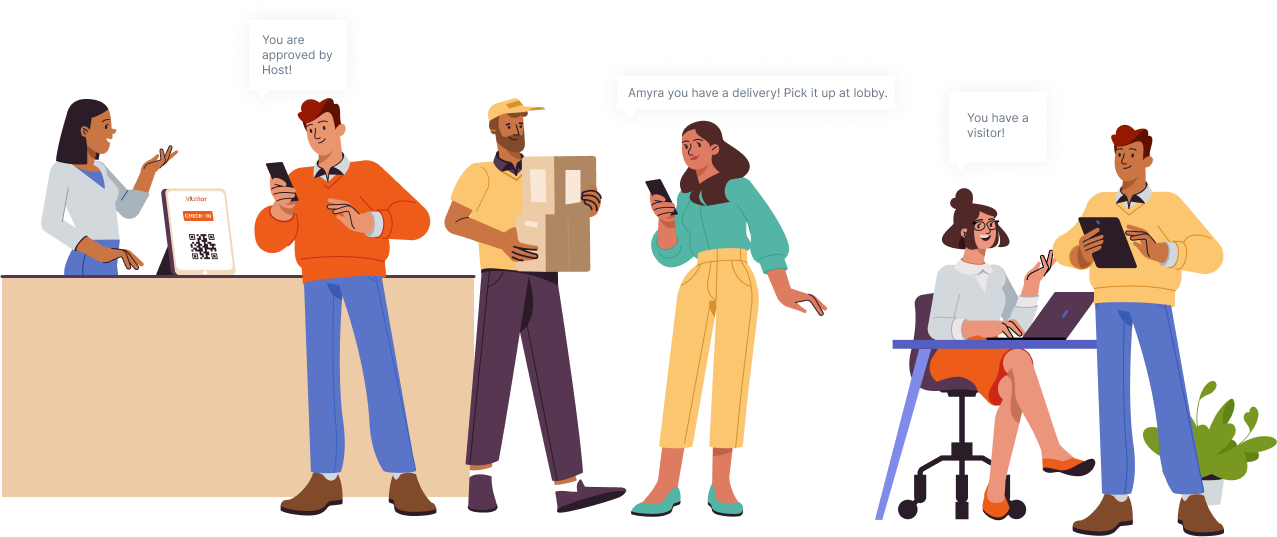
SMS notifications keep customers informed without requiring them to watch a screen or listen for their name. They join the queue, receive a confirmation, and get a text when their turn approaches.
Data-Driven Operations
Every customer interaction generates data. Over weeks and months, this data reveals patterns that inform:
- Staffing schedules
- Counter allocation
- Service process improvements
- Marketing decisions (when to run promotions that drive traffic)
Scalability Without Proportional Cost
A paper queue at one location requires a sign-in sheet, a pen, and a staff member to manage it. Ten locations require ten of each. A digital system serves ten locations from one dashboard, and adding the eleventh is a software configuration, not a new hire.
Integration With Your Tech Stack
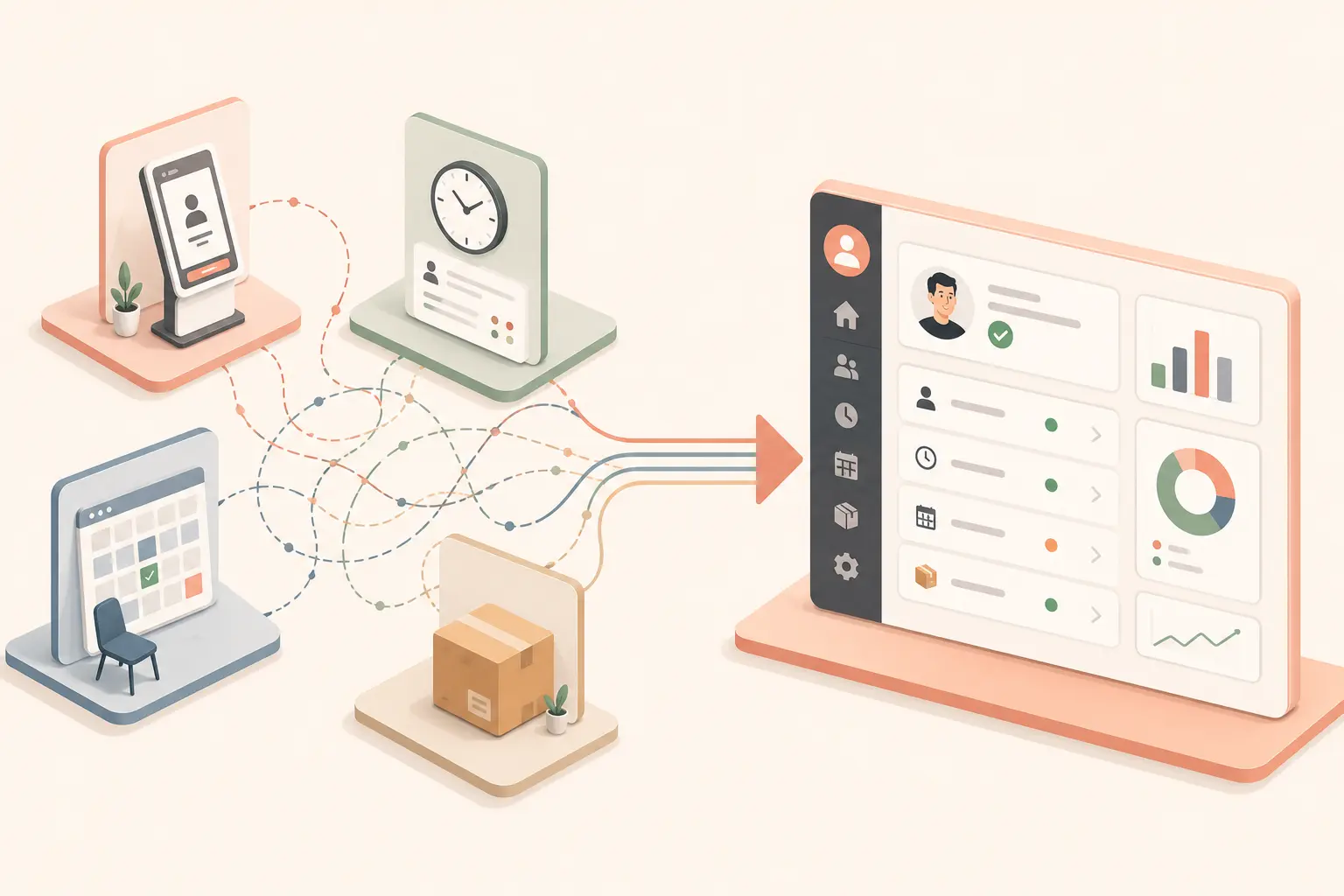
Digital queue management connects with visitor check-in, appointment scheduling, CRM systems, and analytics platforms. Data flows between systems, creating a unified view of customer interactions.
Remote and Virtual Queuing
Customers can join the queue before arriving at your location. They check in from their phone, receive a position, and show up when their turn is approaching. This is impossible with paper.
Common Objections to Going Digital (and the Reality)
“Our customers are not tech-savvy.”
Scanning a QR code requires the same skill as taking a photo. And for customers who truly cannot use a phone, the system supports staff-assisted check-in via a tablet, which is still faster and more accurate than a paper sheet.
“Paper is cheaper.”
The upfront cost is lower, but the total cost of paper queuing (including staff time spent managing the queue, lost customers due to abandonment, and inability to optimize staffing) is significantly higher. The ROI on a digital system typically appears within the first quarter.
“We have always done it this way.”
This is the most common and least valid objection. The businesses you compete with are adopting digital tools. Customer expectations are set by their best experiences elsewhere. Paper may have worked in 2010, but it creates a competitive disadvantage in 2026.
“We do not have a big enough operation to justify it.”
Digital queue management scales down as well as it scales up. Even a single-counter reception desk benefits from automated check-in, wait time transparency, and basic analytics.
Making the Transition: A Practical Guide
Step 1: Audit Your Current Queue Process
Document how your paper queue works today. How do customers check in? How are they notified? What data do you collect? What are the common complaints?
Step 2: Identify Your Primary Goals
Are you trying to reduce wait times? Improve customer satisfaction? Gain operational data? Reduce lobby crowding? Your goals determine which features to prioritize.
Step 3: Choose a Platform
Select a digital queue management system that meets your needs. Vizitor’s queue management system covers the full spectrum, from basic digital check-in to advanced multi-department routing and analytics.
Step 4: Start Small
Deploy in one location or one department first. Gather feedback from both customers and staff. Refine your configuration before expanding.
Step 5: Train Your Team
Staff need to understand both the technology and the new workflow. Run hands-on training sessions and create a simple quick-reference guide for the first few weeks.
Step 6: Communicate to Customers
Use signage, email, and in-person guidance to help customers transition from the paper process to the digital one. Most adapt within their first visit.
Step 7: Measure the Difference
Compare your post-implementation KPIs to your baseline. Wait times, abandonment rates, and satisfaction scores will tell you exactly what the switch achieved.
Getting Started With Vizitor
Vizitor’s digital queue management platform replaces paper processes with a modern, data-driven system. From QR code check-in and SMS notifications to real-time analytics and multi-department routing, it provides everything you need to make the switch.
Ready to move beyond paper?
Book a demo to see the platform in action, or visit our pricing page to find the right plan for your organization.
Frequently Asked Questions
How long does it take to transition from paper to digital queue management?
Most businesses complete the transition in one to two weeks. The first few days involve setup and configuration. The next few days are staff training. Within a week of going live, most customers have adapted to the new check-in process.
Will I lose the personal touch that comes with a paper sign-in?
No. In fact, digital queue management frees your staff from the tedious task of managing a paper list, giving them more time to engage personally with customers. The technology handles logistics; your team handles hospitality.
What hardware do I need for a digital queue system?
At minimum, a tablet for staff and QR code signage for customers. Optionally, you can add self-service kiosks, digital display screens for the waiting area, and countertop devices for staff. See our queue management hardware guide for details.
Can digital queue management work alongside paper for a transition period?
Yes, and many businesses do this. Run both systems in parallel for a few weeks, gradually encouraging customers to use the digital option. Once adoption is high enough, retire the paper process.
What happens if the internet goes down?
Most cloud-based queue systems have offline fallback modes. The system continues to function locally and syncs data when connectivity is restored. For environments where internet reliability is a concern, ask about offline capabilities during your demo.
Try Vizitor Free
No credit card required. Setup in under 5 minutes. Manage visitors, queues, meeting rooms, and more.
Start Free TrialSee Vizitor in action check-in a visitor in under 30 seconds
Trusted by 500+ businesses. QR check-in, badge printing, NDA signing. Plans from $36/mo.