Desk Booking Policy Template: A Ready-to-Use Framework for


Table of Content
Try Vizitor for Free!
Implementing a desk booking system without a clear policy is like installing traffic lights without defining traffic rules. The technology works, but without agreed-upon norms, you get confusion, frustration, and uneven adoption.
A desk booking policy sets the ground rules for how employees reserve, use, and share workstations. It answers the questions employees will inevitably ask: How far in advance can I book? What happens if I do not show up? Can I keep the same desk every day? What if all desks are booked on the day I want to come in?
This article provides a complete, ready-to-use desk booking policy template that you can adapt to your organization’s needs. Each section includes the recommended language, the rationale behind it, and customization options.
Why You Need a Written Desk Booking Policy
Even in a small office, a written policy prevents three problems:
-
Inconsistent enforcement. Without written rules, different managers interpret the system differently. One team requires daily check-in; another ignores it. The result is perceived unfairness.
-
Edge case confusion. What happens when an employee books a desk for a week? Or when a visitor needs a workspace? A policy answers these questions before they become disputes.
-
Adoption failure. Employees are more likely to use the booking system if they understand the rules and consequences clearly. Ambiguity breeds resistance.
According to a 2025 survey by Leesman, organizations with a documented flexible seating policy report 34% higher employee satisfaction with their workspace compared to those without one (Source: Leesman, “Hybrid Work Experience Index,” 2025).
Complete Desk Booking Policy Template
Below is a comprehensive policy template. Use it as-is or customize each section for your organization.
Section 1: Purpose and Scope
Purpose: This policy establishes guidelines for the use of [Company Name]‘s desk booking system. It ensures that all employees have equitable access to workstations, that space is used efficiently, and that our workplace supports both individual productivity and team collaboration.
Scope: This policy applies to all employees, contractors, and temporary staff who use [Company Name]‘s office spaces. It covers all bookable workstations across all office locations.
Effective Date: [Date]
Policy Owner: [Facilities Manager / Workplace Operations / HR]
Section 2: Booking System
Platform: All desk bookings must be made through [Company Name]‘s official desk booking system, Vizitor, accessible via the mobile app (iOS/Android) or web portal.
Single Source of Truth: The booking system is the only authorized method for reserving desks. Desks cannot be reserved through email, verbal agreement, or by placing personal items at a workstation. Any desk not booked through the system is available for others to book.
Section 3: Booking Rules
| Rule | Standard Setting | Notes |
|---|---|---|
| Advance booking window | Up to 2 weeks ahead | Prevents desk hoarding |
| Maximum consecutive days | 5 days (one work week) | Re-booking required for the next week |
| Booking modifications | Allowed anytime before check-in | Cancel and rebook for time changes |
| Cancellation | Cancel as soon as plans change | No penalty for cancellation |
| Overbooking | Not permitted | System prevents double-booking |
| Guest/visitor desks | Book through host employee | Guest must be pre-registered via visitor management |
Advance Booking: Employees may book desks up to 14 calendar days in advance. This window ensures that planning is possible while preventing long-term desk hoarding.
Same-Day Booking: Employees may book available desks on the same day, either through the mobile app or at shared kiosks in the office lobby.
Maximum Bookings: Employees may hold a maximum of 5 active desk bookings at any time (one per workday in the upcoming week). This prevents individuals from blocking excessive desk inventory.
Section 4: Check-In and Auto-Release
Check-In Requirement: All employees must check in to their booked desk within 15 minutes of the start of the business day (or within 15 minutes of a mid-day booking start time). Check-in can be completed by:
- Scanning the QR code at the desk via the mobile app
- Tapping check-in on the mobile app when within the office
- Badge tap at the desk sensor (where available)
Auto-Release: If an employee does not check in within the 15-minute grace period, the desk booking is automatically canceled, and the desk is released for others to book. The employee will receive a notification that their booking has been released.
No-Show Tracking: Repeated no-shows (3 or more in a 30-day period) may result in a temporary reduction of the advance booking window.
Early Departure: If you leave your desk for the day before the end of the booking period, please release the desk through the app so it becomes available for others.
Section 5: Zones and Neighborhoods
Zone Assignment: Each team or department is assigned to a primary zone (neighborhood) on a specific floor. Employees should book desks within their team’s zone to ensure team proximity.
Cross-Zone Booking: Employees may book desks outside their team’s zone when their zone is full or when working with another team for the day. Cross-zone bookings are not restricted but are monitored to ensure zone capacity is balanced.
Zone Changes: Zone assignments are reviewed quarterly by department heads and the facilities team. Requests for zone changes should be submitted to [Facilities Manager].
Section 6: Team Anchor Days
Definition: Anchor days are designated days when a team is expected to be in the office for collaborative work.
Setting Anchor Days: Team managers set anchor days in the booking system. Common configurations are 2-3 anchor days per week.
Desk Allocation on Anchor Days: On anchor days, desks in the team’s zone may be pre-allocated or priority-reserved for team members. Non-team members can still book available desks in the zone.
Flexibility: Employees who cannot attend on an anchor day should notify their manager. Anchor days are a guideline, not a mandate, unless specified otherwise by department leadership.
Section 7: Desk Etiquette
Clean Desk: Leave the desk clean and clear at the end of each use. Remove all personal items, food, and documents. Wipe down the desk surface.
Personal Items: Do not leave personal items at a bookable desk overnight. Lockers are available for personal storage.
Equipment: Do not unplug or rearrange desk equipment (monitors, docking stations, keyboards). If equipment is missing or malfunctioning, report it through [IT support channel].
Noise: Respect the zone type. Quiet zones are for focused work - take phone calls and conversations to designated phone booths or collaboration areas.
Fragrance and Food: Avoid strong fragrances. Eat meals in the kitchen or break area, not at your desk.
Section 8: Accessibility
Accessible Desks: Desks with accessibility features (wheelchair-accessible height, ergonomic equipment, proximity to elevators) are labeled in the booking system.
Priority Access: Employees with accessibility needs have priority booking for accessible desks. These desks are also available to all employees when not needed by someone with accessibility requirements.
Accommodation Requests: Employees requiring specific desk accommodations should contact [HR / Facilities] to ensure appropriate desks are available and tagged in the system.
Section 9: Enforcement and Exceptions
Enforcement: This policy is enforced through the desk booking system’s built-in rules (auto-release, booking limits, zone assignments) and through periodic review by the facilities team.
Consequences: Violations are handled progressively:
- First violation: Automated reminder of the policy
- Repeated violations: Conversation with manager
- Persistent violations: Temporary restriction of booking privileges
Exceptions: Exceptions to this policy (extended bookings, dedicated desks for specific roles) require approval from the facilities team and the employee’s department head. Exception requests should be submitted to [Facilities Manager].
Section 10: Data and Privacy
Data Collection: The desk booking system collects booking data (who booked which desk, when, and check-in/check-out times) to manage desk availability and generate utilization reports.
Data Use: Booking data is used for:
- Managing desk availability and check-in
- Generating anonymous, aggregated utilization reports for space planning
- Contact tracing if required for health and safety purposes
Data Access: Individual booking data is accessible to the employee and their direct manager. Aggregated data is accessible to the facilities team and senior leadership. No individual tracking data is shared publicly.
Retention: Booking data is retained for 12 months for space planning purposes, then anonymized.
Customization Guide
Adapt the template based on your organization:
| Organization Type | Key Customizations |
|---|---|
| Small office (under 50 people) | Simplify zones (one zone per floor), longer grace period (20 min), no anchor days |
| Mid-size hybrid (50-300 people) | Template as written works well; add department-specific zones |
| Large enterprise (300+ people) | Add multi-site policies, executive desk exceptions, stricter enforcement |
| Coworking space | Replace “team zones” with “membership tiers,” add hourly booking |
| Education campus | Add semester-based allocation, faculty priority booking |
Communicating the Policy
How you roll out the policy matters as much as the policy itself:
- Announce 2 weeks before launch. Give employees time to read and ask questions.
- Hold a brief all-hands or recorded walkthrough. Show the app, demonstrate booking, explain the rationale.
- Share a one-page summary. Not everyone will read the full policy. Create a visual summary with the 5 most important rules.
- Post in your wiki/intranet. The full policy should be easily findable.
- Appoint floor ambassadors. 1-2 people per floor who can answer questions during the first month.
Connecting to the Broader Workplace
A desk booking policy does not exist in isolation. It connects to:
- Meeting room booking - Employees who book desks also need rooms; the experience should be unified
- Visitor management - Guest desk bookings trigger visitor pre-registration
- Space management - Desk utilization data informs space planning
- Attendance management - Desk check-in can serve as office attendance
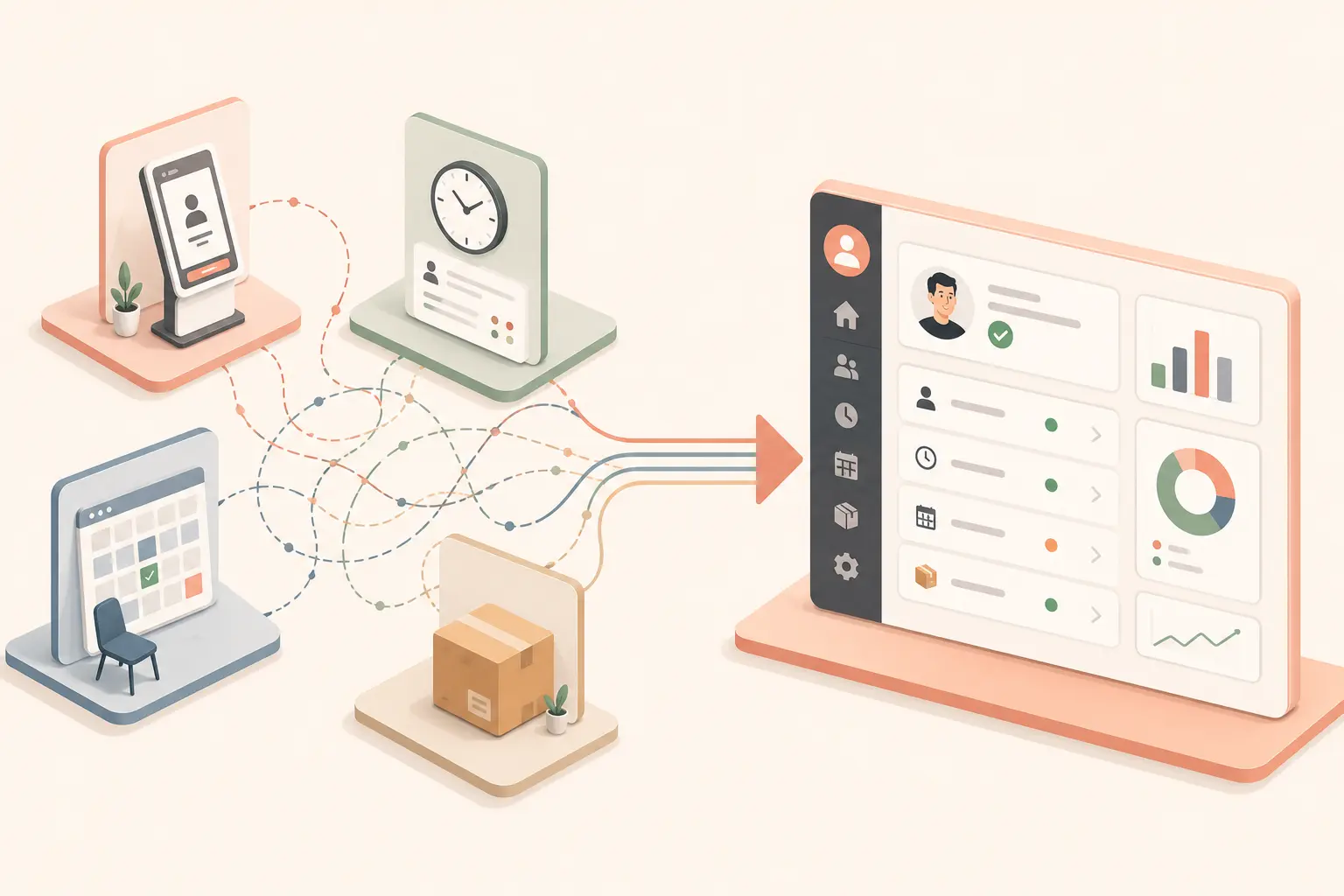
Vizitor’s workplace management platform connects all of these systems, ensuring a consistent experience.
Frequently Asked Questions
Can employees request a permanent assigned desk?
Under this policy, desks are shared. However, exceptions can be made for employees with specific needs (accessibility, specialized equipment, full-time in-office status). Exception requests go through the facilities team.
What if all desks in my zone are booked?
Book a desk in a neighboring zone. The system allows cross-zone booking when your primary zone is full. If this happens frequently, it signals that zone capacity needs adjustment - notify the facilities team.
Can I book a desk for someone else?
Managers can book desks for their team members (for anchor day coordination), and employees can book a guest desk for visitors. One employee cannot book a desk on behalf of another individual employee for personal use.
What if I need to work from the office but forgot to book?
Same-day walk-up booking is available. Open the app and book an available desk. If no desks are available (rare), contact the facilities team for overflow options.
How often will this policy be updated?
The policy is reviewed quarterly and updated as needed based on utilization data, employee feedback, and organizational changes. Major changes are communicated 2 weeks before taking effect.
Get Started
A desk booking policy only works if the technology supports it. Vizitor’s desk booking system enforces booking windows, check-in requirements, auto-release, and zone assignments automatically, so your policy is not just a document but a living, enforced framework.
Book a demo to see how Vizitor supports your desk booking policy. Or visit pricing to explore plans.
Related reading:
- Desk Booking System Guide
- Desk Booking for the Hybrid Workplace
- Desk Booking System Implementation
- Desk Booking vs Assigned Seating
- Hot Desking Software Guide
Try Vizitor Free
No credit card required. Setup in under 5 minutes. Manage visitors, queues, meeting rooms, and more.
Start Free TrialSee Vizitor in action check-in a visitor in under 30 seconds
Trusted by 500+ businesses. QR check-in, badge printing, NDA signing. Plans from $36/mo.