Multi-Site Delivery Management


Table of Content
Try Vizitor for Free!
Definition: Multi-site delivery management is the centralized coordination of package receiving, tracking, notification, and handoff processes across two or more physical locations within a single organization.
Organizations with multiple offices, campuses, or buildings face a delivery management challenge that single-site solutions cannot address. Each location has its own mailroom or front desk, its own staff, and its own package flow. Without coordination, you end up with fragmented processes, inconsistent service, no cross-site visibility, and no way to compare performance or share best practices.
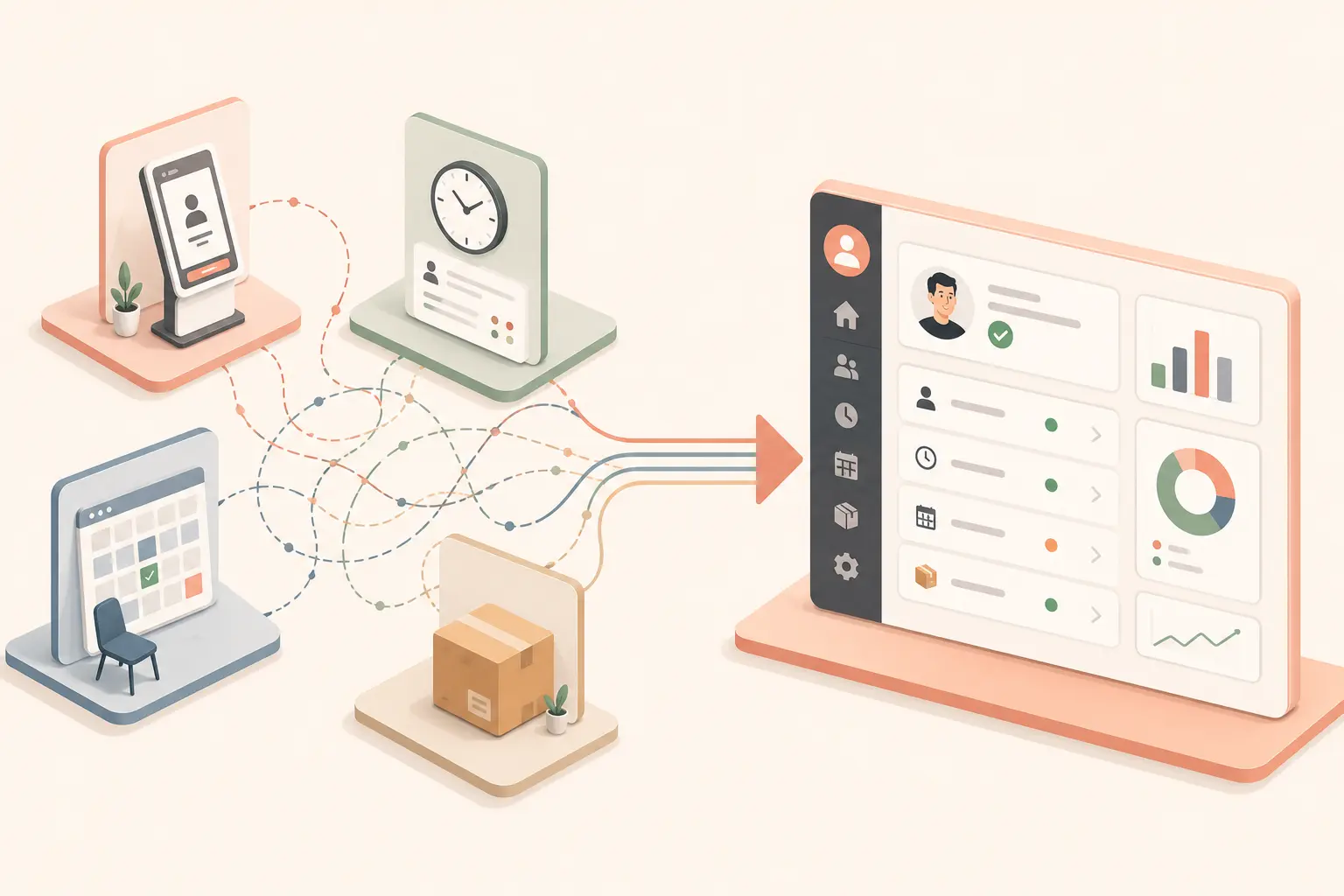
Multi-site delivery management brings these separate operations under a unified platform with centralized oversight and locally executed workflows. This guide covers the specific challenges of managing deliveries across multiple locations, the architecture needed to support it, and the implementation approach that works.
Vizitor’s delivery management system is built with multi-site management at its core, providing a single dashboard that spans all your locations while respecting the operational differences between sites. Our mailroom management software extends this capability to comprehensive mail and package handling.
The Multi-Site Challenge
Inconsistent Processes
Without centralized standards, each location develops its own approach to handling deliveries. One site scans every package; another uses a paper log. One sends Slack notifications; another sends email. This inconsistency creates confusion for employees who work across sites and makes it impossible to measure performance uniformly.
No Centralized Visibility
Facilities managers responsible for multiple locations cannot see what is happening across their portfolio. If a problem develops at one site (rising lost package rates, growing backlog of uncollected items), it may go undetected for weeks.
Cross-Site Transfers
Packages sometimes arrive at the wrong location. An employee based at Site B receives a package at Site A. Without a system that tracks cross-site transfers, these packages often go missing during the handoff.
Inconsistent Employee Experience
An employee who transfers from one office to another may encounter an entirely different delivery experience. This inconsistency undermines the organization’s brand as a modern, well-managed workplace.
Scaling Complexity
According to a 2024 facilities management survey by JLL, organizations managing more than 5 locations spend 3.2 times more staff hours per package on delivery management than single-site organizations, primarily due to coordination overhead (Source: JLL, 2024 Global Facilities Management Report). The right technology eliminates this multiplier.
Multi-Site Architecture
| Component | Single-Site Approach | Multi-Site Approach |
|---|---|---|
| Dashboard | One location view | Centralized dashboard with site filtering |
| Employee directory | Local list | Global directory with location assignments |
| Notifications | Local channels | Location-aware, respects time zones |
| Storage locations | One set | Location-specific with cross-site visibility |
| Reporting | Site-level only | Consolidated and site-level with comparisons |
| Administration | Local admin | Central admin with site-level delegation |
| Workflows | Single configuration | Standard templates with site-level customization |
| Policies | Local | Centrally defined with local exceptions |
Key Capabilities for Multi-Site Management
Centralized Dashboard
A single view that shows delivery volumes, pending pickups, uncollected items, and staff activity across all locations. Facilities managers can drill down into any site for detail or view the portfolio at a glance.
Location-Aware Notifications
Notifications automatically reflect the recipient’s location, including site-specific pickup instructions, local hours, and appropriate time zone. An employee at the London office should not receive a notification at 3 AM because a package was logged during New York business hours.
Cross-Site Transfer Tracking
When a package arrives at the wrong location, the system should support tracked transfers between sites. The transfer records the origin, destination, transporting staff member, and timestamps, maintaining the chain of custody across locations.
Standardized Workflows with Local Flexibility
Central templates define the standard process (scan, store, notify, hand off). Individual sites can customize storage locations, notification channels, and escalation timing within the central framework.
Consolidated Reporting
Reports that aggregate data across all sites reveal portfolio-wide trends. Site comparison reports identify which locations are performing well and which need attention.
Role-Based Administration
Central administrators manage the overall system configuration. Site administrators manage their local settings. Staff operate within their assigned location. This hierarchy ensures governance without creating bottlenecks.
Implementation Approach
Phase 1: Standardize (Weeks 1-3)
Define the standard delivery management process that will apply across all sites. Document the workflow, policies, notification templates, and escalation rules. Allow input from site managers but maintain central decision-making authority.
Phase 2: Pilot (Weeks 4-6)
Deploy the system at 2-3 representative sites. Include sites of different sizes and characteristics to test the standard process in varied environments. Refine the standard based on pilot findings.
Phase 3: Rollout (Weeks 7-16)
Deploy to remaining sites in waves, typically 3-5 sites per wave. Each wave follows a repeatable process: configure site-specific settings, train local staff, launch, and monitor for one week before moving to the next wave.
Phase 4: Optimize (Ongoing)
Use consolidated reporting to compare performance across sites. Identify best practices at top-performing sites and implement them across the portfolio. Conduct quarterly reviews of the overall program.
Cross-Site Transfer Management
One of the most common multi-site challenges is handling packages that arrive at the wrong location.
When a Package Arrives at the Wrong Site
- The staff member scans the package and the system identifies that the recipient is assigned to a different location.
- The system flags the mismatch and prompts the staff member to initiate a cross-site transfer.
- The package is logged as “in transit” with the destination site identified.
- The recipient receives a notification that their package arrived at another location and is being transferred.
- When the package arrives at the correct site, it is scanned again, completing the transfer record.
- The recipient receives a standard pickup notification for their local site.
Preventing Wrong-Site Deliveries
Work with major carriers to update delivery instructions for each location. Include specific building addresses, suite numbers, and attention lines in vendor and procurement systems. Periodically audit carrier delivery accuracy and address persistent issues directly with carrier account managers.
Multi-Site Best Practices
Assign a program owner. Multi-site delivery management needs someone accountable for the overall program, not just individual sites. This person reviews cross-site performance, manages standards, and coordinates improvements.
Standardize first, customize later. Resist the temptation to customize immediately. Start with a consistent process across all sites, then add local customizations only where genuinely needed.
Use comparative reporting. Publish monthly site comparison dashboards showing key metrics (processing time, pickup rate, lost item rate). This creates healthy accountability and surfaces best practices.
Train centrally, support locally. Develop training materials centrally to ensure consistency. Deliver training locally with site-specific examples and context.
Plan for new sites. Define a repeatable onboarding process for adding new locations. This should take days, not weeks, using standard templates and configurations.
Integrate consistently. Connect the delivery system to the same tools at every site: visitor management, workplace security management, and communication platforms. Inconsistent integration creates inconsistent experiences.
Managing Remote and Satellite Offices
Smaller satellite offices without dedicated mailroom staff present unique challenges.
Self-service model. At small offices, have the first person who encounters a delivery scan it using the mobile app. The system handles notifications and tracking from that point.
Rotating responsibility. Assign delivery handling to a rotating schedule so no single person is burdened.
Hub and spoke. Route all deliveries for small satellite offices through a nearby hub office with full mailroom capabilities. The hub processes and forwards or holds items.
Smart lockers. Install smart lockers at satellite offices where delivery drivers can deposit packages without staff involvement. Recipients are notified and collect at their convenience.
Frequently Asked Questions
How does multi-site delivery management differ from having separate systems at each site?
Separate systems create information silos with no cross-site visibility, inconsistent processes, and no consolidated reporting. A multi-site platform provides centralized management, unified reporting, cross-site transfer tracking, and consistent employee experiences.
Can each site have different notification settings?
Yes. While the notification templates are standardized centrally, each site can configure local channels, time zones, and escalation timing. This respects local preferences while maintaining a consistent overall experience.
How do we handle locations in different time zones?
Vizitor’s delivery management system supports location-specific time zone configuration. Notifications, reports, and dashboards automatically adjust to the local time zone of each site and each recipient.
What if different sites have different security requirements?
The system supports site-level workflow customization. A government facility may require enhanced verification for all pickups, while a standard office uses basic badge verification. Both operate within the same platform.
How long does it take to add a new location?
With Vizitor, a new site can be configured and launched within 1-3 days, including storage location setup, staff training, and employee communication. The repeatable onboarding process uses templates from existing sites.
Conclusion
Multi-site delivery management transforms a collection of independent mailroom operations into a coordinated program with centralized visibility, consistent processes, and cross-site accountability. It eliminates the fragmentation that causes lost packages, inconsistent employee experiences, and management blind spots.
Vizitor’s delivery management system is built for multi-site organizations, with centralized dashboards, location-aware workflows, cross-site transfer tracking, and consolidated reporting. Combined with our mailroom management software and workplace management platform, it provides unified management across your entire portfolio.
Ready to unify your delivery operations? Request a demo to see how Vizitor manages deliveries across multiple sites, or visit our pricing page to explore multi-site plans.
Try Vizitor Free
No credit card required. Setup in under 5 minutes. Manage visitors, queues, meeting rooms, and more.
Start Free TrialSee Vizitor in action check-in a visitor in under 30 seconds
Trusted by 500+ businesses. QR check-in, badge printing, NDA signing. Plans from $36/mo.