Delivery Management for Office


Table of Content
Try Vizitor for Free!
The modern office receives far more than interoffice memos and the occasional FedEx envelope. On any given day, your front desk may handle critical business documents, marketing materials, IT equipment, employee personal orders, food deliveries, and courier packages. Without a structured approach, this steady stream of items creates confusion, lost packages, and a front desk team stretched beyond capacity.
Definition: Office delivery management is the structured process of receiving, logging, tracking, notifying recipients about, and handing off packages and deliveries within an office environment using digital tools.
Office delivery management is the practice of systematically logging, tracking, notifying, and handing off every item that arrives at your workplace. When supported by the right technology, it transforms an ad hoc process into a smooth, accountable workflow.
This guide covers the specific challenges of managing deliveries in office environments, the features that matter most, and how to implement a system that works for your team. Vizitor’s delivery management system is purpose-built for offices, with tools that integrate smooth with mailroom management software and visitor workflows.
Why Office Delivery Management Needs Attention
The Volume Problem
According to the National Apartment Association and commercial property surveys, the average corporate office receives between 30 and 100 packages per day, with larger campuses handling several hundred (Source: Pitney Bowes, 2024 Parcel Shipping Index). These numbers spike during holidays and promotional periods.
The Accountability Problem
When a package is marked “delivered” by the carrier but the employee cannot find it, whose problem is it? Without a tracking system, the answer is usually “everyone’s” - which in practice means no one’s.
The Productivity Problem
Studies consistently show that employees spend an average of 10-15 minutes per package incident (searching, calling the front desk, following up). Multiply that by dozens of incidents per week, and the lost productivity is substantial.
The Experience Problem
For employees, receiving a prompt notification that their package has arrived and knowing exactly where to pick it up is a small but meaningful quality-of-life improvement. In competitive talent markets, these details matter.
Key Features for Office Delivery Management
| Feature | Why It Matters for Offices | Priority |
|---|---|---|
| Barcode/QR scanning | Speeds up logging, reduces errors | Essential |
| Automated notifications | Eliminates manual follow-up | Essential |
| Multi-channel alerts (email, SMS, Slack, Teams) | Reaches employees where they work | Essential |
| Digital proof of pickup | Eliminates “I never got it” disputes | Essential |
| Storage location tracking | Helps recipients find their items | High |
| Photo capture at intake | Documents condition on arrival | High |
| Analytics dashboard | Reveals trends and bottlenecks | High |
| Integration with employee directory | Automates recipient matching | High |
| Escalation rules for uncollected items | Prevents storage overflow | Medium |
| Multi-carrier support | Handles all delivery sources | Medium |
| Visitor management integration | Unified front desk workflow | Medium |
How Office Delivery Management Works with Vizitor
Arrival
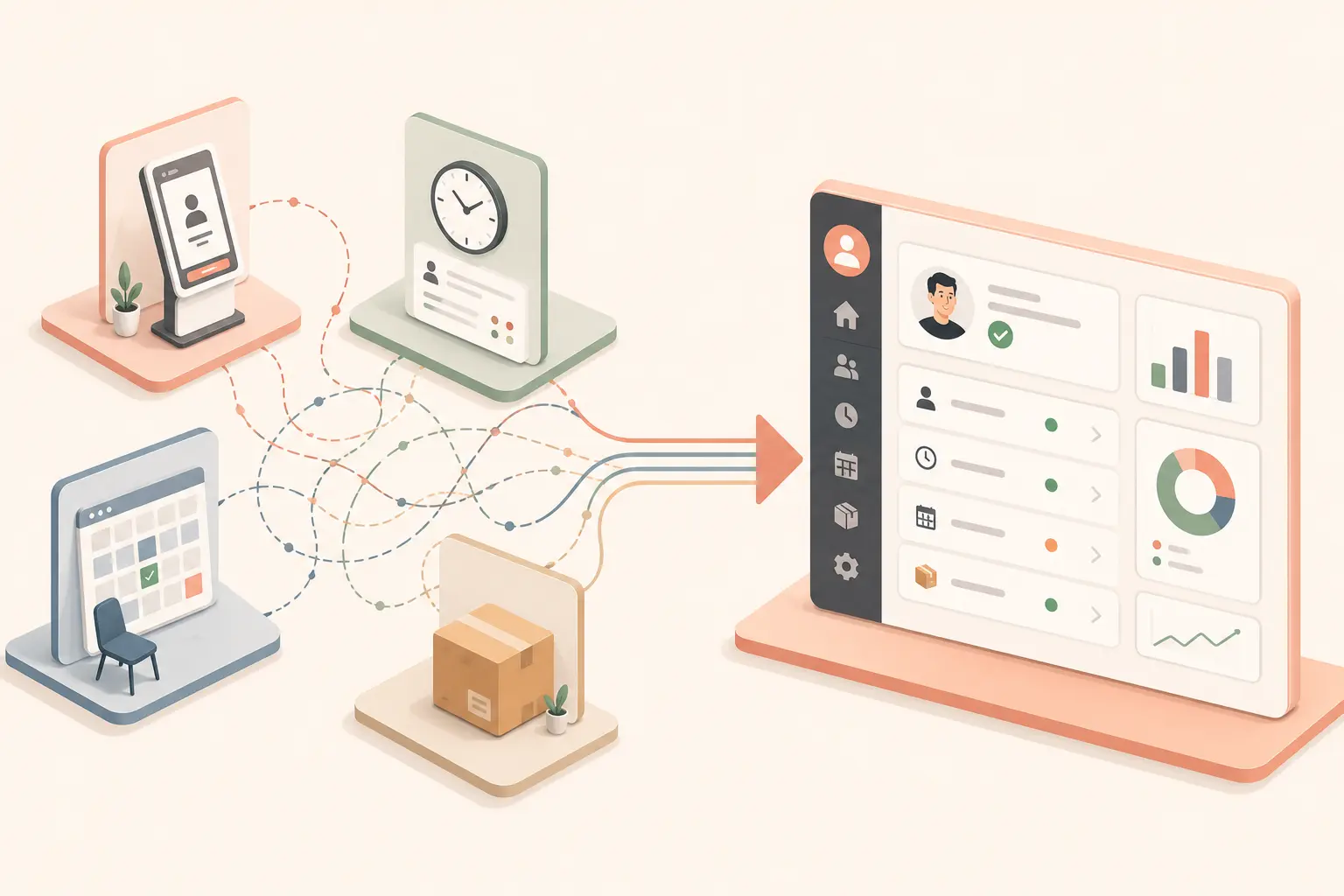
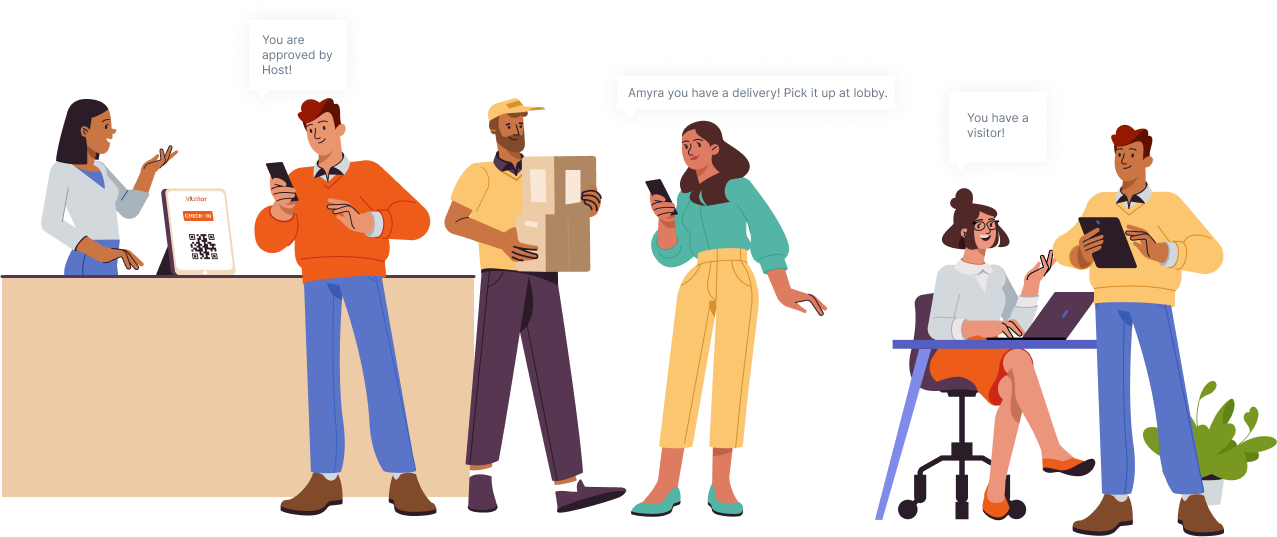
A courier arrives with packages. The front desk staff member opens the Vizitor app on a tablet or smartphone, scans each shipping label, and the system automatically extracts recipient, carrier, and tracking information.
Matching and Storage
The system matches each package to the correct employee using the integrated employee directory. Staff place the package in the assigned storage location, which the system records.
Notification
Within seconds, the recipient receives a notification through their preferred channel. The notification includes package details, storage location, and pickup instructions.
Pickup
The employee visits the designated pickup area, confirms their identity (badge tap, PIN, or digital signature), and the system records the completed handoff with a timestamp.
Escalation
If the package is not collected within the configured window (for example, 48 hours), the system sends a reminder. Further delays trigger escalation to the employee’s manager or the facilities team.
Office-Specific Considerations
Managing Personal Deliveries
Many offices have policies about personal package deliveries, but enforcement is inconsistent. A delivery management system handles personal packages with the same workflow as business deliveries, giving you data to inform policy decisions without creating friction.
Handling Food Deliveries
Lunch orders, catered meetings, and grocery deliveries require special handling due to perishability. The system should support priority notifications for food items and track designated refrigerated or temperature-controlled storage.
Supporting Hybrid Work
When employees work from home part of the week, packages may arrive on days they are not in the office. The system should hold packages and send notifications that include pickup instructions for the employee’s next office day.
Front Desk Integration
In most offices, the front desk handles both visitors and deliveries. Integrating delivery management with your visitor management system creates a unified workflow. Front desk staff do not need to switch between systems, and the organization gets a comprehensive record of everyone and everything entering the building.
IT Equipment Tracking
High-value IT deliveries (laptops, monitors, servers) often require special handling and documented chain of custody. The system should support flagging items as high-value with additional verification at pickup.
Implementation for Office Environments
Week 1: Preparation
Audit your current process by spending a few days at the front desk observing how deliveries are handled. Count volumes, document pain points, and identify the staff involved.
Configure the system with your employee directory, notification preferences, and storage locations. Test scanning with sample packages.
Week 2: Training and Launch
Train front desk staff on the scanning and logging workflow. Run a parallel operation for 2-3 days (logging in both the new system and the old way) to ensure nothing is missed.
Send a company-wide announcement explaining the new system, including what employees should expect and how to set their notification preferences.
Week 3 and Beyond: Optimization
Monitor analytics to identify bottlenecks. Common early adjustments include refining notification channels (some employees prefer Slack over email), updating storage locations, and fine-tuning escalation timing.
Measuring Success
Track these metrics to gauge the impact of your office delivery management system.
Notification speed: Time from package arrival to recipient notification. Target: under 2 minutes.
Pickup rate within 24 hours: Percentage of packages collected within one business day. Target: over 85%.
Lost package rate: Number of packages that cannot be located after logging. Target: zero.
Front desk time per package: Average time staff spend logging each package. Target: under 30 seconds.
Employee satisfaction: Track feedback or include delivery experience in workplace surveys.
Common Mistakes in Office Delivery Management
Relying on email only. If your employees live in Slack or Teams, email notifications may go unread for hours. Use the channels where people are actually active.
Skipping the photo capture. A quick photo at intake documents the package condition and helps resolve damage disputes. It takes seconds and saves headaches.
Not setting pickup deadlines. Without clear expectations, packages accumulate indefinitely. Set a policy, communicate it, and enforce it with automated reminders.
Treating all deliveries the same. A confidential legal document and a personal Amazon order have different handling requirements. Your system should support classification and differentiated workflows.
Ignoring the data. The analytics are there for a reason. Monthly reviews of delivery data reveal staffing needs, peak periods, and process improvements that you would otherwise miss.
Integrating with Your Broader Workplace Stack
Delivery management does not exist in isolation. The most effective implementations connect with other workplace systems.
Visitor management. When couriers and delivery drivers check in through your visitor management system, you get a complete record of who entered the building and what they delivered.
Workplace security. Connecting delivery tracking with workplace security management ensures that suspicious packages are flagged and that delivery data is available during security investigations.
Space management. Delivery data reveals how much storage space you actually need and how it is used. This informs office layout decisions managed through your workplace management platform.
Queue management. In offices where package pickup creates congestion, integrating with a queue management system can schedule pickup times and distribute traffic.
Frequently Asked Questions
How is office delivery management different from a mailroom system?
Office delivery management covers all packages arriving at any entry point, including the front desk, side entrances, and loading docks. Mailroom management software focuses specifically on centralized mailroom operations, including postal mail sorting and internal distribution. Many organizations need both, which is why Vizitor integrates the two into a single platform.
Do we need dedicated hardware?
No. Most modern systems, including Vizitor, run on smartphones and tablets that your team already has. Barcode scanners can speed up high-volume operations but are not required.
What if we have multiple offices?
Vizitor’s delivery management system supports multi-site management from a single dashboard. Each location maintains its own storage locations and staff assignments while rolling up to centralized reporting.
Can the system handle deliveries from any carrier?
Yes. The system is carrier-agnostic. Whether the delivery comes from FedEx, UPS, DHL, Amazon, a local courier, or a food delivery service, the scanning and notification workflow is the same.
How quickly can we be up and running?
Most single-office implementations go live within a few days, including setup, testing, and staff training. Multi-site deployments with custom integrations typically take 2-3 weeks.
Conclusion
Office delivery management is a straightforward problem with a clear solution. By digitizing the intake, tracking, notification, and handoff process, you eliminate lost packages, free up front desk time, and give employees a better experience.
Vizitor’s delivery management system is designed specifically for office environments, with the flexibility to scale from a single location to a global portfolio of workplaces.
Ready to bring order to your office deliveries? Request a demo to see how Vizitor works, or visit our pricing page to find the plan that fits your office.
Try Vizitor Free
No credit card required. Setup in under 5 minutes. Manage visitors, queues, meeting rooms, and more.
Start Free TrialSee Vizitor in action check-in a visitor in under 30 seconds
Trusted by 500+ businesses. QR check-in, badge printing, NDA signing. Plans from $36/mo.