Walk-In Visitor Queue Management


Table of Content
Try Vizitor for Free!
Not every visitor books ahead. In most organizations, a significant percentage of daily visitors arrive without an appointment. They walk in, approach the front desk, and expect to be served. How your organization handles these walk-in visitors determines whether the experience is smooth or chaotic.
Walk-in visitor queue management is the practice of organizing, prioritizing, and serving visitors who arrive without prior scheduling. It sits at the intersection of two systems: your queue management operation (which determines how people wait and get served) and your visitor management process (which determines how people are identified, registered, and tracked).
A 2024 study by Envoy found that 42% of daily visitors at corporate offices, healthcare facilities, and government buildings are walk-ins, meaning they did not have a scheduled appointment (Source: Envoy Workplace Report, 2024). For organizations that rely on appointments, this still represents a substantial volume that must be handled efficiently. To understand the broader queue management picture, visit our queue management system pillar page.
Walk-In vs. Appointment Visitors
Understanding the differences between walk-in and appointment visitors helps you design a system that serves both groups fairly.
| Aspect | Walk-In Visitors | Appointment Visitors |
|---|---|---|
| Arrival time | Unpredictable | Known in advance |
| Staff preparation | None (no advance notice) | Host notified, context prepared |
| Wait time expectations | Lower expectations (accept some waiting) | Higher expectations (expect minimal wait) |
| Service priority | Typically lower | Typically higher (confirmed time slot) |
| Check-in process | Full registration at arrival | Pre-registered, partial or express check-in |
| Surge risk | High (multiple walk-ins can arrive simultaneously) | Low (distributed across time slots) |
| Data availability | Limited until check-in | Full profile often available |
Most organizations handle both types of visitors simultaneously. The challenge is managing walk-in visitor traffic without disrupting the flow for appointment visitors, and without making walk-ins feel like second-class visitors.
The Walk-In Problem: Why It Is Difficult
Unpredictable Demand
Walk-in visitors arrive on their own schedule. There may be two in an hour or twenty. Mondays and Fridays often see higher walk-in volumes than midweek. Seasonal patterns, local events, and weather all influence walk-in traffic.
Front Desk Overload
Without a queue management system, the front desk becomes the bottleneck. A receptionist trying to simultaneously check in a walk-in visitor, answer the phone, notify a host about an appointment visitor, and manage the waiting area is set up to fail.
Visitor Frustration
Walk-in visitors often have urgent needs. They did not book an appointment because the matter was unexpected, because they did not know how, or because they expected to be served immediately. When faced with a long unstructured wait, frustration escalates quickly.
Security Gaps
Walk-in visitors who are not properly registered create security blind spots. If your visitor management system only handles pre-registered guests, walk-ins may bypass the registration process during busy periods, creating compliance and safety risks.
How Walk-In Visitor Queue Management Works
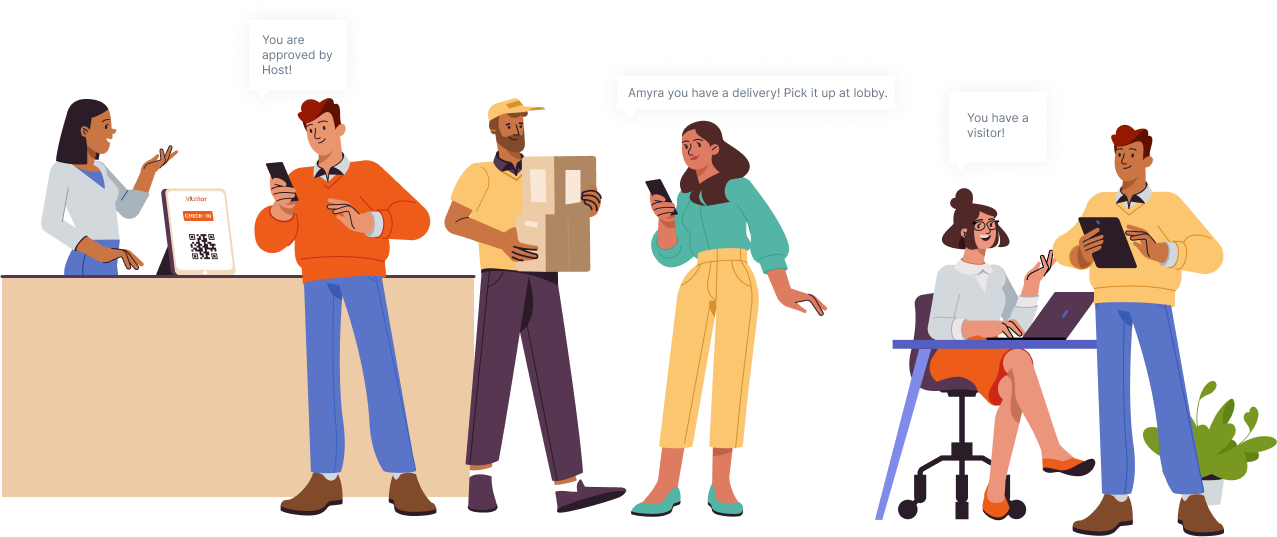
An effective walk-in visitor queue management system combines visitor registration with queue positioning in a single workflow.
Step 1: Self-Service Check-In
Walk-in visitors check in at a kiosk, tablet, or reception desk. During check-in, they provide:
- Their name and contact information
- The purpose of their visit
- Who they are here to see (if they know)
- The service they need
This registration step serves dual purposes: it adds the visitor to the security log (visitor management) and places them in the appropriate service queue (queue management).
Step 2: Queue Assignment
Based on the service type selected, the walk-in visitor is assigned to the appropriate queue. If they are visiting a specific department, they are routed to that department’s queue. If their need is general, they may be routed to a reception or triage queue where a staff member determines the best next step.
Step 3: Wait Time Communication
The walk-in visitor receives their queue position and estimated wait time through a printed token, SMS message, or the check-in screen. This transparency is especially important for walk-ins who may not know what to expect.
Step 4: Host Notification
If the walk-in visitor has named a specific host, the queue management system can notify that host via SMS, email, or app push notification. The host can confirm availability, suggest a different time, or delegate to a colleague, all before the visitor reaches the front of the queue.
Step 5: Service Delivery
When the visitor’s turn arrives, they are called to the appropriate location through display screens and mobile notifications. The experience from this point forward is identical to that of an appointment visitor.
Handling Walk-In Surges
Surges are the primary challenge in walk-in visitor queue management. When multiple walk-ins arrive within a short period, the system must manage the load without creating a chaotic waiting experience.
Dynamic Counter Allocation
When the queue management system detects a surge (queue length exceeding a threshold or wait times rising above a target), it can alert managers to open additional service counters or redirect staff from quieter departments.
Virtual Queuing for Walk-Ins
Offering walk-in visitors the option to join a virtual queue reduces lobby congestion during surges. After checking in at the kiosk, visitors can wait outside, in a nearby cafe, or in their vehicle, receiving an SMS when their turn approaches. Our guide on virtual queue management explains how this works in detail.
Triage Queuing
During surges, a staff member can operate a triage position near the entrance, quickly assessing each walk-in visitor’s need and directing them to the right queue. This prevents visitors from waiting in a general queue only to be redirected later.
Overflow Scheduling
If the walk-in queue becomes excessively long, offer visitors the option to book an appointment for later that day or the next day through a kiosk or mobile link. This converts some walk-ins into appointments, reducing immediate pressure while ensuring the visitor’s need is eventually met.
Integrating Queue Management with Visitor Management
Walk-in visitor queue management works best when your queue management system and visitor management system are integrated. Vizitor provides this integration natively, but the principle applies regardless of the platform.
Unified Check-In
A single check-in process captures both visitor registration data (for security and compliance) and queue assignment (for service routing). The visitor does not need to register at one desk and then join a separate queue at another.
Visitor Profiles
When a walk-in visitor has visited before, the integrated system can pull their profile, speeding up check-in. It can also flag visitors who require special handling (VIPs, known security concerns, accessibility needs).
Badge and Queue Token
The system issues a visitor badge (for identification and security) and a queue token (for service routing) in a single step. The badge may display the visitor’s name, host, and queue information.
Host Notification with Context
When the host is notified of a walk-in visitor, the notification includes the visitor’s name, purpose, and queue position. The host can prepare for the meeting while the visitor is still waiting, making the eventual interaction more productive.
Departure Tracking
When the walk-in visitor’s service is complete and they depart, both the visitor management system (marking them as checked out) and the queue management system (closing the service record) are updated simultaneously.
This integrated approach is central to how Vizitor’s workplace management platform handles the full visitor lifecycle, from arrival to departure.
Best Practices
Set Walk-In Expectations
Post clear signage about expected wait times during peak and off-peak hours. If walk-in wait times typically exceed 30 minutes, proactively suggest appointment booking as an alternative.
Reserve Capacity for Walk-Ins
Do not schedule appointments back-to-back with zero buffer. Reserve 20-30% of your service capacity for walk-in visitors. This prevents a situation where appointment slots are full and walk-ins face unreasonably long waits.
Staff for the Peaks
Use queue management analytics to identify walk-in surge patterns. Staff accordingly, with flexible workers who can be deployed to walk-in service during high-demand periods.
Collect Walk-In Data
Track why visitors are walking in rather than booking appointments. If a common service type generates high walk-in volumes, consider making that service available online, via phone, or through self-service kiosks.
Prioritize Returning Walk-Ins
If a walk-in visitor has been previously turned away due to capacity or was unable to complete their service, give them priority on their return visit. The queue management system can flag these visitors and adjust their position accordingly.
Maintain Security Standards
Walk-in urgency should not compromise security. Ensure that every walk-in visitor completes the same registration process as appointment visitors, including ID verification and host confirmation where required. Integration with workplace security management ensures consistent security regardless of how the visitor arrived.
Measuring Walk-In Management Performance
| Metric | Target | How to Measure |
|---|---|---|
| Walk-in check-in time | Under 2 minutes | Time from kiosk interaction start to queue assignment |
| Walk-in average wait time | Under 20 minutes | Time from queue assignment to service start |
| Walk-in satisfaction score | Above 3.8/5.0 | Post-service survey for walk-in visitors specifically |
| Walk-in to appointment conversion | Above 15% | Percentage of walk-ins who book future appointments |
| Walk-in abandonment rate | Below 10% | Percentage of walk-ins who leave before being served |
| Security compliance rate | 100% | Percentage of walk-ins who complete full registration |
Frequently Asked Questions
How do I balance walk-in visitors with appointment visitors in the same queue?
Use configurable priority rules. Appointment visitors receive priority (they booked a specific time and expect to be seen near that time). Walk-in visitors are served in the gaps between appointments and during periods when appointment slots are not booked. The queue management system manages this balancing automatically.
Should walk-in visitors pay higher fees than appointment visitors?
This depends on your organization’s policy. Some service providers charge a premium for walk-in service to incentivize appointment booking. Others maintain equal pricing to ensure accessibility. Either approach can work; the queue management system supports configurable pricing rules if needed.
How do I encourage walk-in visitors to book appointments instead?
Display appointment booking options prominently during the walk-in check-in process. Show estimated walk-in wait times alongside the nearest available appointment time. If the appointment time is sooner (or offers a guaranteed shorter wait), many visitors will choose to book. Make the booking process as easy as one or two taps on the kiosk.
Can walk-in queue management work at locations with no receptionist?
Yes. Self-service kiosks handle check-in and queue assignment without staff involvement. The queue management system routes the visitor to the appropriate service point and notifies the host. This model is common in modern offices and co-working spaces.
What if a walk-in visitor does not know who they need to see?
The check-in process should include a service type selection that routes the visitor to the appropriate department or staff member. If the visitor’s need is unclear, they can be routed to a general reception or triage queue where a staff member determines the right course of action.
Walk-in visitors will always be part of your daily traffic. The question is whether they encounter a professional, organized process or a chaotic, frustrating one. A walk-in visitor queue management system turns unpredictable arrivals into a managed flow, protecting both the visitor experience and your operational efficiency.
Ready to handle walk-in visitors more effectively? Book a demo with Vizitor or explore our pricing to get started.
Try Vizitor Free
No credit card required. Setup in under 5 minutes. Manage visitors, queues, meeting rooms, and more.
Start Free TrialSee Vizitor in action check-in a visitor in under 30 seconds
Trusted by 500+ businesses. QR check-in, badge printing, NDA signing. Plans from $36/mo.