Visitor Management System in the Philippines


Table of Content
Try Vizitor for Free!
The Philippines has emerged as a major hub for business process outsourcing, manufacturing, real estate development, and financial services. Metro Manila alone hosts thousands of commercial buildings, from the towers of Makati and BGC to the expanding business parks of Ortigas, Alabang, and Clark.
With this commercial growth comes a corresponding challenge: managing the flow of visitors into these workplaces. Office buildings in the Philippines often process hundreds of visitors daily, including clients, job applicants, delivery personnel, government inspectors, and contractor crews.
The Philippine Statistics Authority reports that the country’s services sector, which includes BPO, financial services, and professional services, contributes over 60% of GDP and employs millions of workers across thousands of office locations. (Source: PSA National Accounts 2024)
What is a visitor management system? A visitor management system (VMS) is a digital platform that automates the registration, identification, and tracking of visitors entering a workplace. It replaces paper logbooks with digital check-in, photo capture, host notification, and compliance-ready reporting. Learn more on our visitor management system page.
This guide explains why Philippine businesses are adopting visitor management technology and how Vizitor serves this market.
Why Philippine Businesses Need Visitor Management Systems
BPO Industry Requirements
The Philippines is the world’s second-largest BPO market. BPO companies handle sensitive data for international clients, including healthcare records, financial information, and customer data. These clients require their Philippine service providers to maintain strict physical security controls, including documented visitor management.
A digital VMS provides the audit trail that international clients demand during site visits and security assessments.
Data Privacy Act of 2012 (DPA) Compliance
The National Privacy Commission (NPC) enforces the Data Privacy Act, which requires organizations to protect personal information collected from visitors. Paper logbooks, where every visitor can see the names and details of previous visitors, violate the DPA’s data protection principles.
A digital system encrypts visitor data, restricts access to authorized personnel, and supports the data subject rights that the DPA guarantees.
Commercial Building Security Standards
Building owners and property managers in Metro Manila’s major business districts increasingly require tenants to implement visitor management systems. PEZA (Philippine Economic Zone Authority) zones and IT parks often have their own security requirements that include visitor tracking and documentation.
Typhoon and Emergency Preparedness
The Philippines experiences an average of 20 typhoons per year. During severe weather events, building managers need an instant count of every person in the building to manage evacuations safely. A digital visitor management system provides this capability.
Key Challenges in the Philippine Market
1. High-Volume Commercial Buildings
A typical commercial tower in Makati or BGC may house 20 or more tenant companies across 30+ floors. The building lobby processes hundreds of visitors daily. Manual check-in creates long queues during peak hours, frustrating visitors and tenants alike.
Vizitor’s self-service kiosks and pre-registration workflows reduce check-in time to under 30 seconds, eliminating lobby congestion.
2. Multi-Tenant Building Management
Building management companies need a system that serves all tenants while giving each tenant control over their own visitor policies. A workplace management platform like Vizitor operates at both the building level and the tenant level, providing unified lobby management with tenant-specific configurations.
3. Guard Force Integration
Philippine commercial buildings typically employ security guards who manage visitor check-in. The visitor management system must be easy for guards to operate and should complement their existing procedures rather than adding complexity.
4. Connectivity Challenges
While Metro Manila has strong internet infrastructure, areas outside the capital, including PEZA zones in provinces, may experience connectivity issues. The visitor management system must function offline and sync when connectivity is restored.
5. Cost Sensitivity
Philippine businesses, especially SMEs, are cost-conscious technology buyers. The visitor management solution must deliver clear ROI at price points appropriate for the local market.
How Vizitor Serves the Philippine Market
Building-level and tenant-level management. Deploy Vizitor at the lobby level for building-wide visitor management while giving each tenant company their own dashboard, visitor types, and notification settings.
Guard-friendly interface. The check-in interface is designed for simplicity. Security guards with minimal technology training can operate the system confidently after a brief orientation.
DPA-compliant data handling. Visitor data is encrypted, access is role-based, and consent is collected at check-in. Data retention policies ensure visitor information is purged after the required period. These features support compliance with NPC requirements.
Offline capability. Kiosks and tablets continue to function during internet outages. Data syncs automatically when connectivity returns, ensuring uninterrupted operation.
Multilingual support. Configure check-in screens in English, Filipino, or other languages to accommodate your visitor population.
Pre-registration for BPO client visits. When an international client schedules a site visit, the BPO company pre-registers them in Vizitor. The client receives a welcome email with check-in instructions. Upon arrival, they check in in seconds, creating a professional first impression.
Emergency mustering. Access a real-time report of every visitor in the building during a typhoon warning, earthquake, or other emergency. Share the report with building management and emergency responders.
Explore Vizitor’s workplace security management features for the Philippine market.
Comparison: Paper Logbook vs. Digital VMS in the Philippines
| Feature | Paper Logbook | Digital VMS (Vizitor) |
|---|---|---|
| DPA compliance | Non-compliant (data exposed) | Built-in privacy controls |
| Check-in speed | 2-5 minutes | Under 30 seconds |
| Lobby congestion at peak hours | Significant queues | Reduced through self-service |
| Building-level + tenant management | Separate systems | Unified platform |
| Guard operability | Simple but limited | Simple and feature-rich |
| Emergency headcount | Manual (slow, inaccurate) | Instant digital report |
| Client impression (BPO) | Dated, unprofessional | Modern, branded experience |
| Visitor photo capture | Not available | Automatic at check-in |
| Data retention compliance | Manual management | Automated purge schedules |
| Offline capability | Inherently offline (paper) | Digital with offline sync |
Industry Applications in the Philippines
BPO and shared services. The Philippines’ BPO industry serves Fortune 500 clients who conduct regular site audits. Vizitor provides the documented visitor management controls these audits require, including visitor identification, access logging, and confidentiality acknowledgment.
Real estate and property management. Developers like Ayala Land, SM Prime, and Megaworld manage large commercial portfolios. Vizitor provides building-level visitor management that serves all tenants while maintaining property management oversight.
Manufacturing. Factory and production facilities in Cavite, Laguna, Batangas, and Cebu use Vizitor to manage contractor check-ins, enforce safety orientations, and track visitor access to production areas.
Banking and financial services. Banks and financial institutions throughout the Philippines use visitor management to protect client data, manage regulatory inspector visits, and comply with BSP (Bangko Sentral ng Pilipinas) security requirements.
Healthcare. Hospitals and medical centers manage patient visitors, pharmaceutical representatives, and medical equipment vendors with systems that support the DPA and DOH facility management requirements.
Government offices. National and local government offices use visitor management to control access, manage citizen appointments, and maintain the security documentation that government facilities require.
Pricing Considerations for the Philippine Market
Vizitor offers pricing plans designed to be accessible for Philippine businesses across all segments. Plans are available for single-office SMEs, multi-floor commercial tenants, and building management companies overseeing large properties.
For current pricing in PHP, visit the pricing page or request a demo to discuss a plan tailored to your organization’s size and needs.
Best Practices for Philippine Deployments
-
Start with the lobby. For commercial buildings, deploying visitor management at the lobby level provides the broadest impact with the least disruption to individual tenants.
-
Train security guards thoroughly. Guards are the primary users of the system. Invest in training that covers normal operations, common visitor scenarios, emergency procedures, and basic troubleshooting.
-
Configure DPA consent notices. Present a clear, Filipino/English consent notice at check-in that explains data collection and use. Store the consent record with the visit data.
-
Plan for typhoon season. Test the system’s offline capability before the June-November typhoon season. Ensure kiosks have battery backup or UPS power.
-
Use pre-registration for client visits. For BPO companies, pre-registering clients before their site visit creates a professional experience that reinforces the organization’s competence and attention to detail.
For buildings with high visitor volumes, a queue management system can further optimize lobby flow and reduce wait times.
Frequently Asked Questions
How does a visitor management system help with Data Privacy Act compliance?
The DPA requires organizations to protect personal information, limit collection to what is necessary, and secure data against unauthorized access. A digital VMS encrypts visitor data, collects consent at check-in, restricts data access to authorized personnel, and automates data deletion after configurable retention periods. Paper logbooks, which expose visitor names and details to every subsequent visitor, fail to meet these requirements.
Can the system manage visitors for an entire commercial building with multiple tenants?
Yes. Vizitor supports building-level deployment where the property management company controls the lobby check-in process. Each tenant company has its own dashboard, visitor categories, and notification settings. When a visitor checks in at the lobby and specifies their destination tenant, the system routes the notification to the correct host and applies the tenant’s visitor policies.
What happens during a power outage or internet disruption?
Vizitor includes offline functionality. Check-in kiosks continue to operate on battery backup or UPS power, storing visitor data locally. When power and internet connectivity are restored, the system syncs all offline data to the cloud automatically. This ensures continuous operation during brownouts, load management events, and connectivity interruptions.
Is the system easy enough for security guards to operate?
Yes. The interface is designed for simplicity and can be operated with minimal training. Check-in flows follow a clear step-by-step process. Guards can assist visitors, look up pre-registrations, and generate occupancy reports with a few taps. A brief training session is typically sufficient to bring guards up to full competency.
How does pre-registration work for BPO client visits?
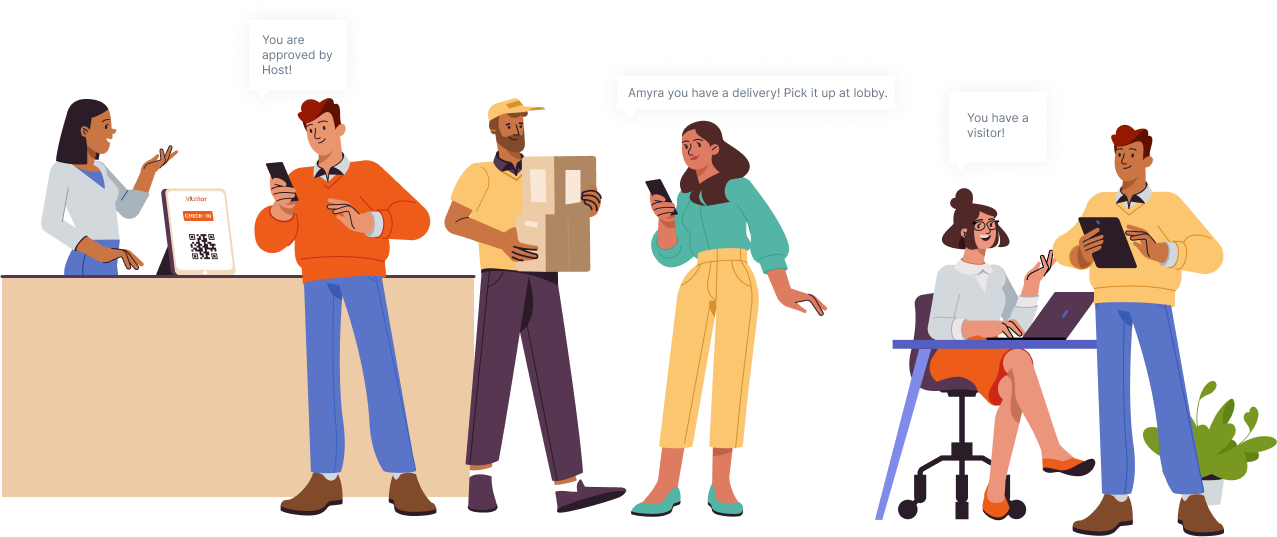
The host (account manager or operations lead) creates a visitor pre-registration in Vizitor, entering the client’s name, company, expected arrival date, and any special instructions. The system sends the client a welcome email with check-in instructions and a QR code. When the client arrives, they scan the QR code at the lobby kiosk, complete check-in in seconds, and the host receives an instant notification. The entire process is fast, professional, and documented.
Conclusion
The Philippine business landscape demands visitor management that balances security, compliance, efficiency, and cost-effectiveness. From the high-rise towers of Makati to manufacturing zones in Laguna, from BPO floors in BGC to government offices nationwide, the need for modern visitor management is clear.
Vizitor provides a solution designed for the realities of the Philippine market: guard-friendly operation, DPA compliance, offline capability for connectivity challenges, and pricing that works for local budgets.
Request a demo to see Vizitor configured for your Philippine business, or explore pricing to find the right plan.
Try Vizitor Free
No credit card required. Setup in under 5 minutes. Manage visitors, queues, meeting rooms, and more.
Start Free TrialSee Vizitor in action check-in a visitor in under 30 seconds
Trusted by 500+ businesses. QR check-in, badge printing, NDA signing. Plans from $36/mo.