Queue Management for Government Offices


Table of Content
Try Vizitor for Free!
Government offices serve the public. That sounds obvious, but the implications for queue management are significant. Unlike a private business that can choose to limit its customer base, a government office must serve every citizen who walks through its doors. There is no competitor to lose citizens to, but there is something equally important at stake: public trust.
Long wait times at government offices are one of the most common and most complained-about aspects of interacting with public institutions. A 2023 citizen satisfaction survey by the Centre for Good Governance found that 67% of citizens listed “waiting time” as their primary dissatisfaction factor when visiting government offices, ahead of staff behavior (42%) and process complexity (38%) (Source: Centre for Good Governance Annual Report, 2023).
Queue management for government offices addresses this challenge by bringing structure, transparency, and technology to public service delivery. For a foundational understanding of how these systems work, visit our queue management system overview.
Why Government Offices Need Queue Management
High and Unpredictable Walk-In Volume
Government offices handle services that citizens cannot get elsewhere: passport applications, license renewals, tax filings, property registrations, birth and death certificates, and dozens of other essential services. This creates consistently high footfall with limited ability to redirect demand.
Multiple Service Types
A single government office may handle 10 to 20 different service types, each requiring different documentation, different staff expertise, and different processing times. Without a queue management system, citizens may wait in one line only to discover they are in the wrong one.
Accessibility and Inclusion Requirements
Government offices must serve all citizens, including elderly individuals, people with disabilities, those who do not speak the primary language, and those with limited digital literacy. The queue management system must accommodate this full range of abilities.
Public Accountability
Government operations face a level of public scrutiny that private businesses do not. Wait time data, service metrics, and citizen satisfaction scores are increasingly subject to transparency requirements and public reporting.
Limited Budget Flexibility
Government offices typically operate with fixed budgets and cannot simply hire more staff when queues get long. Technology that improves efficiency within existing resource constraints is essential.
How Queue Management for Government Works
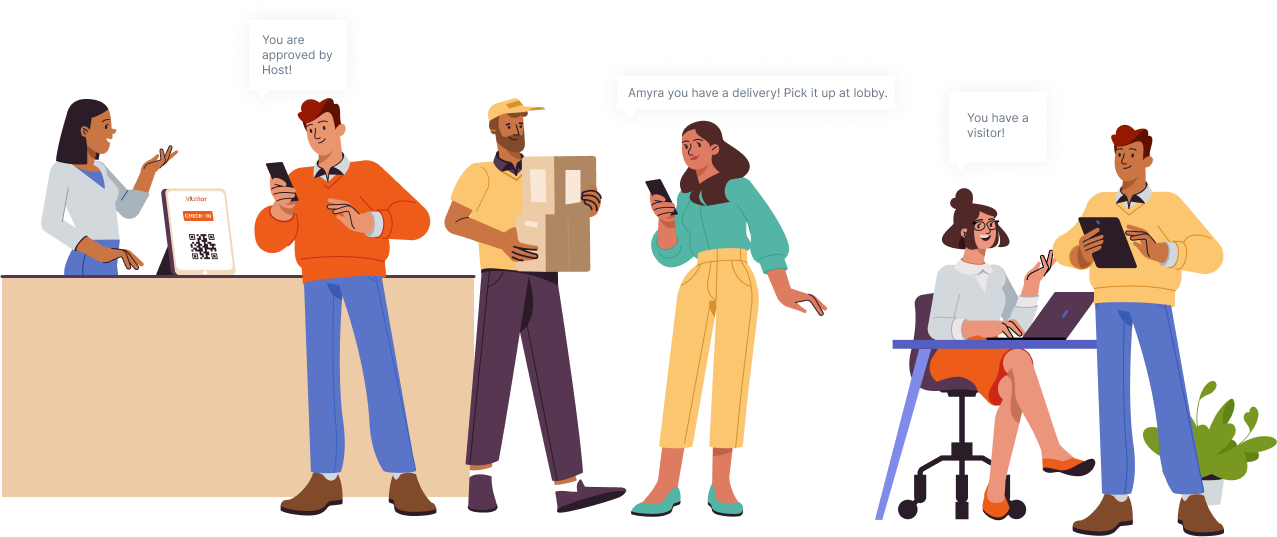
Citizen Arrival and Check-In
Citizens check in through:
- Self-service kiosks at the office entrance where they select their service type
- QR codes displayed at the entrance or on the government office website
- Pre-registration portals where citizens book a time slot before visiting
- Reception staff who assist citizens with check-in when needed
The check-in process captures the citizen’s name, contact number, service type needed, and any appointment details. For offices that also track visitors for security purposes, integration with a visitor management system handles both queuing and security registration in a single step.
Service Routing
The queue management system routes each citizen to the appropriate service queue. If a citizen needs multiple services (for example, document verification followed by fee payment), the system creates a multi-step route.
Wait Time Communication
Citizens receive their queue position and estimated wait time through:
- Digital display screens in the waiting area
- SMS messages to their mobile phone
- The government office’s mobile app (if available)
This transparency is particularly important in government settings where citizens have historically had no visibility into how long they would wait.
Service Delivery and Completion
When a citizen’s turn arrives, they are called to the designated counter through the display screen and an SMS notification. After service completion, the system logs the interaction and optionally collects feedback.
The Citizen Experience: Before and After
| Aspect | Without Queue Management | With Queue Management |
|---|---|---|
| Arrival experience | Crowded lobby, unclear where to go | Organized check-in with clear routing |
| Wait visibility | No idea how long the wait will be | Real-time position and time estimate |
| Wait location | Must remain in the crowded waiting area | Can wait anywhere with SMS notifications |
| Service routing | May wait in the wrong line for the wrong service | Automatically routed to the correct counter |
| Fairness perception | Suspicion of line-cutting and favoritism | Transparent, auditable queue order |
| Multi-service visits | Re-queue at each department from scratch | Automatic routing to next service |
| Accessibility | No special accommodation for elderly or disabled | Priority queuing and accessible check-in options |
| Feedback | No structured way to provide input | Post-service survey via SMS or kiosk |
Technology Solutions for Government Queuing
Self-Service Kiosks
Touchscreen kiosks at the entrance allow citizens to select their service and receive a token without interacting with staff. Kiosks should support multiple languages, have large readable fonts, and be accessible for wheelchair users.
Digital Signage
Large display screens in waiting areas show the current queue status, which tokens are being served at which counters, and estimated wait times. Placement and readability are critical. Our guide on queue display systems covers best practices.
Virtual Queuing
Citizens join the queue remotely through a government portal or mobile app. They receive SMS updates and arrive only when their turn is near. This reduces facility congestion and is particularly valuable for offices in dense urban areas with limited waiting space. Learn more in our virtual queue management guide.
Appointment Scheduling
Online appointment booking lets citizens choose a specific date and time for their visit. The queue management system reserves capacity for appointments while still accommodating walk-ins. This is one of the most effective ways to reduce peak-period congestion.
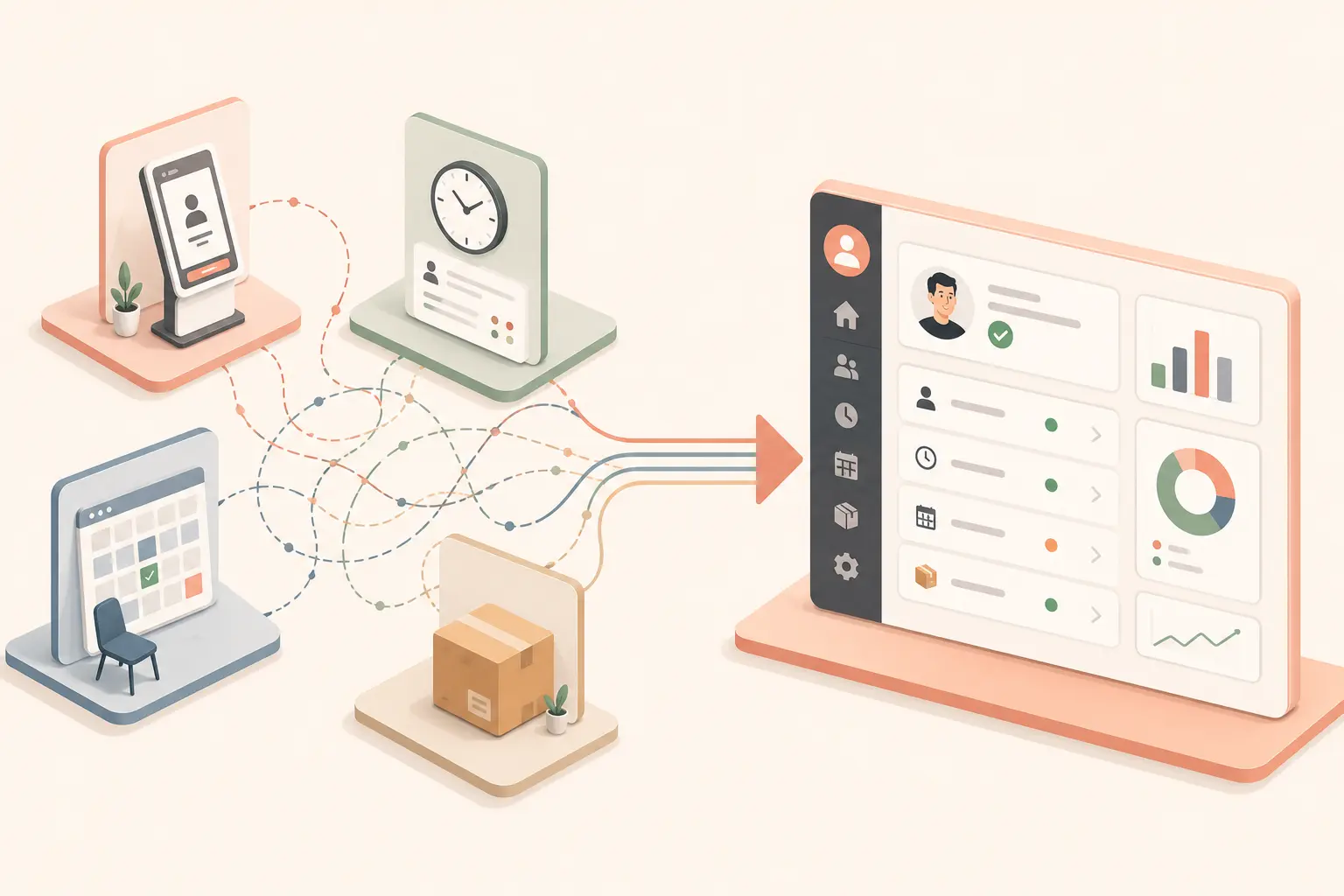
Analytics Dashboard
Real-time and historical dashboards give office managers and government administrators visibility into:
- Daily citizen volumes and peak periods
- Average and maximum wait times by service type
- Counter utilization and staff performance
- Citizen satisfaction scores and feedback trends
- Comparison across multiple offices or departments
This data supports accountability, resource allocation, and continuous improvement.
Compliance and Governance Considerations
Data Privacy
Government offices collect sensitive citizen data during the queue management process. The system must comply with applicable data protection laws (DPDP Act in India, GDPR in Europe) and government data handling policies. Citizen data collected for queuing purposes should be used only for that purpose and retained only as long as necessary.
Accessibility Standards
Queue management systems in government offices must comply with accessibility standards. This includes physical accessibility of kiosks (height, reach, braille labels), digital accessibility of web portals (WCAG compliance), and process accessibility (non-digital alternatives for citizens who cannot use technology).
Audit Trails
Government operations require audit trails. The queue management system should maintain detailed logs of token issuance, service delivery, wait times, and any priority overrides. These logs support internal audits, citizen grievance resolution, and public transparency reports.
Multilingual Support
Government offices serve diverse populations. The queue management system should support multiple languages for kiosk interfaces, display screens, SMS notifications, and web portals. The number and selection of languages should match the linguistic profile of the population served.
Integration with E-Governance
Queue management for government offices should integrate with broader e-governance initiatives. This includes connecting with citizen identity systems, service delivery platforms, and government workplace tools. Vizitor’s integration with workplace management platforms and workplace security management makes this kind of cross-system connectivity possible.
Implementation Approach for Government Offices
Phase 1: Assessment (Weeks 1-2)
- Map all service types and their processing requirements
- Measure current wait times and citizen volumes
- Identify infrastructure requirements (network, power, display mounting)
- Assess accessibility needs
Phase 2: Configuration and Setup (Weeks 3-4)
- Configure service categories, routing rules, and priority levels
- Install kiosks, display screens, and counter terminals
- Set up SMS gateway and notification templates
- Configure analytics dashboards and reporting
Phase 3: Staff Training (Week 5)
- Train counter staff on the new system
- Train managers on dashboard monitoring and configuration
- Train help desk staff on assisting citizens with check-in
- Prepare citizen-facing communication materials
Phase 4: Pilot Launch (Weeks 6-8)
- Launch at one office or department
- Maintain manual backup processes during the pilot
- Collect daily data on wait times, citizen feedback, and system issues
- Make daily adjustments based on observations
Phase 5: Full Rollout (Weeks 9-16)
- Expand to additional offices using refined configuration
- Centralize monitoring across all offices
- Establish regular reporting cadence for government administrators
- Begin publishing citizen-facing service metrics
Common Objections and Responses
“Our citizens are not tech-savvy enough." Modern queue management systems include non-digital options: receptionist-assisted check-in, printed tokens, and verbal counter announcements. The technology adds options without removing familiar ones.
“We do not have the budget." Cloud-based queue management systems have low upfront costs ($50-200/month per location). The cost is typically offset by reduced need for crowd management staff and the efficiency gains from data-driven operations.
“Our processes are too complex." Complex processes benefit the most from queue management. Multi-service routing, department-specific queues, and priority handling are exactly what the system is designed for.
“We tried something like this before and it did not work." Early queue management implementations often failed because they were hardware-only solutions without analytics, notifications, or virtual queuing. Modern cloud-based platforms are fundamentally different in capability and ease of use.
Frequently Asked Questions
How does queue management for government handle citizens who need multiple services?
The system creates a multi-step route for the citizen. After completing one service, the citizen is automatically added to the queue for their next service, typically with priority to account for time already spent. The citizen receives a notification when it is time to proceed to the next counter.
Can queue management for government offices work in rural areas with limited connectivity?
Yes. Basic implementations using local network connections (not dependent on internet) can run offline with periodic data sync. Physical token printers and local display screens operate without cloud connectivity. When internet is available, virtual queuing and SMS notifications add additional capability.
How does queue management address the needs of elderly or disabled citizens?
The system supports priority queuing for elderly and disabled citizens, accessible kiosk designs (adjustable height, large buttons, audio guidance), and staff-assisted check-in for those who cannot use self-service options. The goal is to ensure every citizen can participate in the organized queue regardless of ability.
What data does a government queue management system collect?
Typically: citizen name, contact number, service requested, arrival time, wait time, service time, counter assignment, and optional feedback. This data is subject to government data protection policies and should be retained only as long as operationally necessary.
How does queue management improve government accountability?
The system generates auditable records of service delivery, including wait times, service times, and citizen feedback. This data can be published in transparency reports, used in performance evaluations, and referenced in citizen grievance proceedings. It replaces subjective assessments with objective metrics.
Queue management for government offices is not about technology for its own sake. It is about respecting citizens’ time, improving public trust, and enabling government workers to do their jobs more effectively. The tools exist. The implementation approaches are proven. The question is whether the will to modernize matches the citizen demand for better service.
If your government office is ready to improve the citizen experience, schedule a demo with Vizitor to see how our queue management system works in public sector settings.
Try Vizitor Free
No credit card required. Setup in under 5 minutes. Manage visitors, queues, meeting rooms, and more.
Start Free TrialSee Vizitor in action check-in a visitor in under 30 seconds
Trusted by 500+ businesses. QR check-in, badge printing, NDA signing. Plans from $36/mo.