How to Write a Workplace Visitor Policy: What to Include
This guide explains what a workplace visitor policy is and walks through the exact sections a written policy needs, from registration and access control to emergency procedures, with sample clause language for each. It also covers why policies fail to get enforced and how Vizitor turns the document into an automated process.



Table of Content
Try Vizitor for Free!
A workplace visitor policy is a written document that says who can enter your office, how they check in, and what happens if the rules get broken. It matters because a rule that only lives in someone’s head disappears the day that person is out sick, on leave, or gone for good.
Most offices already have something like a policy. It’s a laminated sign at reception, a paragraph in the employee handbook, or an unwritten habit the front desk person just knows. That’s not a policy. That’s a guess that happens to work most of the time, until it doesn’t.
This guide covers what a real, written workplace visitor policy needs section by section, with sample language you can adapt. It also covers why so many policies exist on paper but never get enforced at the door.
What Is a Workplace Visitor Policy?
A workplace visitor policy is a set of written rules for managing anyone who isn’t an employee but enters your premises: clients, vendors, contractors, delivery staff, job candidates, and personal guests of employees.
It typically covers four things: how visitors register and check in, where they’re allowed to go, how they’re expected to behave, and what happens to their data. A policy without all four is missing a piece.
The goal isn’t to make visitors feel like suspects. It’s to make sure every visitor gets the same experience and every risk gets the same handling, whether it’s a Tuesday morning with three scheduled meetings or a Friday afternoon with a surprise vendor drop-in.
Why Most Visitor Policies Never Get Enforced
Writing a policy is the easy part. Getting your team to follow it every single time is where most offices quietly give up. A few patterns show up again and again.
The policy lives in a document nobody opens. It gets written once during an audit prep or after an incident, saved to a shared drive, and never looked at again. New hires never see it during onboarding.
Enforcement depends on whoever’s at the desk that day. Without a system tying the rules to the check-in process itself, a new or temporary receptionist has no way of knowing which visitors need an escort and which don’t.
There’s no consequence for skipping a step. If a host can wave a guest past the front desk without registering them, and nothing happens, the policy is optional in practice, even if it’s mandatory on paper.
Contractors get treated like a one-off exception. Most policies are written with client visits in mind, then contractors, delivery drivers, and repeat vendors get handled ad hoc because the policy never actually named them as a category.
Nobody owns updating it. A policy written in 2022 that still doesn’t mention hybrid work, contactless check-in, or a state’s newer privacy law is a document that stopped being maintained, not a document that stopped being needed.
What to Include in a Workplace Visitor Policy
Here’s the section-by-section structure a working policy needs. Use these as the actual headings in your document, and adapt the sample language to your office.
Purpose and scope. State plainly why the policy exists (security, safety, and confidentiality) and who it applies to. Sample line: “This policy applies to all visitors, contractors, and vendors entering [Company] premises, and to all employees who host them.”
Visitor registration and check-in. Define whether visitors must be pre-registered by their host, how far in advance, and what happens at the door. Specify whether check-in is a sign-in sheet, a tablet at reception, or a QR code sent by email. Whatever you choose, the method should be the same for every visitor, every time. A visitor management system handles this step automatically and removes the need for a receptionist to remember the rules for each visitor type.
Access control and escort rules. List which areas are open to visitors and which require an employee escort. Server rooms, R&D floors, and areas with client data usually need an explicit no-unescorted-visitor rule. Say what an employee should do if they spot an unescorted visitor somewhere they shouldn’t be.
Visitor identification. Require a badge for every visitor while on-site, showing their name, their host, and the date. Badges that clearly expire at end of day make it obvious to anyone in the office if someone is still wearing yesterday’s pass. A visitor badge system that prints automatically at check-in removes the manual step of writing names on stick-on labels.
Visitor conduct. Set expectations for behavior: no photography in work areas without permission, no bringing unauthorized devices into secure zones, and a clear list of anything prohibited on-site. This section is where most policies are vaguest, and it’s exactly where a specific list prevents an awkward on-the-spot judgment call.
Confidentiality and data protection. Note whether visitors need to sign an NDA, what visitor data you collect (name, company, contact details, photo ID in regulated environments), how long you retain it, and who can access it. If your industry falls under GDPR, HIPAA, or a similar regulation, this section is where you document that you’re handling visitor data accordingly, not just employee data.
Emergency and evacuation procedures. Your visitor log doubles as your evacuation list. The policy should require every visitor to check out, not just check in, so a headcount during an emergency is accurate. State how visitors are briefed on evacuation routes and where they should assemble, and connect this section to your broader emergency evacuation plan rather than treating visitor safety as an afterthought.
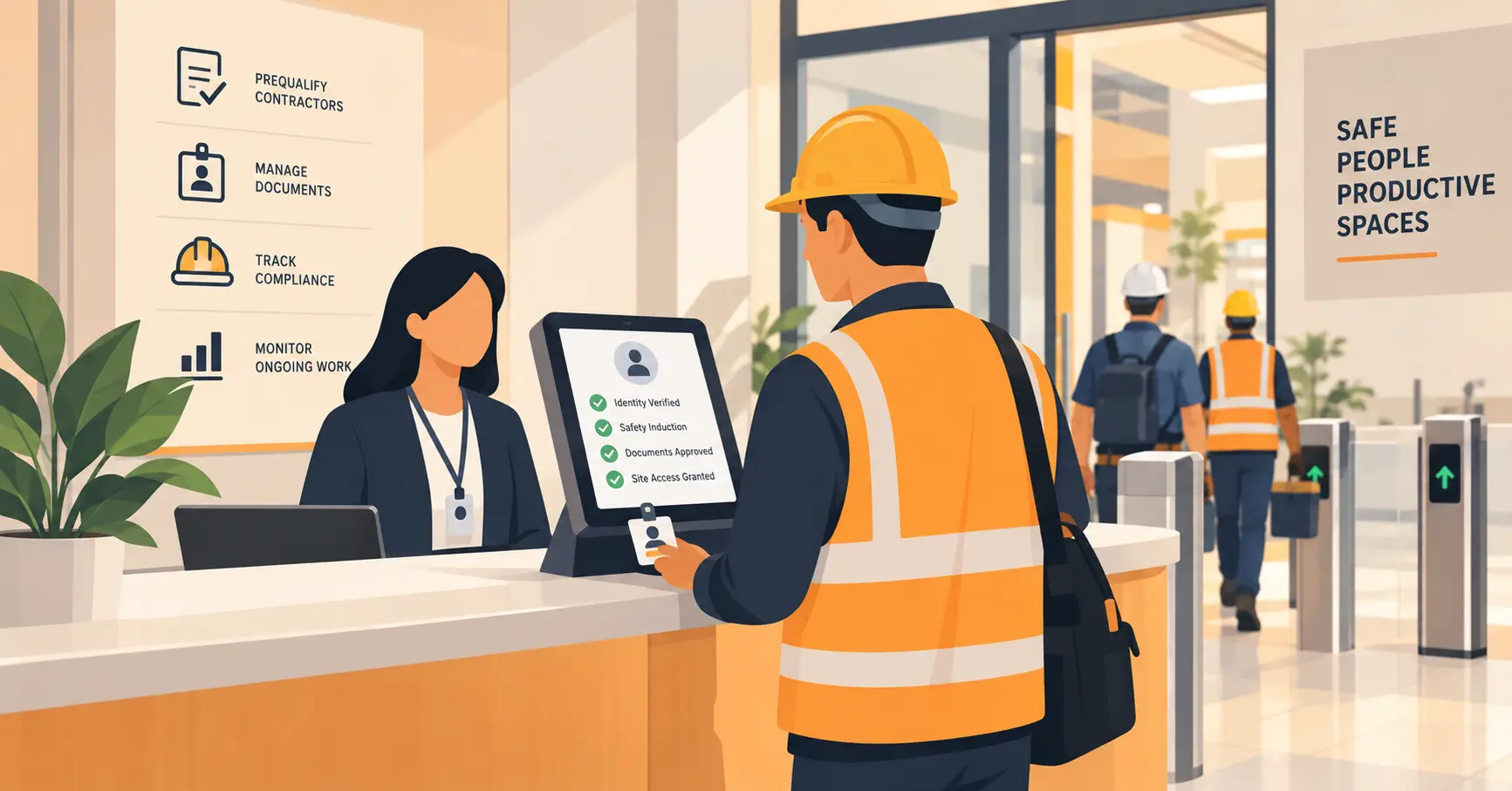
Health and safety requirements, where relevant. Manufacturing floors, labs, and healthcare environments often need a safety briefing or PPE requirement before a visitor goes past reception. Document what’s required and who confirms it happened.
Check-out and departure. Close the loop: badges get returned or deactivated, and the visitor is marked as departed in the log. A policy that only covers arrival leaves half the risk unmanaged.
Training and review. State how often employees are trained on the policy (annually is a reasonable minimum) and how often the policy itself gets reviewed. A policy nobody has updated in three years is a policy nobody is really using.
Common Mistakes That Undermine a Visitor Policy
Treating the policy as a one-time project. A policy written once during a security audit and never revisited stops matching how the office actually operates within a year.
Writing rules with no way to check compliance. If nothing in your process actually verifies that hosts pre-registered their guests or that badges got returned, the rule exists in name only.
Leaving contractors and repeat vendors out of scope. These are often the visitors with the most building access and the least oversight, because “they’re always here” gets treated as a substitute for a check-in record.
No defined consequence for skipping steps. A policy that says visitors “should” check in, with no follow-up when they don’t, trains staff to skip it too.
Making the front desk the only enforcement point. When one person at reception is the entire enforcement mechanism, the policy fails the moment they’re out sick, at lunch, or dealing with three visitors at once.
When a Written Policy Isn’t Enough
A document, on its own, doesn’t stop anyone from walking past reception unchecked. Writing the policy is necessary, but it’s not sufficient without something enforcing it at the point of entry.
This matters most in three situations: multi-location offices where policy interpretation drifts site to site, high-turnover reception roles where informal knowledge never transfers, and any office that’s grown past the point where one person can remember every rule for every visitor type.
In each case, the honest fix isn’t a longer document. It’s tying the policy to your check-in process itself, so pre-registration, badge printing, host notification, and check-out happen the same way regardless of who’s at the desk.
How Vizitor Helps You Enforce the Policy You Write
A written policy and an enforced policy are two different things. Vizitor closes that gap by building your rules directly into the check-in flow instead of leaving them as a document staff have to remember.
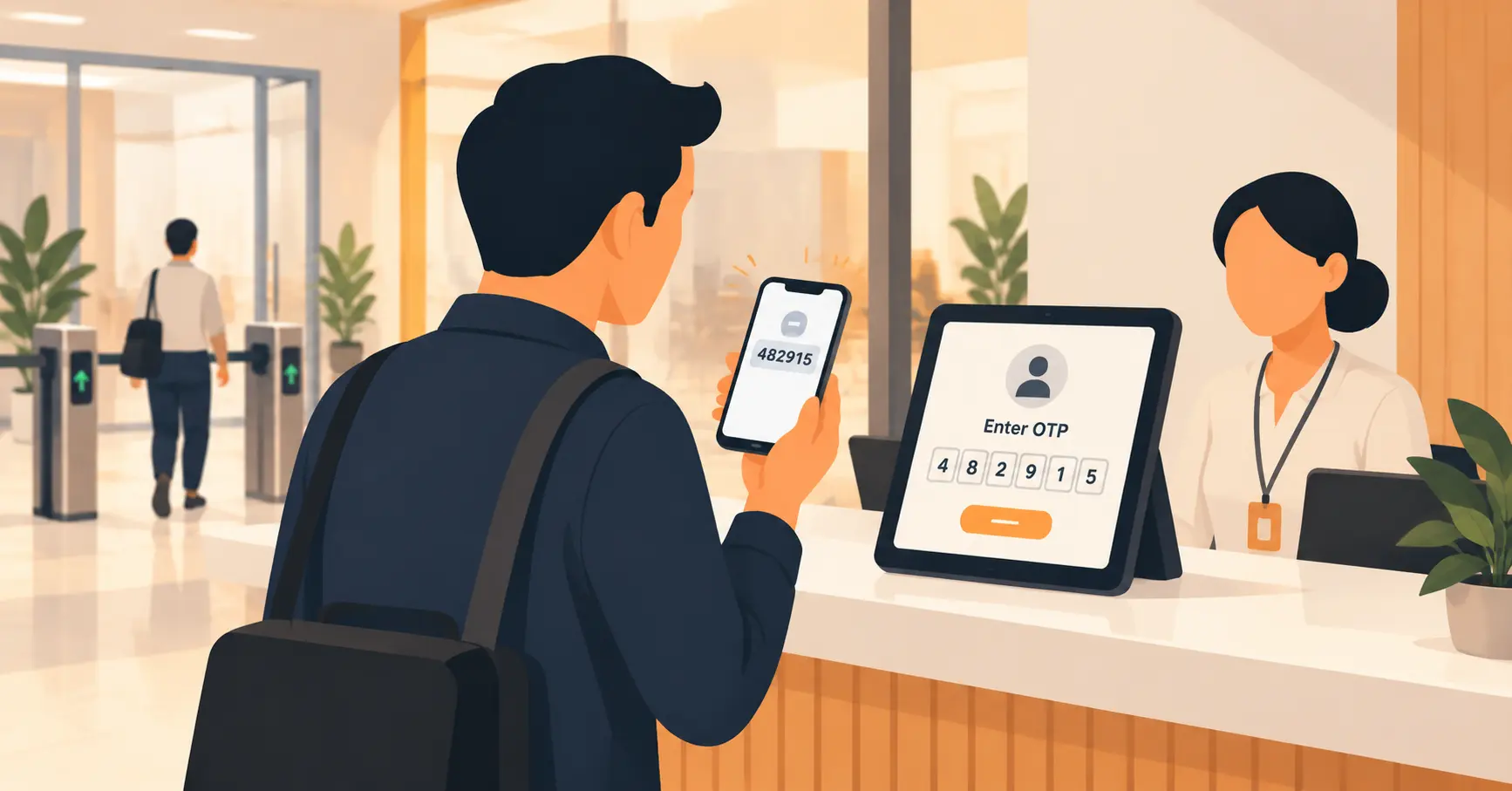
Visitors register and check in on a tablet or their phone, replacing the paper logbook and cutting the manual data entry that reception used to handle by hand. Pre-registration means a host’s guest is already in the system before they arrive.
Every visitor gets a printed badge with their name, host, and visit purpose the moment they check in, so anyone in the office can tell at a glance who belongs and who doesn’t. Access rules you define, restricted floors, escort requirements, watchlist checks, get applied consistently because the system applies them, not whichever receptionist is on shift.
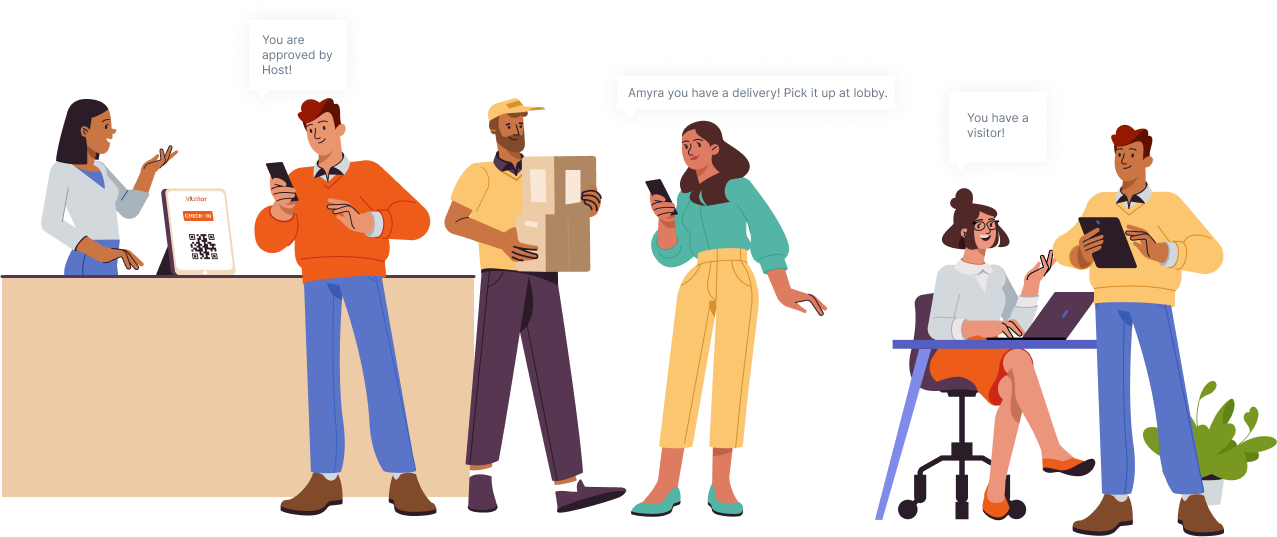
Hosts get an instant notification the second their guest arrives, which removes the “how long has this person been waiting” problem entirely. NDAs and safety acknowledgments can be signed digitally during check-in, so the confidentiality section of your policy is enforced automatically rather than left to a paper form nobody chases down.
If there’s ever an emergency, Vizitor generates a real-time list of everyone on-site, employees and visitors both, so your evacuation procedure has an accurate headcount instead of a guess. That single feature is often the difference between a policy that looks good on paper and one that actually protects people.
Want to see how this looks for your office specifically? Book a demo and we’ll walk through how Vizitor enforces the exact policy sections above, or start with our guide to access control systems for workplace security if you’re building out a broader security plan alongside your visitor policy.
If you’re deciding on the day-to-day rules before you write the document itself, our guide to workplace visitor rules for secure office operations walks through the six visitor categories and eight rule areas in more depth. And if you want the fuller nine-step rollout process, from defining access levels to training your team, see our guide to crafting an office visitor policy.
Frequently Asked Questions
See Vizitor in action check-in a visitor in under 30 seconds
Trusted by 500+ businesses. QR check-in, badge printing, NDA signing. Plans from $36/mo.