Workplace Audit Checklist: The Complete Guide for 2026



Table of Content
Try Vizitor for Free!
Key Takeaway: A structured workplace audit checklist is the most effective way to identify compliance gaps, reduce regulatory risk, and maintain operational excellence. Organizations that conduct regular audits using standardized checklists are 3x more likely to pass external inspections without findings, according to the International Compliance Association.
A workplace audit checklist is the backbone of any serious compliance program. Without a structured, repeatable audit process, organizations leave themselves vulnerable to regulatory violations, safety incidents, data breaches, and operational failures that could have been prevented.
In 2026, the regulatory environment is more complex than ever. Between data privacy regulations like GDPR and the DPDP Act, workplace safety standards from OSHA, and security frameworks like ISO 27001, organizations must audit across multiple compliance domains simultaneously. This guide provides a complete, actionable workplace audit checklist that you can implement immediately.
What Is a Workplace Audit?
A workplace audit is a systematic review of an organization’s operations, processes, policies, and physical environment to assess compliance with applicable laws, regulations, industry standards, and internal policies. It identifies gaps, documents findings, and drives corrective actions.
Workplace audits can be:
- Internal audits conducted by the organization’s own team
- External audits performed by third-party auditors or regulatory bodies
- Regulatory inspections initiated by government agencies (OSHA, data protection authorities)
- Certification audits for standards like ISO 27001, SOC 2, or ISO 45001
A well-designed audit program combines all of these, using internal audits to prepare for external scrutiny.
Why You Need a Workplace Audit Checklist
Conducting an audit without a checklist is like navigating without a map. A workplace audit checklist ensures:
- Consistency: Every audit covers the same areas, regardless of who conducts it
- Thoroughness: No critical compliance area is overlooked
- Efficiency: Auditors spend less time planning and more time evaluating
- Documentation: Findings are captured in a structured format for reporting and follow-up
- Accountability: Clear ownership for each checklist item and corrective action
- Benchmarking: Track compliance progress over time by comparing audit results
According to a 2025 PwC Global Risk Survey, organizations that use standardized audit checklists identify 47% more compliance issues than those using ad-hoc audit approaches.
The Complete Workplace Audit Checklist for 2026
Section 1: Health and Safety Compliance
Health and safety audits ensure your workplace meets occupational health standards and provides a safe environment for employees, visitors, and contractors.
General Safety
- Emergency exits clearly marked and unobstructed
- Fire extinguishers inspected and serviced within the last 12 months
- First aid kits stocked and accessible on every floor
- Emergency evacuation plan posted in visible locations
- Emergency evacuation drills conducted at least twice per year
- Incident reporting procedures documented and communicated
- Safety signage displayed in relevant areas (wet floors, restricted zones, PPE requirements)
Occupational Health
- Ergonomic assessments completed for workstations
- Indoor air quality tested and within acceptable limits
- Noise levels measured in applicable work areas
- Hazardous materials properly labeled, stored, and disposed of
- Personal protective equipment provided where required
- Workplace health and wellness programs documented
Emergency Preparedness
- Emergency contact list updated and accessible
- Real-time headcount capability available for evacuation scenarios
- Communication systems tested for emergency notifications
- Business continuity plan documented and tested
- Emergency assembly points designated and communicated
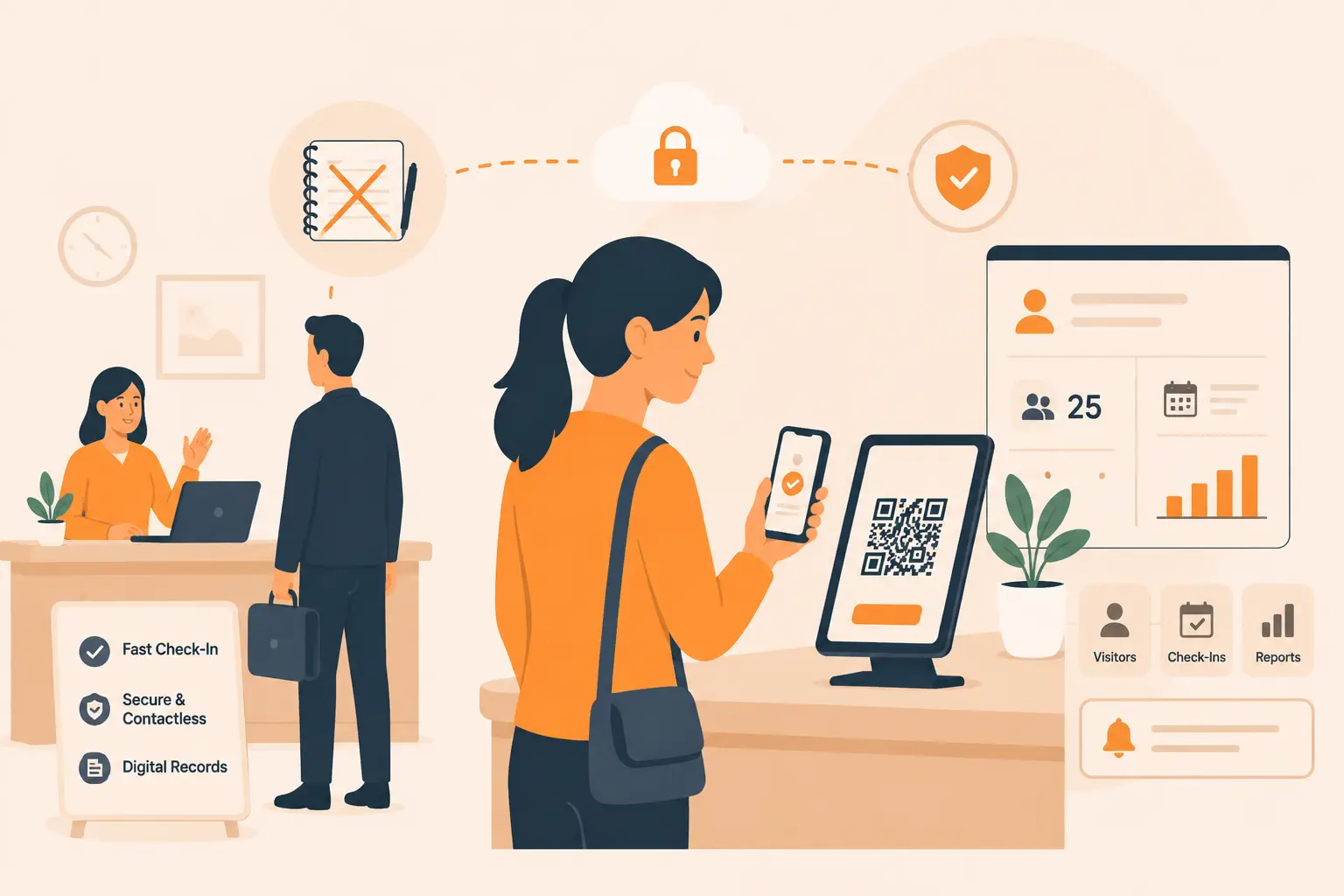
A digital visitor management system provides real-time visibility into who is on your premises at any moment, making emergency headcounts accurate and instant, a critical capability during evacuations.
Section 2: Data Privacy and Protection Audit
Data privacy audits verify that personal data is handled in accordance with applicable regulations such as GDPR, DPDP Act, CCPA, and HIPAA.
Data Inventory and Mapping
- All personal data processing activities documented in a Records of Processing Activities (ROPA)
- Data flows mapped from collection to storage to deletion
- Lawful basis identified for each processing activity
- Data categories classified (personal, sensitive, special category)
- Third-party data processors identified with Data Processing Agreements in place
Consent and Transparency
- Privacy notices displayed at all data collection points (front desk, website, forms)
- Visitor consent captured digitally before data collection
- Employee privacy notices provided during onboarding
- Consent records maintained with timestamps and version tracking
- Cookie consent and website privacy compliant
Data Subject Rights
- Process established for data access requests
- Process established for data erasure requests
- Process established for data portability requests
- All requests responded to within regulatory timelines (30 days for GDPR)
- Data subject requests logged and tracked
Data Retention and Deletion
- Retention periods defined for all data categories
- Automated deletion mechanisms in place for visitor data, CCTV footage, and temporary records
- Manual review process for data nearing retention limits
- Evidence of data deletion maintained for audit purposes
Data Security
- Personal data encrypted at rest and in transit
- Access to personal data restricted by role-based controls
- Data breach notification procedures documented (72-hour GDPR window)
- Data breach response plan tested within the last 12 months
- Regular penetration testing and vulnerability assessments conducted
For a deeper dive into GDPR-specific requirements, see our GDPR workplace compliance guide. Indian organizations should also review our guide on the India DPDP Act and visitor management.
Section 3: Physical Security Audit
Physical security audits assess whether your premises are protected against unauthorized access, theft, and security threats.
Access Control
- All entry points secured with electronic access control systems
- Visitor check-in process enforced at all entry points
- Visitor badges issued and worn during the visit
- Visitor escort policies enforced for restricted areas
- Tailgating prevention measures in place
- After-hours access procedures documented and enforced
Visitor Management
- Digital visitor management system deployed at all locations
- Visitor pre-registration available and encouraged
- Photo capture and ID verification active for visitors
- Watchlist screening enabled for all visitor check-ins
- Host notification automated upon visitor arrival
- Visitor check-out enforced at departure
- Visitor audit trail maintained and accessible
Surveillance
- CCTV cameras operational and covering all critical areas
- CCTV signage displayed as required by local regulations
- Footage retention aligned with data privacy policies
- Access to footage restricted to authorized personnel
- CCTV system maintenance and testing scheduled regularly
Asset Protection
- Sensitive areas (server rooms, R&D labs, executive floors) access-restricted
- Key and credential management procedures documented
- Lost/stolen badge reporting and deactivation procedures in place
- Delivery management system tracking incoming and outgoing packages
For comprehensive security management, explore Vizitor’s workplace security management capabilities.
Section 4: Labor and Employment Compliance
Labor audits ensure compliance with employment laws, worker protections, and HR regulations.
Employment Records
- Employee files complete and securely stored
- I-9 / work authorization documents verified and retained
- Offer letters, contracts, and amendments on file
- Background check records maintained (where permitted)
- Termination documentation complete
Wage and Hour Compliance
- Minimum wage requirements met for all classifications
- Overtime calculations accurate and documented
- Time and attendance records maintained for required retention periods
- Pay stubs provided with required disclosures
- Classification of employees vs. independent contractors reviewed
Anti-Discrimination and Harassment
- Equal employment opportunity policy posted
- Anti-harassment training conducted annually
- Complaint and investigation procedures documented
- Accommodation requests process established (ADA / disability)
Leave and Benefits
- Leave policies compliant with FMLA, state laws, and local regulations
- Benefits administration compliant with ERISA and ACA (US) or applicable local laws
- Leave records maintained and accessible
Section 5: IT and Cybersecurity Audit
Cybersecurity audits assess whether digital systems and data are adequately protected.
Network Security
- Firewall and intrusion detection systems operational
- Wi-Fi networks secured with enterprise-grade encryption
- Guest Wi-Fi isolated from corporate network
- VPN required for remote access
- Network access logs monitored
Endpoint Security
- Antivirus and endpoint protection deployed on all devices
- Device encryption enabled
- Mobile device management (MDM) policies enforced
- USB and removable media policies documented
- Patch management cycle established and followed
Identity and Access Management
- Multi-factor authentication (MFA) enabled for all critical systems
- Password policies enforced (complexity, rotation)
- User access reviews conducted quarterly
- Offboarding process includes immediate access revocation
- Privileged access management implemented
Incident Response
- Cybersecurity incident response plan documented
- Incident response team identified and trained
- Tabletop exercises conducted at least annually
- Post-incident review process established
Section 6: Operational and Facility Compliance
Operational audits cover day-to-day facility management and compliance with building codes, environmental regulations, and operational standards.
Building and Facility
- Building permits and occupancy certificates current
- HVAC systems maintained per manufacturer schedules
- Electrical systems inspected annually
- Plumbing and water systems tested for safety
- Elevator inspections current
- Pest control services scheduled and documented
Environmental Compliance
- Waste disposal procedures compliant with local regulations
- Recycling programs implemented
- Hazardous waste properly handled and documented
- Energy consumption monitored and reported
- Carbon footprint tracking in place (where required)
Vendor and Contractor Management
- Vendor compliance requirements documented
- Contractor safety orientation conducted before site access
- Insurance certificates collected from contractors
- Service level agreements reviewed annually
- Vendor data processing agreements in place (for GDPR/DPDP compliance)
How to Conduct a Workplace Audit: Step-by-Step
Step 1: Define the Audit Scope
Determine which areas the audit will cover. Options include:
- Full compliance audit (all sections above)
- Focused audit (single domain, e.g., data privacy only)
- Follow-up audit (verifying remediation of previous findings)
- Pre-certification audit (preparing for ISO, SOC 2, etc.)
Step 2: Assemble the Audit Team
Assign auditors with relevant expertise:
- Health and safety: Facilities manager or EHS specialist
- Data privacy: Data Protection Officer or legal counsel
- Physical security: Security manager
- IT security: IT manager or CISO
- HR compliance: HR director
For small organizations, a single person may cover multiple areas. Consider engaging external auditors for objectivity.
Step 3: Gather Documentation
Before the audit begins, collect:
- Current policies and procedures
- Previous audit reports and corrective action logs
- Training records
- Incident reports
- System access logs
- Vendor contracts and compliance certificates
Step 4: Conduct the Audit
Walk through each checklist section systematically:
- Document review: Verify that policies exist and are current
- Process observation: Watch how procedures are actually followed
- Interviews: Speak with staff about their understanding of compliance requirements
- System testing: Verify that technical controls are functioning (access controls, data encryption, automated deletion)
- Physical inspection: Walk the premises to check signage, safety equipment, access controls, and facility conditions
Step 5: Document Findings
For each checklist item, record:
- Status: Compliant, non-compliant, partially compliant, or not applicable
- Evidence: Documentation, screenshots, or observations supporting the finding
- Risk level: High, medium, or low
- Recommendation: Specific corrective action required
- Owner: Person responsible for remediation
- Deadline: Target date for corrective action
Step 6: Create the Audit Report
Compile findings into a structured report that includes:
- Executive summary with overall compliance score
- Detailed findings by section
- Risk-prioritized corrective action plan
- Comparison with previous audit results (if applicable)
- Timeline for follow-up audit
Step 7: Track Remediation
Use a compliance tracking system to monitor corrective actions:
- Assign each finding to a responsible owner
- Set deadlines and send reminders
- Verify completion with evidence
- Schedule follow-up audits for high-risk findings
Audit Frequency Recommendations
| Audit Type | Recommended Frequency |
|---|---|
| Full workplace compliance audit | Annually |
| Data privacy audit | Bi-annually (or after regulatory changes) |
| Physical security audit | Quarterly |
| Health and safety walkthrough | Monthly |
| IT security assessment | Quarterly |
| Visitor management system review | Bi-annually |
| Fire and emergency drill | Bi-annually |
| Vendor compliance review | Annually |
How Vizitor Supports Workplace Audits
Vizitor provides several features that directly support audit readiness:
Complete Visitor Audit Trails
Every visitor interaction is logged with timestamps, including check-in, check-out, host notification, NDA signing, consent capture, and badge printing. These records are instantly searchable and exportable for auditors.
Compliance Reporting
Generate compliance reports covering visitor data handling, consent rates, data deletion records, and access patterns. These reports provide the evidence auditors need to verify compliance.
Configurable Compliance Settings
Set location-specific compliance rules for data retention, consent requirements, mandatory fields, and visitor screening. Each location can be configured to match its local regulatory requirements.
Real-Time Dashboards
Monitor visitor activity, occupancy levels, and compliance metrics in real time. Dashboards provide instant visibility during audits and daily operations.
Integration with Security Systems
Vizitor integrates with access control, CCTV, and identity verification systems, creating a unified audit trail that spans physical and digital security.
Common Workplace Audit Pitfalls to Avoid
Auditing policies instead of practices: Verifying that a policy document exists is not enough. Auditors must verify that the policy is actually followed in practice.
Skipping the front desk: The visitor check-in process is often overlooked in audits, yet it is a high-risk area for data privacy, safety, and security compliance.
Not interviewing frontline staff: Policies mean nothing if the people executing them do not understand the requirements. Include staff interviews in every audit.
Ignoring corrective action follow-up: An audit is only valuable if findings are remediated. Without follow-up, the same issues will appear in the next audit.
Auditing in silos: Compliance areas overlap. A data privacy issue may also be a security issue. Coordinate across audit domains for a holistic view.
Over-relying on self-assessment: Internal self-assessments are valuable but should be supplemented with independent reviews for objectivity.
Building a Culture of Compliance
The most effective compliance programs are not driven solely by audit checklists. They are embedded in the organizational culture:
- Leadership commitment: Executive support for compliance is non-negotiable
- Continuous training: Regular, practical training keeps compliance top of mind
- Open reporting: Encourage employees to report concerns without fear of retaliation
- Technology enablement: Use platforms like Vizitor to automate compliance and reduce human error
- Recognition: Acknowledge teams and individuals who demonstrate compliance excellence
For a comprehensive overview of workplace compliance in 2026, read our Workplace Compliance Guide 2026. Visit the Workplace Compliance & Audit hub for additional resources.
Ready to make your workplace audit-ready? Book a demo to see how Vizitor streamlines compliance, or check our pricing to get started.
Frequently Asked Questions
What is a workplace audit checklist?
A workplace audit checklist is a structured document that lists all the items, processes, and compliance requirements that need to be reviewed during a workplace audit. It ensures that audits are consistent, thorough, and documented, covering areas such as health and safety, data privacy, physical security, labor compliance, IT security, and facility operations. Using a standardized checklist helps organizations identify compliance gaps and track remediation over time.
How often should workplace audits be conducted?
Full workplace compliance audits should be conducted at least annually. However, high-risk areas require more frequent reviews: physical security should be audited quarterly, health and safety walkthroughs should occur monthly, and data privacy audits should be conducted bi-annually or after any regulatory change. The frequency should match your risk profile and regulatory requirements.
Who should conduct workplace audits?
Workplace audits can be conducted by internal teams (compliance officers, HR, facilities managers, IT staff) or external auditors. Internal audits provide regular monitoring and early detection of issues, while external audits offer objectivity and credibility. For certification purposes (ISO 27001, SOC 2), accredited external auditors are required. The best practice is to combine both approaches.
What should I do if an audit reveals non-compliance?
When non-compliance is identified, create a corrective action plan that includes the specific finding, risk level, remediation steps, responsible owner, and deadline. Prioritize high-risk findings for immediate action. Track remediation progress and schedule a follow-up audit to verify that corrective actions have been implemented effectively. Document everything for future reference and regulatory reporting.
How does a visitor management system help with workplace audits?
A visitor management system like Vizitor creates automatic, tamper-proof audit trails for every visitor interaction. This includes timestamped check-in and check-out records, consent captures, NDA signatures, and host notifications. During audits, these records can be instantly searched and exported, providing the evidence needed to demonstrate compliance with data privacy, safety, and security requirements.
What are the most commonly missed items in workplace audits?
The most commonly missed items include visitor data handling practices at the front desk, CCTV compliance with privacy regulations, data retention policy enforcement (many organizations store data longer than their stated retention period), contractor and vendor compliance verification, and emergency evacuation headcount capabilities. A comprehensive checklist like the one in this guide helps ensure nothing is overlooked.
How do I prepare my team for an external audit?
Preparation includes conducting an internal audit first using this checklist, ensuring all documentation is current and accessible, briefing staff on their roles during the audit, testing all technical controls, and confirming that corrective actions from previous audits have been completed. Ensure your visitor management system can generate compliance reports on demand, and that all consent records and audit trails are accessible for the auditors.
Try Vizitor Free
No credit card required. Setup in under 5 minutes. Manage visitors, queues, meeting rooms, and more.
Start Free TrialSee Vizitor in action check-in a visitor in under 30 seconds
Trusted by 500+ businesses. QR check-in, badge printing, NDA signing. Plans from $36/mo.