Top 6 Free Meeting Room Booking Systems in 2026
This page compares six free meeting room booking systems suitable for businesses in 2026. It covers both truly open-source tools and free/freemium SaaS platforms. Each tool is evaluated on setup complexity, calendar integrations, self-hosting capability, and ideal use case. The page also explains the difference between free and open-source software, includes a side-by-side comparison table, best-practice deployment tips, and an FAQ section covering common user questions. Vizitor is presented as a paid alternative for teams needing enterprise-grade room booking with visitor management, multi-location support, and real-time analytics.


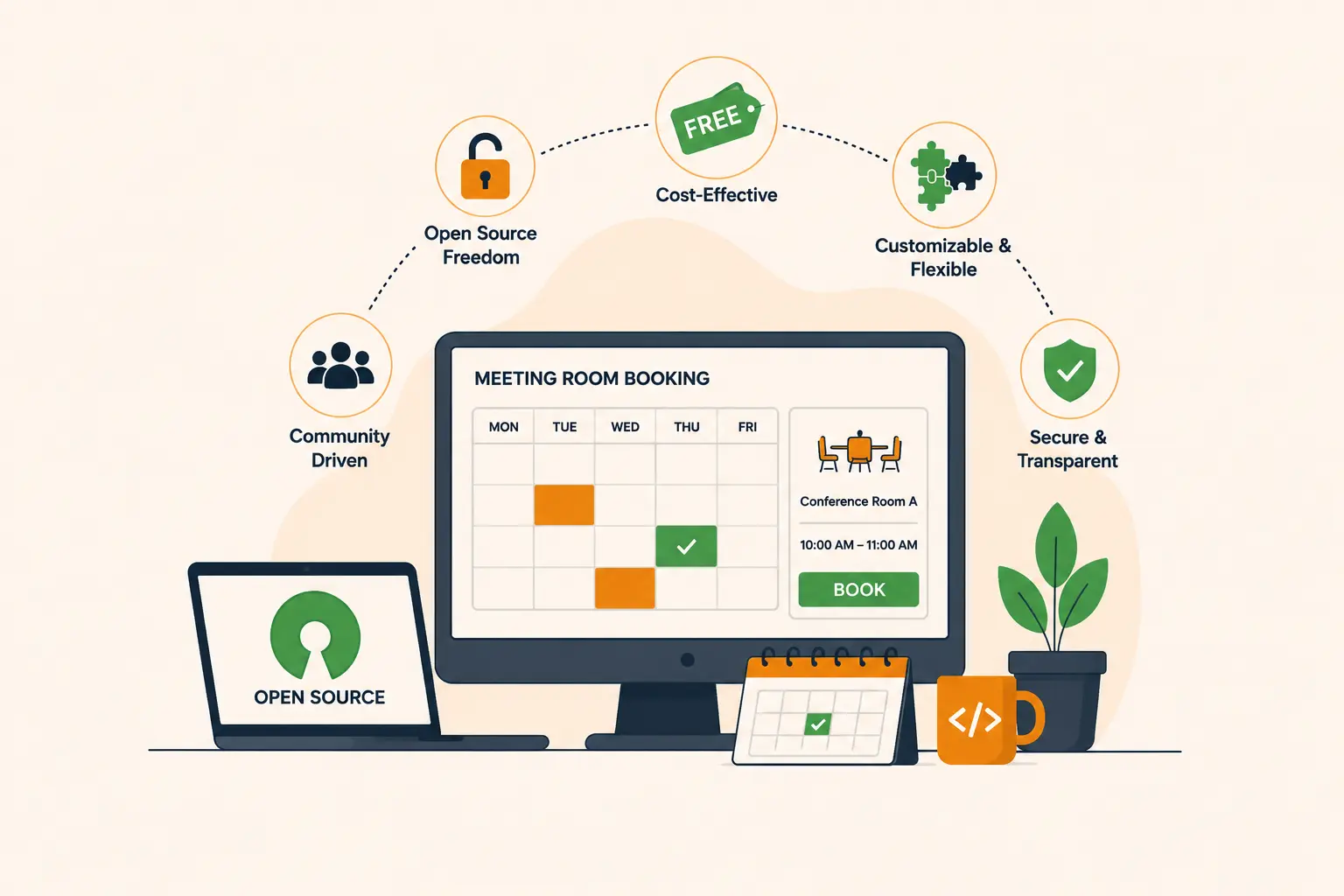
Table of Content
Try Vizitor for Free!
Double bookings. Empty rooms that show “occupied.” People wandering hallways looking for a free space five minutes before a meeting starts. If any of this sounds familiar, you don’t have a people problem, you have a scheduling problem.
The good news? You don’t need to spend a fortune to fix it. There are solid free meeting room booking systems out there including some that are fully open source that can bring order to the chaos without adding to your software budget.
In this guide, we’ve rounded up the top 6 options for 2026. We’ll cover what each tool does well, where it falls short, and which type of team it works best for, so you can make the right call without wasting time trialing the wrong ones.
What Is a Meeting Room Booking System?
A meeting room booking system is software that lets employees check room availability and reserve a space in real time from their phone, desktop, or a display panel outside the room. It eliminates manual scheduling, prevents double bookings, and gives office managers a clear picture of how their spaces are actually being used.
For teams running hybrid or in-office setups, having a booking system in place isn’t a luxury. It’s one of the simplest ways to reduce friction and keep people productive.
Free vs. Open Source: What’s the Difference?
People often use these terms interchangeably, but they mean different things and it matters when you’re picking a tool.
Free software means you pay nothing to use it, but the code is controlled by the company that built it. You can’t modify it, host it yourself, or dig into how it works.
Open-source software means the source code is publicly available. You can download it, host it on your own server, customize it, and have full control over your data. Some open-source tools are also free; others have paid versions with extra features.
In the list below, we’ve clearly labeled each tool so you know exactly what you’re getting.
Quick Comparison: All 6 Tools at a Glance
| Tool | Type | Calendar Integration | Best For |
|---|---|---|---|
| Roombelt | Open Source (Free) | Google Calendar, Office 365 | Small teams, startups |
| Hubbion | Free (Closed Source) | Basic | Design & creative teams |
| Picktime | Freemium SaaS | Google, Outlook, Zoom | Integration-heavy teams |
| DeskFlex | Freemium SaaS | Google Calendar | Coworking spaces |
| SuperSaas | Freemium SaaS | Google Calendar, Outlook | Large enterprises |
| SimplyBook.me | Freemium SaaS | Google Calendar | Client-facing businesses |
Open-source software boasts two key advantages:
• Customization: Open the code and tailor the system to your specific needs. Add features, modify layouts, and create a booking experience that perfectly complements your workflow.
• Cost-Effectiveness: Save money! No licensing fees or hidden costs – just a free, downloadable solution ready to streamline your meeting madness.
Need more than a free tool? See how Vizitor handles meeting room booking
Vizitor's meeting room booking system integrates with Outlook and Google Calendar, includes real-time availability displays, and works across multiple office locations. Used by 500+ workplaces.
Explore Vizitor Meeting Room Booking Book a DemoTop 6 Free and Open-Source Meeting Room Booking Systems (2026)
Free and open-source meeting room booking systems offer a powerful solution for organizations of all sizes. They help streamline scheduling, eliminate double bookings, and boost overall workplace productivity. Let’s dive deeper into six of the most popular options, providing a comprehensive overview to help you choose the perfect fit:
1. Roombelt: Simple & Lightweight Open Source Room Booking System
Ideal for: Small Businesses and Teams
Roombelt shines with its user-friendly interface and focus on core functionalities. It excels in:
• Simple Booking: Schedule meetings in a few clicks with a clean and intuitive interface.
• Real-time Availability: Quickly see which rooms are free and book the perfect space for your needs.
• Easy Setup: Get started quickly with minimal technical knowledge required.
• User Feedback: “Great for basic needs. Lightweight and easy to set up.”
Roombelt caters perfectly to startups or small teams seeking a straightforward booking solution.
2. Hubbion: Visually Appealing Open Source Meeting Room Scheduler
Ideal for: Design Agencies and Creative Teams
Hubbion goes beyond basic booking, offering a visually stunning platform with:
• Drag-and-Drop Scheduling: Effortlessly schedule meetings with a user-friendly drag-and-drop interface.
• Modern Design: Enjoy a sleek and modern aesthetic that complements creative workspaces.
• Customizable Views: Tailor the room list to display the information most relevant to your team.
• User Feedback: “Modern look and feel, but some users report occasional bugs.”
Hubbion’s visual appeal and intuitive interface make it ideal for design agencies and creative teams who value aesthetics.
3. Picktime: Integration Powerhouse for Smooth Room Scheduling
Ideal for: Businesses with Existing Collaboration Tools
Picktime integrates smooth with popular platforms, streamlining your workflow:
• Calendar Integrations: Connect effortlessly with Google Calendar, Outlook Calendar, and others.
• Communication Tool Integrations: Integrate with communication tools like Slack or Microsoft Teams for real-time updates.
• Automated Reminders: Reduce missed meetings with automated reminders sent to attendees.
User Feedback: “Integration capabilities praised, user interface can be cluttered.” Picktime is a powerful choice for organizations heavily reliant on existing collaboration platforms.
4. DeskFlex: The Multipurpose Self-Hosted Booking System
Ideal for: Coworking Spaces and Offices with Diverse Needs
While DeskFlex offers paid features, its free core functionality is robust:
• Multi-purpose Booking: Book not only meeting rooms, but also desks, equipment, and other resources.
• Flexible Use: Adapt the system to your specific needs with a high degree of customization.
• Resource Management: Track and manage all your workspace resources efficiently.
User Feedback: “Flexible and adaptable, but requires some technical know-how.” DeskFlex caters perfectly to coworking spaces or offices with diverse needs for booking a variety of resources.
5. SuperSaas: Enterprise-Ready Room Reservation System
• Ideal for: Large Enterprises and Organizations with Multiple Locations
SuperSaas is a robust platform built for large-scale needs:
• Scalability: Handles large teams and complex scheduling scenarios across multiple locations.
• Advanced Features: Offers features like user permissions, reporting, and custom branding.
• Customization: Tailor the system to your specific workflow with advanced customization options.
• User Feedback: “Highly scalable, but requires more technical expertise to set up.”
SuperSaas is ideal for large enterprises that require a feature-rich, scalable solution for managing meeting rooms across multiple locations.
6. SimplyBook.me: Freemium Hybrid Meeting Room & Appointment Tool
While not strictly open-source, SimplyBook.me offers a free plan with valuable features:
Meeting Room Booking: Schedule meetings and manage room availability.
• Appointment Scheduling: Offer appointment booking alongside meeting rooms (perfect for client meetings).
• Online Payments: Accept online payments for appointments directly through the system (free plan has limitations).
• User Feedback: “Easy to set up and use, limited customization in the free plan.”
SimplyBook.me is a great option for businesses offering appointments alongside meeting spaces. The free plan provides basic functionality, with paid plans offering additional features.
How to Choose the Right Meeting Room Booking System
With six solid options on the table, the right choice comes down to a few key questions:
Do you need full control over your data?
If data privacy is a priority especially for regulated industries go with a self-hosted, open-source tool like Roombelt, Vizitor. You own the server, you own the data.
How technical is your team?
Open-source tools like Roombelt require some setup. If nobody on your team wants to deal with that, a cloud-based tool like Hubbion or SimplyBook.me is a faster path to getting started.
Are you booking more than just rooms?
If you also manage desks, parking, or shared equipment, Vizitor, DeskFlex is built for that. A single-purpose room booking tool won’t cover those needs.
How integrated does it need to be?
If your team runs on Google Workspace or Microsoft 365, Picktime’s, Vizitor’s integrations will save the most friction. Calendar invites, reminders, and room availability all stay in sync automatically.
How many people and locations are you managing?
For a team under 20 in one office, almost any tool on this list works. For a larger company with multiple locations, SuperSaas or a platform like Vizitor is a better fit.
Need Something More Robust?
Take a Look at Vizitor
Free and open-source tools are a great starting point, but they come with tradeoffs, limited support, manual updates, and features that top out pretty quickly as your team grows.
If you’re managing multiple office locations, need real-time room displays, or want booking data tied to visitor management and attendance tracking, Vizitor’s meeting room booking system is worth considering.
With Vizitor, you can:
- Book rooms from your phone, desktop, or a room display panel
- See real-time availability across all your office locations
- Manage conference rooms, huddle spaces, desks, and parking from one dashboard
- Book equipment and resources alongside room reservations
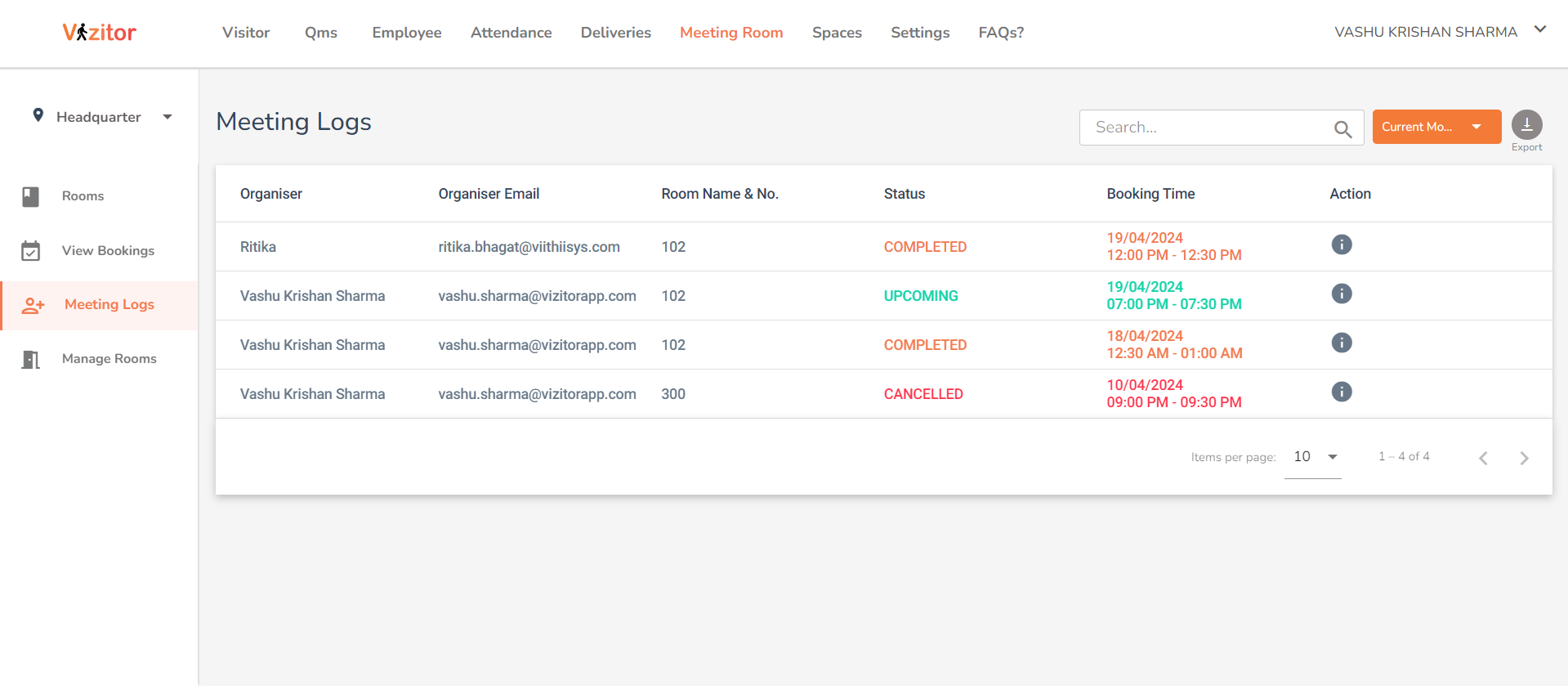
- Track check-ins and check-outs with digital logs
- Generate usage reports to see which spaces are actually being used
Vizitor integrates with Google Calendar and Outlook, so your team doesn’t need to change how they already work. It’s used by 500+ workplaces and takes under five minutes to set up.
Explore Vizitor Meeting Room Booking | Start a Free Trial
Best Practices Once You Pick a System
Getting the software right is step one. Here’s how to make sure the rollout actually works:
Define who can book what.
Set up user roles early; admins, regular employees, and guests should have different levels of access. This prevents unauthorized bookings and keeps things organized.
Connect it to your existing calendar.
If your team already uses Google Calendar or Outlook, connecting your booking system to it should be the first thing you do. Nobody wants to check two places to find a free room.
Put displays outside your rooms.
A tablet or display panel outside each room showing real-time availability makes a bigger difference than most people expect. It eliminates the “is this room being used?” walk-up confusion immediately.
Set up automated reminders.
Most tools on this list support booking confirmation emails and pre-meeting reminders. Turn these on, they dramatically reduce no-shows.
Check your data security setup.
If you’re using a self-hosted tool, make sure your server has proper security in place. If you’re using a cloud-based tool, review the vendor’s privacy policy and understand where your data is stored.
Ask your team for feedback after the first month.
The tool that looks good on paper might have friction points you didn’t anticipate. A quick survey after 30 days tells you what to adjust before bad habits form.
Conclusion
Getting meeting room scheduling under control doesn’t require a big budget. Whether you go with an open-source tool like Roombelt for full data ownership, a free SaaS tool like Picktime for seamless integrations, or a multi-purpose platform like DeskFlex, there’s a solid option for every team size and setup.
If you’re a small team just getting started, pick one tool from this list, get it connected to your calendar, and give it 30 days. You’ll wonder how you managed without it.
And if your needs grow beyond what free tools can handle; multiple locations, deeper analytics, visitor management tied to room booking, Vizitor is worth a look. The free trial takes five minutes to set up and no credit card is required.
Try Vizitor Free
No credit card required. Setup in under 5 minutes. Manage meeting rooms, visitors, queues, and more.
Start Free TrialFAQs
What is the best free meeting room booking system in 2026?
It depends on your setup. Roombelt is the best option if you need a truly open-source, self-hosted solution. Picktime is the best free cloud-based option for teams that rely heavily on Google or Microsoft integrations. For all-in-one room and resource management, DeskFlex covers the most ground on a free plan.
What’s the difference between a free and an open-source booking system?
A free tool costs nothing to use but is controlled by the company that built it, you can’t modify the code or host it yourself. An open-source tool gives you access to the source code, so you can customize it, self-host it, and control your own data. Some open-source tools are also free; others have paid tiers.
Can I host my own meeting room booking system?
Yes, Roombelt is the best option on this list for self-hosting. It runs on your own server, which means you control all the data. You’ll need some basic technical knowledge to set it up, but the GitHub documentation is clear and the community is active.
Do these systems work with Google Calendar and Outlook?
Most of them do. Roombelt, Picktime, DeskFlex, SuperSaas, and SimplyBook.me all support Google Calendar integration. Roombelt and SuperSaas also support Office 365 and Outlook. Hubbion has limited calendar integration compared to the others.
Are free meeting room booking tools suitable for larger companies?
For smaller teams and single offices, yes. For larger organizations with multiple locations, growing headcount, and more complex scheduling needs, most free tools start to show their limitations. Platforms like Vizitor are designed for that level of scale, with multi-location support, analytics, and visitor management built in.
Is open-source room booking software secure?
It can be, but the security depends on how you set it up. Because you’re hosting the software yourself, you’re responsible for keeping the server secure, applying updates, and managing access controls. Cloud-based tools handle this for you, which is one reason many larger teams prefer managed SaaS platforms.
Can these tools prevent double bookings?
Yes, preventing double bookings is the core job of any room booking system. As long as the tool syncs with your team’s calendar and shows real-time availability, double bookings become essentially impossible.
What should I look for when choosing a room booking system?
Focus on four things: how well it integrates with the tools your team already uses, how easy it is for staff to actually book a room, whether it scales with your office size, and who controls your data. Everything else is a nice-to-have.
See Vizitor in action check-in a visitor in under 30 seconds
Trusted by 500+ businesses. QR check-in, badge printing, NDA signing. Plans from $36/mo.