Hard FM vs Soft FM: What Facilities Managers Actually Handle
This guide explains what facilities management actually means, breaking the discipline into hard FM (building systems, maintenance, capital assets) and soft FM (cleaning, security, mailroom, visitor and workplace operations), and covers in-house versus outsourced staffing models. It lists the core responsibilities of a facilities manager: space and occupancy planning, safety and compliance, vendor and contractor management, maintenance and asset oversight, budget control, visitor and workplace operations, emergency preparedness, and sustainability. It also categorizes the tools the role relies on, from computerized maintenance management systems to workplace and visitor management software, and is honest about where Vizitor's space management software fits (people and space operations) and where it doesn't (hard-FM maintenance and asset tracking).



Table of Content
Try Vizitor for Free!
Facilities management is the discipline of keeping a building and the people inside it running safely, efficiently, and cost-effectively, covering everything from physical maintenance and safety compliance to space planning, vendor coordination, and front-desk operations. A facilities manager’s core responsibilities typically include space and occupancy planning, safety and compliance oversight, vendor and contractor management, budget and cost control, maintenance and asset oversight, and visitor and workplace operations. The tools the role relies on span computerized maintenance management systems, integrated workplace management platforms, building automation systems, and workplace and visitor management software.
This guide covers all three pieces: what facilities management actually means, the responsibilities that come with the role, and the tools used to do it, including where a platform like Vizitor fits and where it honestly doesn’t.
Facilities management, defined
Facilities management sits at the intersection of people, place, and process. It’s the function responsible for making sure a physical workplace, whether that’s an office, a hospital, a school, or a manufacturing site, actually supports the work happening inside it. That means the building itself (structure, systems, safety), the space inside it (desks, rooms, layout), and the operations running through it (visitors, deliveries, vendors, day-to-day requests).
It’s a broader discipline than any single software category. A facilities manager might spend a morning reviewing a maintenance backlog, an afternoon walking a vendor through a site safety briefing, and an evening approving next quarter’s space plan. For a deeper look at day-to-day FM strategy and practical tips, Vizitor’s guide to facility management best practices is worth reading alongside this one.
Hard FM vs. soft FM: the two halves of the discipline
Most facilities management work falls into one of two categories, and understanding the split explains why so many different tools exist for what looks like one job.
Hard facilities management covers the physical building: HVAC systems, electrical and plumbing infrastructure, structural maintenance, fire safety systems, and capital assets like elevators or generators. This is the side of FM that’s about keeping the building itself functional and safe, and it’s typically handled with maintenance-scheduling and asset-tracking tools.
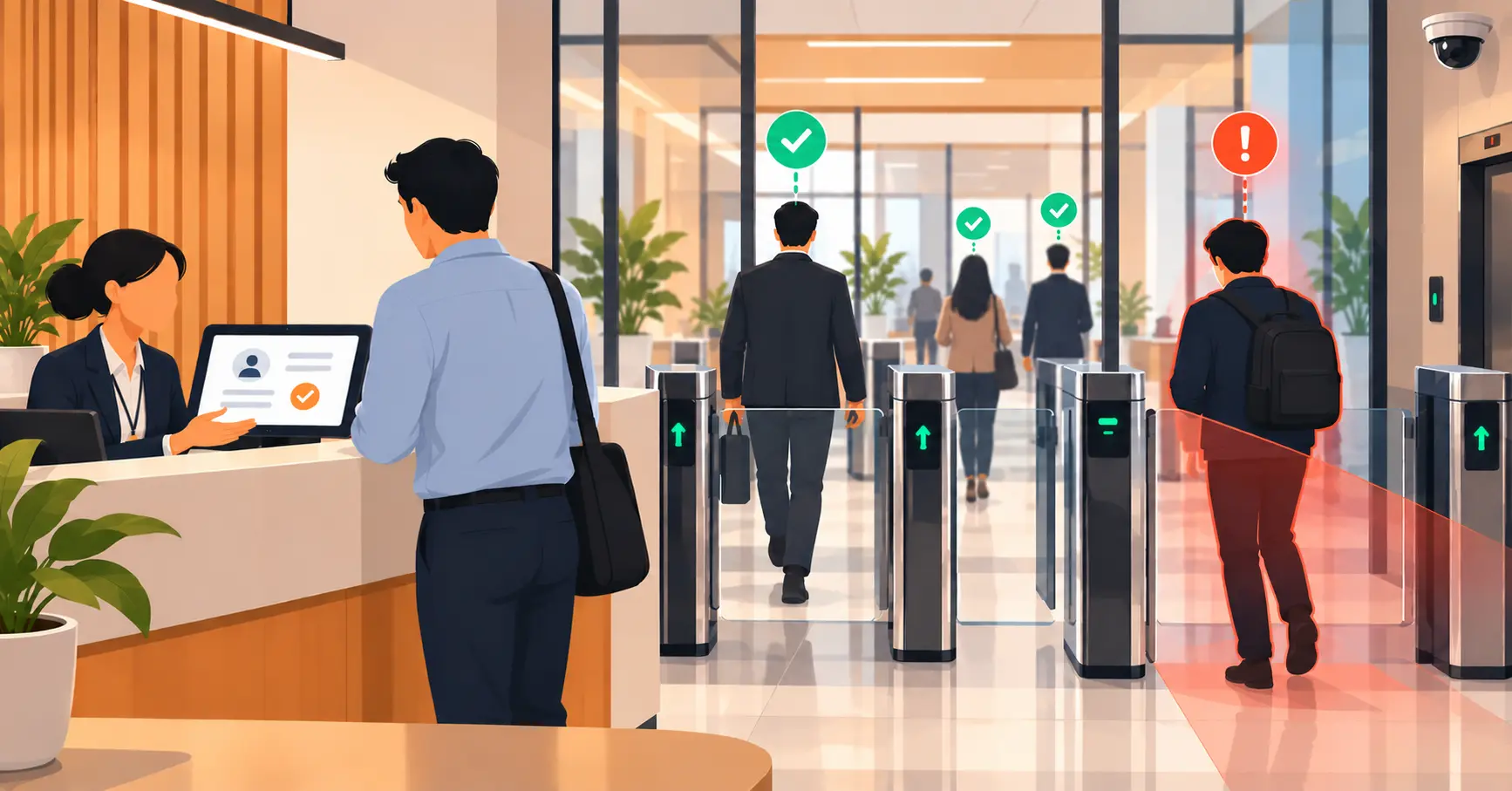
Soft facilities management covers the human and operational side: cleaning and janitorial services, security and access control, catering, mailroom and reception, and the general workplace experience of the people using the building. This is the side that’s about how people move through and experience the space, not the building’s mechanical systems.
Most facilities teams handle both, but most software tools specialize in one side or the other. A computerized maintenance system that’s excellent at tracking HVAC service schedules usually has little to say about visitor check-in or meeting room booking, and the reverse is just as true.
In-house vs. outsourced facilities management
Organizations generally handle facilities management one of three ways: an in-house team, a fully outsourced FM provider, or a hybrid where some functions (cleaning, security) are contracted out while space planning and visitor operations stay internal.
In-house teams tend to have better institutional knowledge of the specific building and its people, but cost more to staff across every specialty a large facility needs. Outsourced FM providers, common for hard-FM work like maintenance and janitorial services, bring economies of scale and specialized expertise, but add a coordination layer between the organization and the people actually doing the work.
The hybrid model is the most common in practice: an internal facilities or workplace operations lead who owns strategy, space planning, and visitor/vendor policy, while specific hard-FM functions like HVAC servicing or cleaning are contracted to outside vendors and managed against a service-level agreement.
Core responsibilities of a facilities manager
Space and occupancy planning
Deciding how much space an organization actually needs, and how it should be laid out, sits squarely with facilities management. That includes desk and room allocation, planning for headcount changes, and adjusting layouts as hybrid work patterns shift how often people are actually on-site.
Safety and compliance oversight
Fire safety, evacuation planning, accessibility requirements, and workplace safety regulations vary by region and building type, and someone has to own making sure the workplace meets them. This responsibility also extends to visitor and contractor safety: knowing who’s in the building matters as much for compliance as for security.
Vendor and contractor management
Cleaning crews, maintenance contractors, caterers, security staff, and construction vendors all need to be scheduled, badged, and tracked while on-site. A facilities manager is usually the one setting the rules for how outside parties access and move through the building.
Maintenance and asset oversight
Keeping mechanical systems, equipment, and physical assets in working order, on a preventive schedule rather than a reactive one, is core hard-FM work. This is where computerized maintenance management systems typically come in, tracking work orders, service history, and asset lifecycles.
Budget and cost control
Facilities budgets cover everything from utility costs to vendor contracts to space-related capital spend. Facilities managers are usually accountable for keeping these costs predictable and justified, which means tracking utilization and spend closely enough to catch waste before it compounds.
Visitor and workplace operations
Front-desk operations, visitor check-in, queue management at busy counters, package and delivery handling, and day-to-day workplace requests all fall under facilities management’s operational side. This is the layer most visible to employees and guests, even though it’s often a smaller line item in the budget than hard-FM maintenance work.
Emergency preparedness
Evacuation plans, muster points, and incident response protocols need an owner, and that owner is usually facilities management, working alongside security and safety teams. This responsibility connects directly to visitor and employee logs: knowing who was in the building at the time of an incident is part of being prepared for one.
Sustainability and energy management
Monitoring and reducing energy consumption, waste, and a building’s broader environmental footprint has become a standing facilities management responsibility rather than a side project, partly driven by cost pressure and partly by corporate sustainability commitments and, in some regions, regulatory reporting requirements. This usually means working with building automation and energy monitoring systems, and it overlaps with hard-FM maintenance since inefficient or aging equipment is often the biggest source of avoidable energy waste. On the waste side specifically, a practical breakdown of what to reuse or recycle first covers the items most facilities teams overlook, from cartridges to old furniture.
Tools facilities managers use
The tool landscape mirrors the hard FM / soft FM split above, and most facilities teams end up running more than one system rather than a single all-in-one platform.
Computerized maintenance management systems (CMMS) handle work orders, preventive maintenance schedules, and asset service history. These are built for the hard-FM side: tracking when a piece of equipment was last serviced and flagging when it’s due again.
Integrated workplace management systems (IWMS) and space management platforms handle desk and room allocation, occupancy planning, and space utilization reporting. These tools answer questions like how much of the office is actually being used, and where.
Building automation and IoT sensor systems monitor things like temperature, occupancy sensors, and energy usage in real time, feeding data back into both the hard-FM maintenance side and the space-planning side.
Workplace and visitor management software handles the people-facing operational layer: visitor check-in, queue management, desk and meeting room booking, and mailroom tracking. This is the category Vizitor’s space management software belongs to.
For a closer look at specific tool categories and vendor features, Vizitor’s guide to must-have tools for facility managers and Vizitor’s breakdown of facility management system features go deeper into asset management, maintenance systems, and building automation specifically.
Where Vizitor fits, and where it honestly doesn’t
Worth being direct about this: Vizitor is built for the soft-FM, people-and-space-operations side of facilities management, not the hard-FM maintenance and asset side. It won’t track an HVAC service schedule or manage a capital asset registry, and it isn’t trying to.
What it does cover is the operational layer that touches people every day: visitor management for check-in, badges, and host notifications; queue management for routing and wait times at busy counters; desk booking and meeting room booking for space allocation; and mailroom management for package tracking and handoff.
If your facilities management workload is mostly hard-FM (equipment maintenance, capital planning, building systems), a CMMS is the right tool and Vizitor isn’t a substitute for one. If a meaningful part of your workload is people and space operations, that’s the gap Vizitor’s space management software is built to close, and it can sit alongside a CMMS rather than replace it.
Common mistakes in facilities management
The first common mistake is treating facilities management as purely reactive: fixing what breaks instead of tracking patterns that predict what’s about to break or what space is about to run out. Preventive maintenance and occupancy trend tracking both exist to move a team out of constant firefighting.
The second is running hard-FM and soft-FM entirely separately with no shared visibility. A maintenance issue that affects a meeting room’s availability, or a security incident that touches both visitor logs and building access, needs someone able to see both sides at once, not two teams working from two disconnected systems.
The third is under-investing in the visitor and workplace operations side because it looks like a smaller budget line than mechanical systems. A chaotic front desk or a broken visitor process is highly visible to guests, candidates, and clients, and it shapes first impressions of the entire organization in a way a well-maintained boiler room never will.
The fourth is picking tools by feature checklist instead of by which side of the job they actually solve. A platform with an impressive list of features across both hard-FM and soft-FM tends to do neither particularly well, compared to a focused tool paired with a clear process for handing off between systems.
When you don’t need a dedicated FM platform yet
A very small single-location office with a handful of employees and no meaningful visitor or vendor traffic can often run on spreadsheets and manual processes for longer than people assume. The complexity that justifies dedicated tools usually shows up with scale: multiple locations, a real volume of visitors or contractors, hybrid seating that needs active management, or compliance requirements that demand an actual audit trail rather than someone’s memory.
Bringing the people and space side of facilities management together
Facilities management covers a lot of ground, and no single tool covers all of it honestly. If the part of the job eating your time is visitor traffic, desk and room chaos, queues, or package disputes, book a demo to see how Vizitor’s space management software handles that side of the work.
Frequently Asked Questions
See Vizitor in action check-in a visitor in under 30 seconds
Trusted by 500+ businesses. QR check-in, badge printing, NDA signing. Plans from $36/mo.