Why Clocking In Looks Different on a Factory Floor
Attendance tracking works differently on a factory or warehouse floor than in an office, and this article explains why: shared hardware in harsh conditions, shift-change throughput, and workers who often can't carry a personal phone on the floor. It cites a July 2026 survey of 831 US hourly workers (commissioned by OnTheClock) finding 1 in 4 have buddy-punched and 43% have submitted inaccurate timesheets, and covers what the FLSA actually requires employers to record and retain under DOL Fact Sheet #21. It compares RFID, biometric, and app-based check-in honestly for this environment, and closes with where Vizitor's own attendance approach fits, and where a dedicated industrial method is the more honest choice.


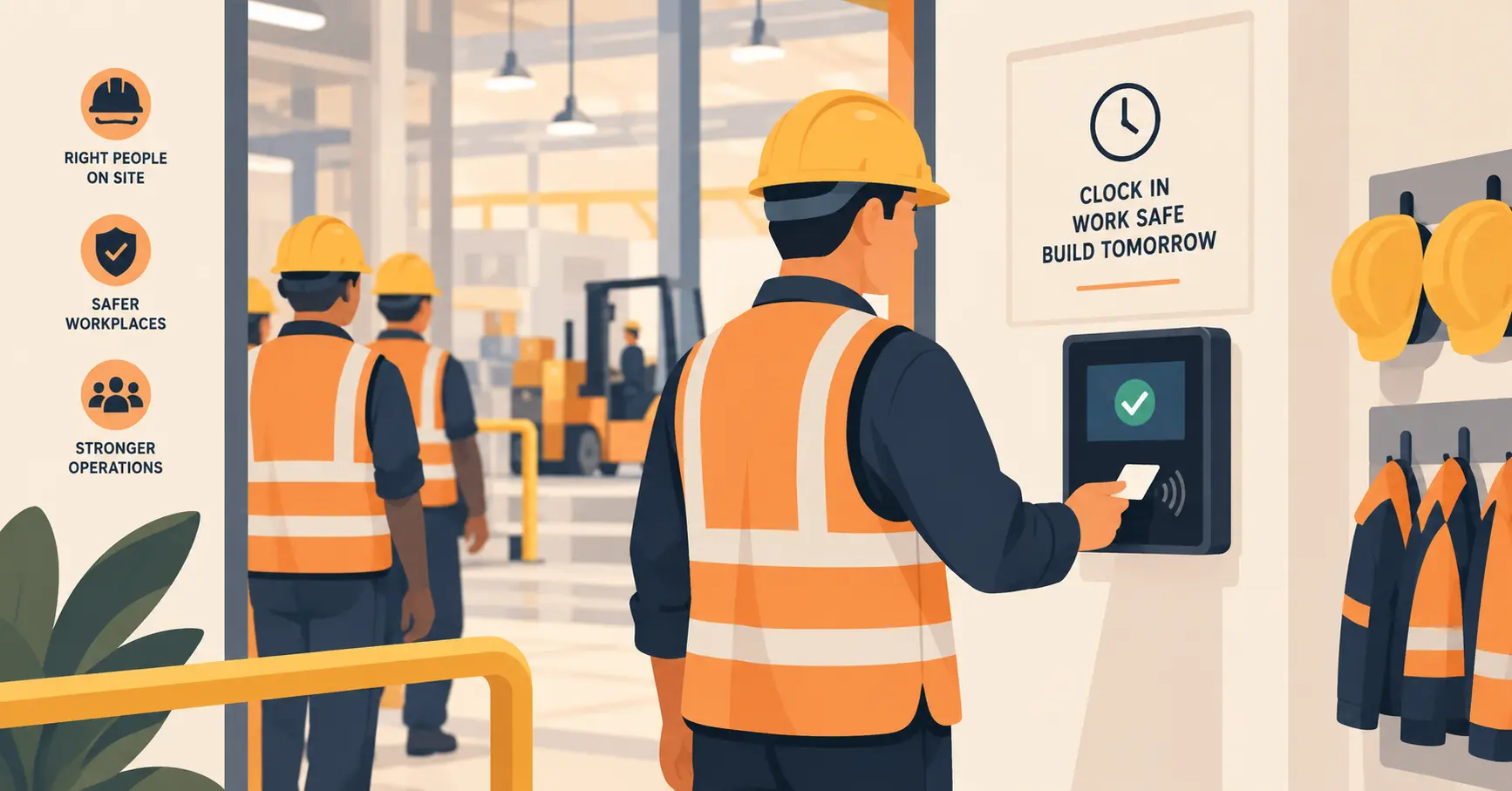
Table of Content
Try Vizitor for Free!
1 in 4 hourly workers have clocked in or out for a co-worker, or had a co-worker do it for them, according to a July 2026 survey of 831 US hourly workers commissioned by OnTheClock. On a factory floor or in a warehouse, that number matters more than it does in most offices, because shared badges, shared card readers, and high headcount at shift change make buddy punching easier to pull off and harder to catch.
Attendance tracking for factory and warehouse teams isn’t the same problem as attendance tracking for an office. This covers what’s actually different. It covers what the Fair Labor Standards Act (FLSA), the federal law that governs overtime and recordkeeping, requires you to track. It compares RFID, biometric, and app-based methods honestly for this environment. And it covers where a general attendance tool fits, and where it doesn’t.
Why the Factory Floor Is a Different Problem
Shared hardware in harsh conditions. Gloves, grease, dust, and cold storage all interfere with fingerprint scanners. Shared card readers verify the card, not the person holding it, which is exactly how a borrowed badge becomes buddy punching.
Shift-change throughput. A good system can’t take 30 to 45 seconds per person to use, or you get a queue forming before the shift has even started. Attendance technology gets tested hardest at shift change, not during a quiet afternoon.
Multiple, very different shifts. The workforce walking in at a 6 AM shift change is a completely different group from the one arriving at 2 PM. A plan built around one shift’s habits doesn’t automatically work for the next one.
Personal devices aren’t always allowed on the floor. Many plants restrict phones near machinery for safety reasons. Some workers simply don’t carry a company device during a shift. That rules out app-based check-in for a real share of factory and warehouse staff, in a way it usually doesn’t for office workers.
The stakes are higher during an emergency. A real-time, accurate headcount matters more when the building has heavy machinery, hazardous materials, or restricted zones. A wrong or outdated attendance record during an evacuation is a bigger problem here than in a typical office.
What Time Theft Actually Costs
The buddy-punching numbers aren’t the whole picture. The same July 2026 survey found 43% of hourly workers had submitted timesheets that didn’t match their actual hours. That’s a broader pattern than buddy punching alone. Separately, the American Payroll Association has long cited an estimate of roughly 4.5 hours per week per employee lost to time theft in various forms. That figure gets repeated often across payroll and HR sources, though it’s an industry estimate, not a fresh study.
Whatever the exact number is at your site, the mechanism is the same. Manual or easily-shared attendance methods leave room for inaccurate records. And inaccurate records cost real payroll dollars, long before they ever become a compliance problem.
What the FLSA Actually Requires You to Record
Under the Department of Labor’s Fact Sheet #21, employers must keep 14 specific data points for each non-exempt employee, including:
- Time and day of week when the employee’s workweek begins
- Hours worked each day
- Total hours worked each workweek
- The basis on which wages are paid (hourly, weekly, piecework, etc.)
- Regular hourly pay rate
- Total overtime earnings for the workweek
- Date of payment and the pay period it covers
Records generally need to be kept for two to three years, depending on the document type. There’s no required format and no specific technology mandated. A punch clock, an app, or a paper log can all satisfy the rule, as long as the numbers are accurate and kept on file.
Overtime itself is separate, and it isn’t optional. Non-exempt employees covered by the FLSA must be paid at least 1.5 times their regular rate for hours worked beyond 40 in a workweek. Employer and employee can’t agree to waive that requirement.
Comparing the Real Options for This Environment
| Method | Works well when | Real weakness on a factory floor |
|---|---|---|
| RFID / proximity card | Workers don’t carry personal devices, fast tap-and-go needed | Reader verifies the card, not the person; shared or borrowed cards enable buddy punching |
| Biometric (fingerprint or face) | No shared hardware wanted, high confidence in identity needed | Gloves, grease, dust, and cold storage all interfere with fingerprint accuracy; face recognition needs consistent lighting and camera placement |
| App-based (QR or mobile) | Staff carry a personal device and can use it on the floor | Doesn’t work if phones aren’t allowed near machinery, or workers don’t have a company device during their shift |
None of these is universally right. Start with one honest question: can and will your floor workforce carry a personal device during a shift? If not, RFID or biometric is the realistic starting point. Just plan for their specific weak points instead of picking an app-based tool that assumes a phone in every pocket.
How to Choose for Your Site
Start with device access, not features. If floor workers can’t carry phones during a shift, app-based attendance isn’t a real option for them, no matter how good the rest of the feature set looks.
Plan for shift-change volume specifically. Ask any vendor how long their method takes per person. Multiply that by your actual headcount at the busiest shift change, not an average day.
Check how each method handles its own weak point. RFID needs a plan for shared or lost cards. Biometric needs to work with gloves, and in the real lighting and temperature on your floor, not a demo room.
Confirm the required FLSA data points actually get captured. A clock-in and clock-out time isn’t enough on its own. Total daily and weekly hours, pay basis, and overtime all need to trace back to the same record.
Decide if the shop floor and the office really need the same system. Many facilities run one method for floor staff and a different one for supervisors, engineers, and admin roles. That’s often simpler than forcing one tool to fit two very different groups of workers.
Where Vizitor Fits, Honestly
Vizitor’s attendance management system uses a personal device and GPS location matching. No fingerprint reader. No card. No hardware to buy. A check-in from outside the approved site boundary gets blocked rather than logged. That closes the proxy-attendance gap without any hardware at all.
That approach fits supervisors, engineers, and admin staff at an industrial site well, since those roles carry a personal device all day anyway. It’s not the honest choice for hourly floor workers who can’t carry a phone near machinery, or who don’t have a company device during their shift. That group is usually better served by a dedicated RFID or biometric system built for that specific constraint.
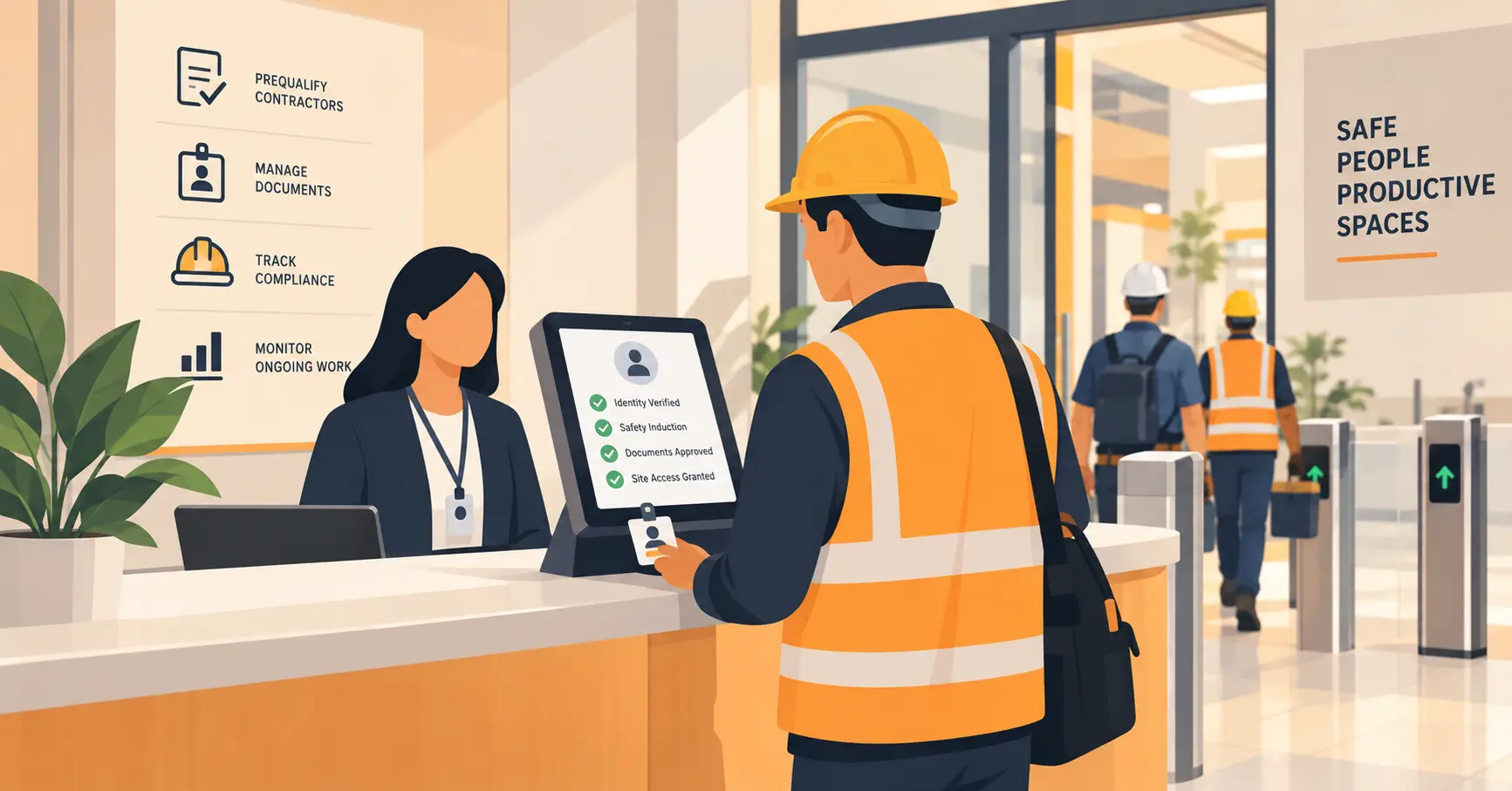
Vizitor fits the factory or warehouse gate more directly through visitor and contractor management: tracking who’s on site, verifying contractor documents before they reach the floor, and keeping a searchable record for an audit or an evacuation roster. For a deeper look at that side specifically, see our comparison of visitor management systems built for manufacturing.
Book a demo to see the attendance and contractor sides of a facility running from one dashboard.
Frequently Asked Questions
See Vizitor in action check-in a visitor in under 30 seconds
Trusted by 500+ businesses. QR check-in, badge printing, NDA signing. Plans from $36/mo.